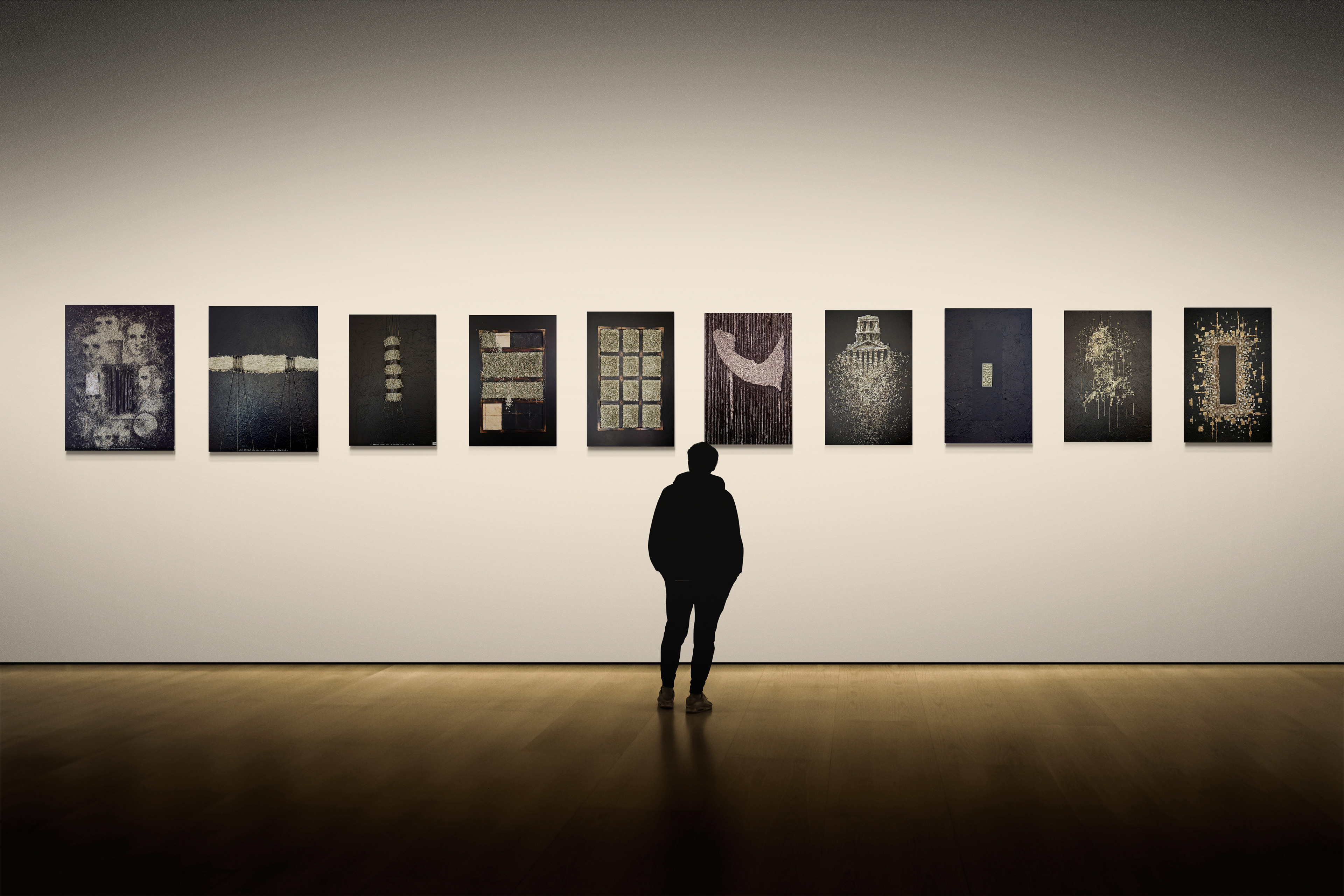
Portraits of Invisible Power
Sculptural structures built from decommissioned currency examining how value and authority are constructed and sustained.
I use shredded money because even after value is destroyed, memory remains.
Every fragment in my work once belonged to a complete bill that moved through unknown hands and unknown lives. A single piece may have passed through the pocket of someone struggling to survive, through the hands of someone counting their last dollars, or through the safe of someone who would never notice its absence. It may have been folded into a waitress’s apron, hidden in a stripper’s bra under neon light, pressed into a church donation box, exchanged during a drug deal, carried by immigrants crossing borders, or stacked silently inside the office of a millionaire.
Money travels through every layer of human existence without judgment. It absorbs desperation, power, desire, humiliation, ambition, survival, greed, love, fear, and hope. Long before it entered my work, it already carried human history on its surface.
When currency is shredded, society declares it finished. Worthless. Removed from circulation. But I became obsessed with the idea that destruction does not erase experience. Even in fragments, those pieces still contain the weight of the lives they touched.
By rebuilding these remnants into large physical structures, I try to transform something abandoned back into presence. The work is not about wealth. It is about systems, memory, labor, inequality, and the invisible emotional residue that money carries as it moves through the world.
What interests me most is that every tiny fragment was once part of something considered whole, powerful, and valuable — and even after being destroyed, it still refuses to become nothing.
Earlier Works (selected)






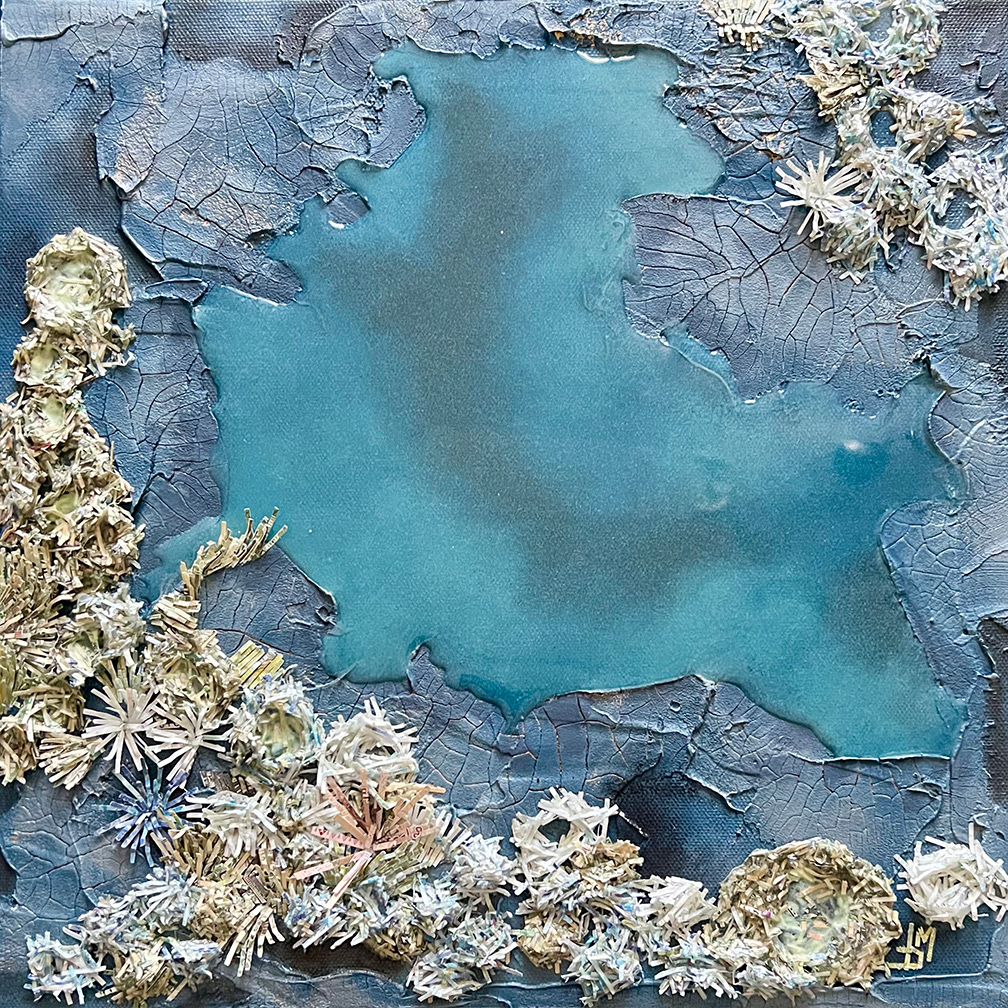


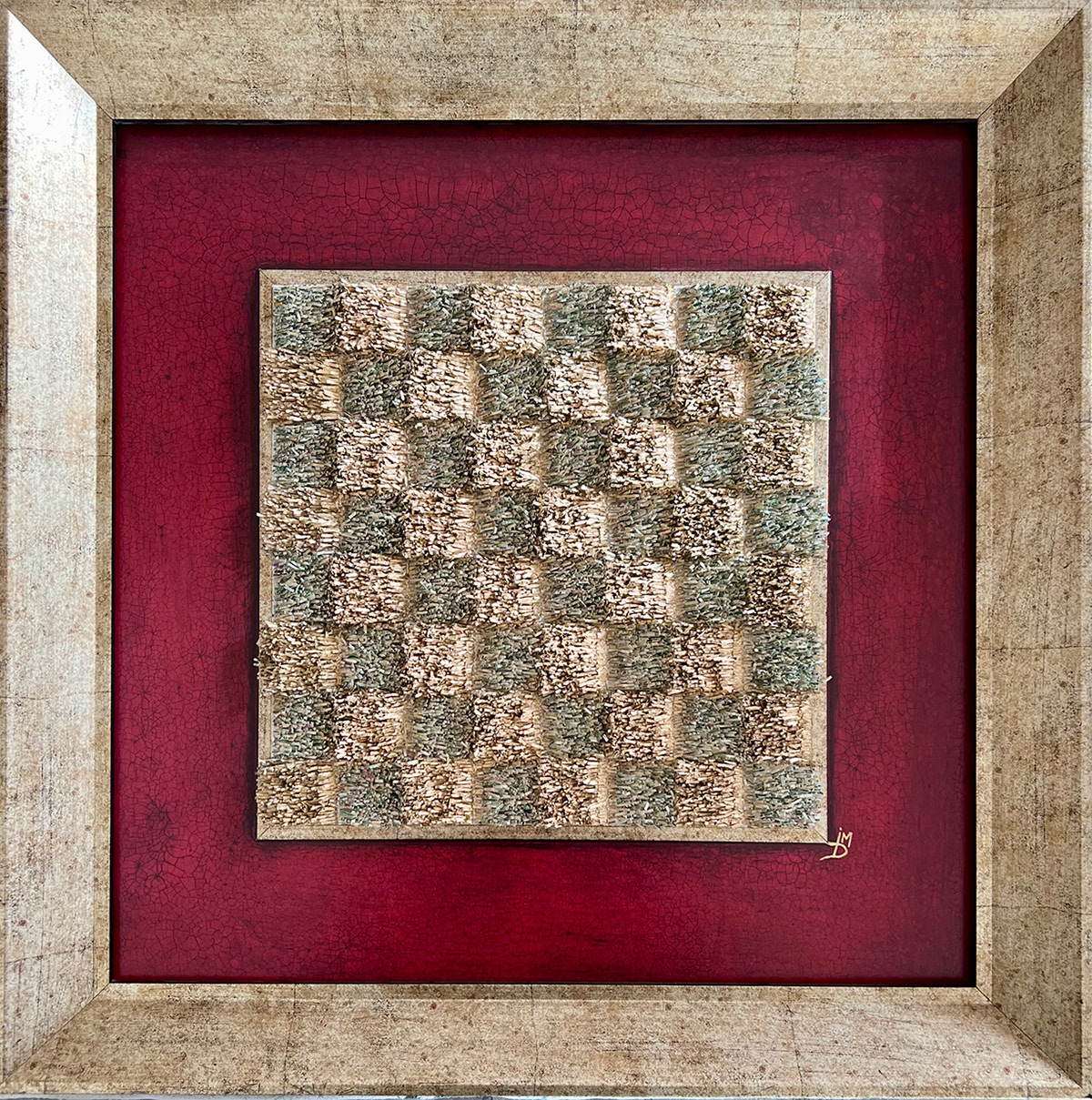

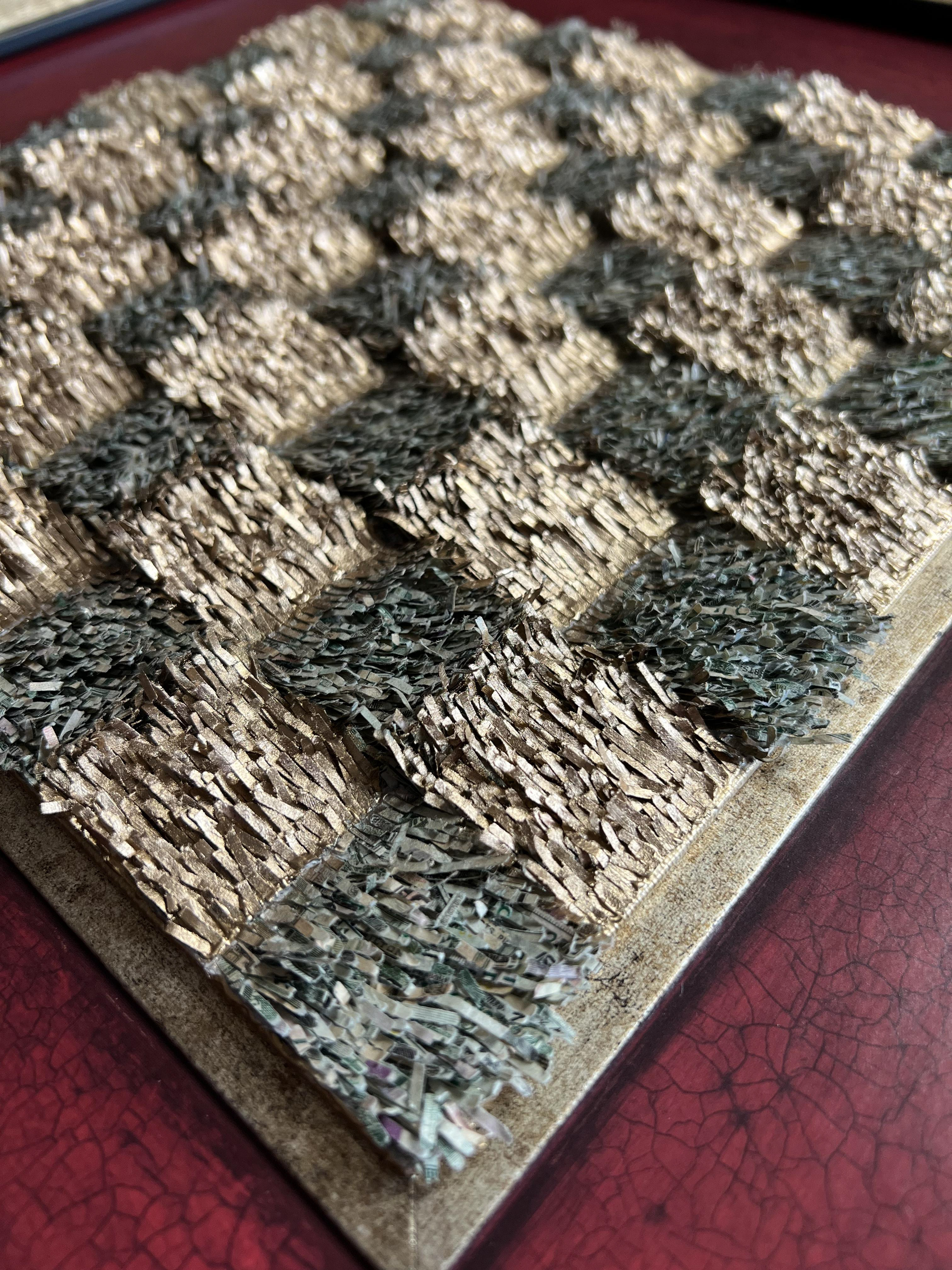
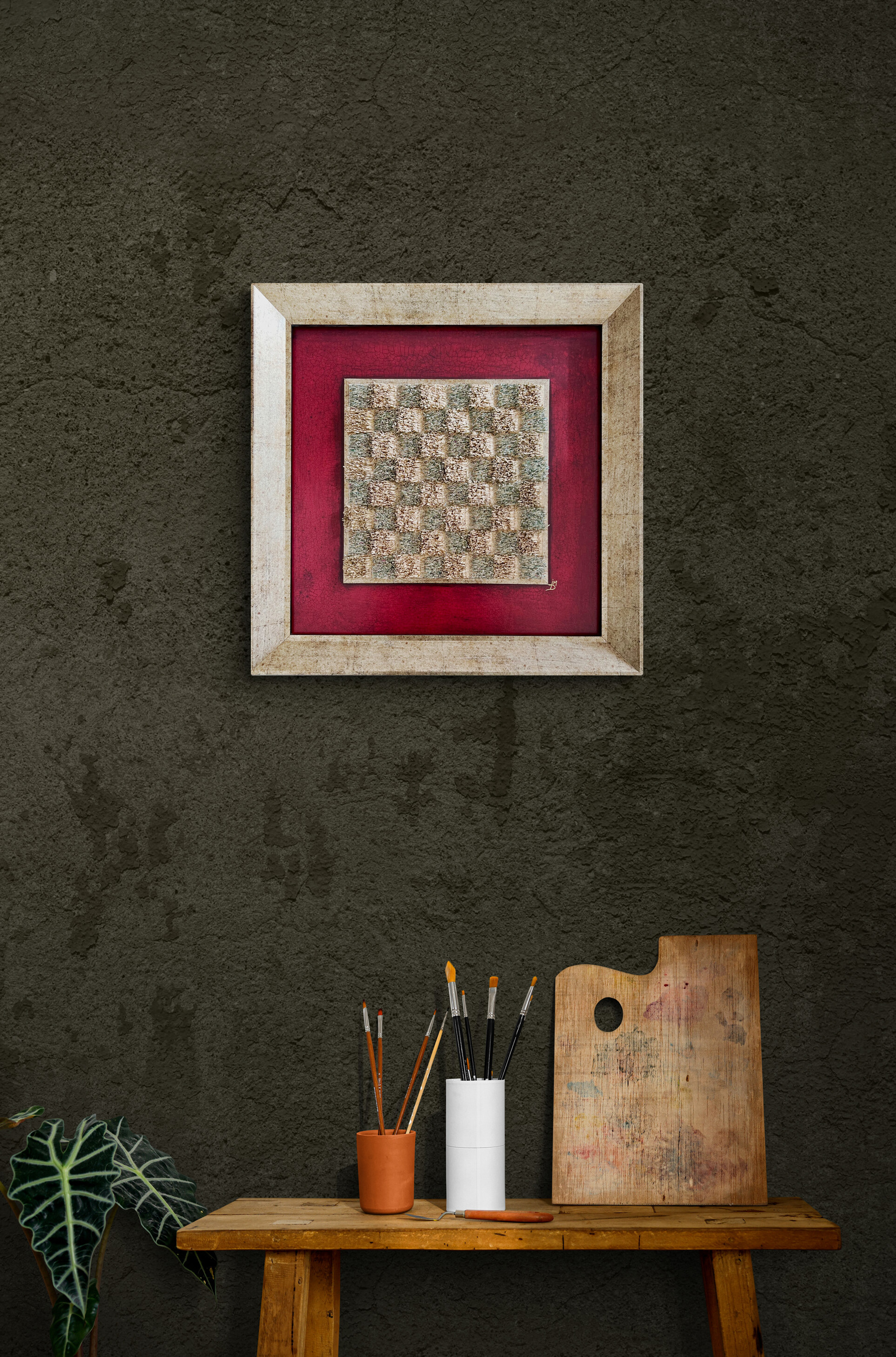
“Wealthy Pursuit” transforms shredded currency into a fragmented chessboard, merging the language of money with the psychology of strategy, ambition, and control. Built from the remains of devalued currency, the work reflects the invisible systems that shape competition, status, and the constant pursuit of power.
The chessboard becomes a metaphor for modern society itself — a structured game where every move carries consequence, sacrifice, calculation, and risk. By using destroyed money as both texture and symbol, the piece questions whether wealth is truly freedom, or simply another system people spend their lives trying to survive and master.
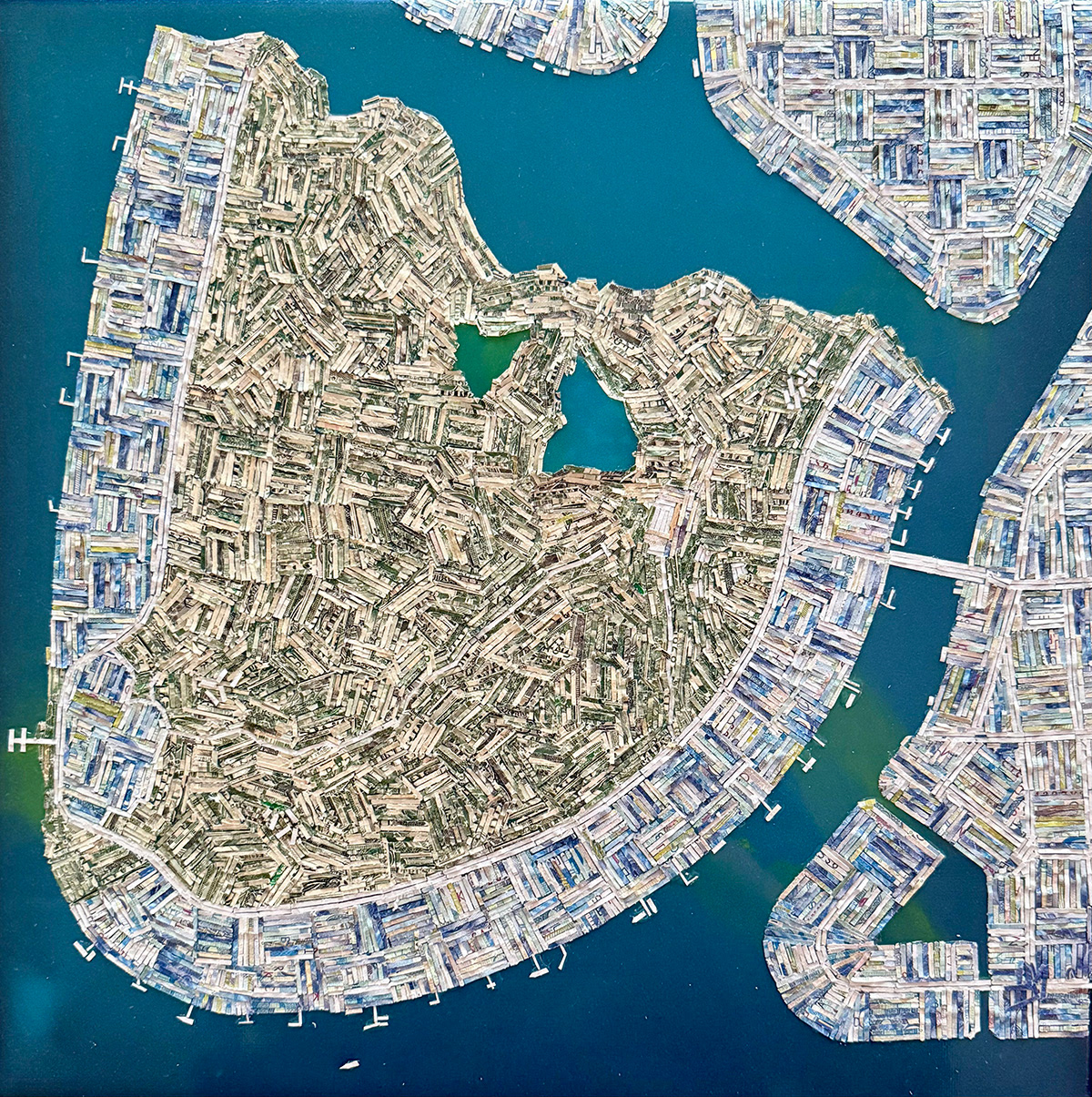
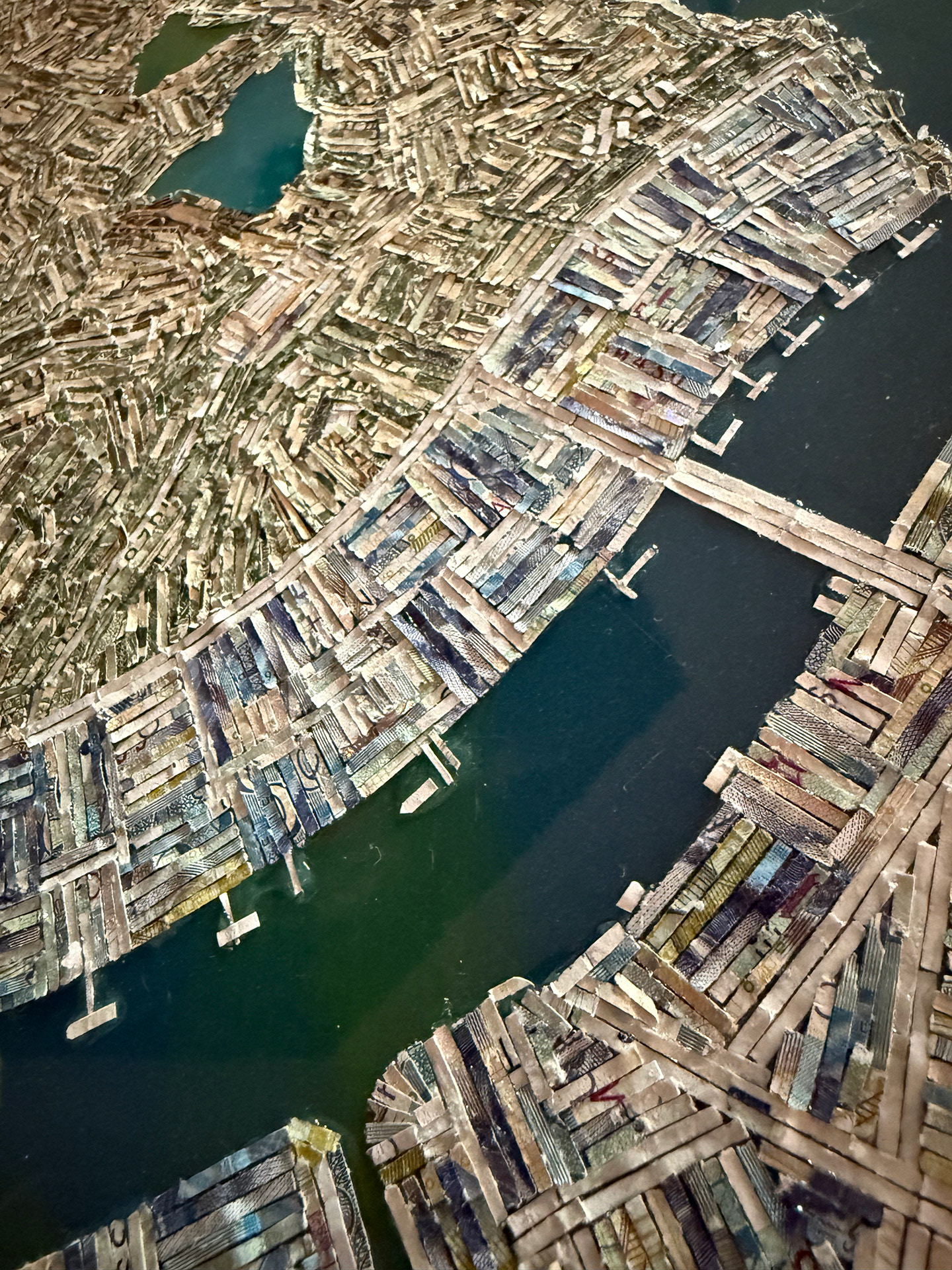


“Bridge of Fortune” reimagines Indiana Creek Island through an aerial perspective constructed entirely from shredded currency. Surrounded by water and connected through narrow passages, the island becomes a symbol of concentrated wealth, exclusivity, and separation.
Built from fragments of destroyed money, the work transforms currency into landscape, architecture, and social structure. The island is no longer simply a geographic location — it becomes a portrait of access, privilege, and the invisible boundaries created by wealth.
The surrounding bridges suggest more than physical connection; they represent the fragile passage between aspiration and power, between those allowed inside and those kept at a distance. Suspended between beauty and control, “Bridge of Fortune” examines how capital quietly shapes territory, identity, and modern social hierarchy.


Blue Bloomscape

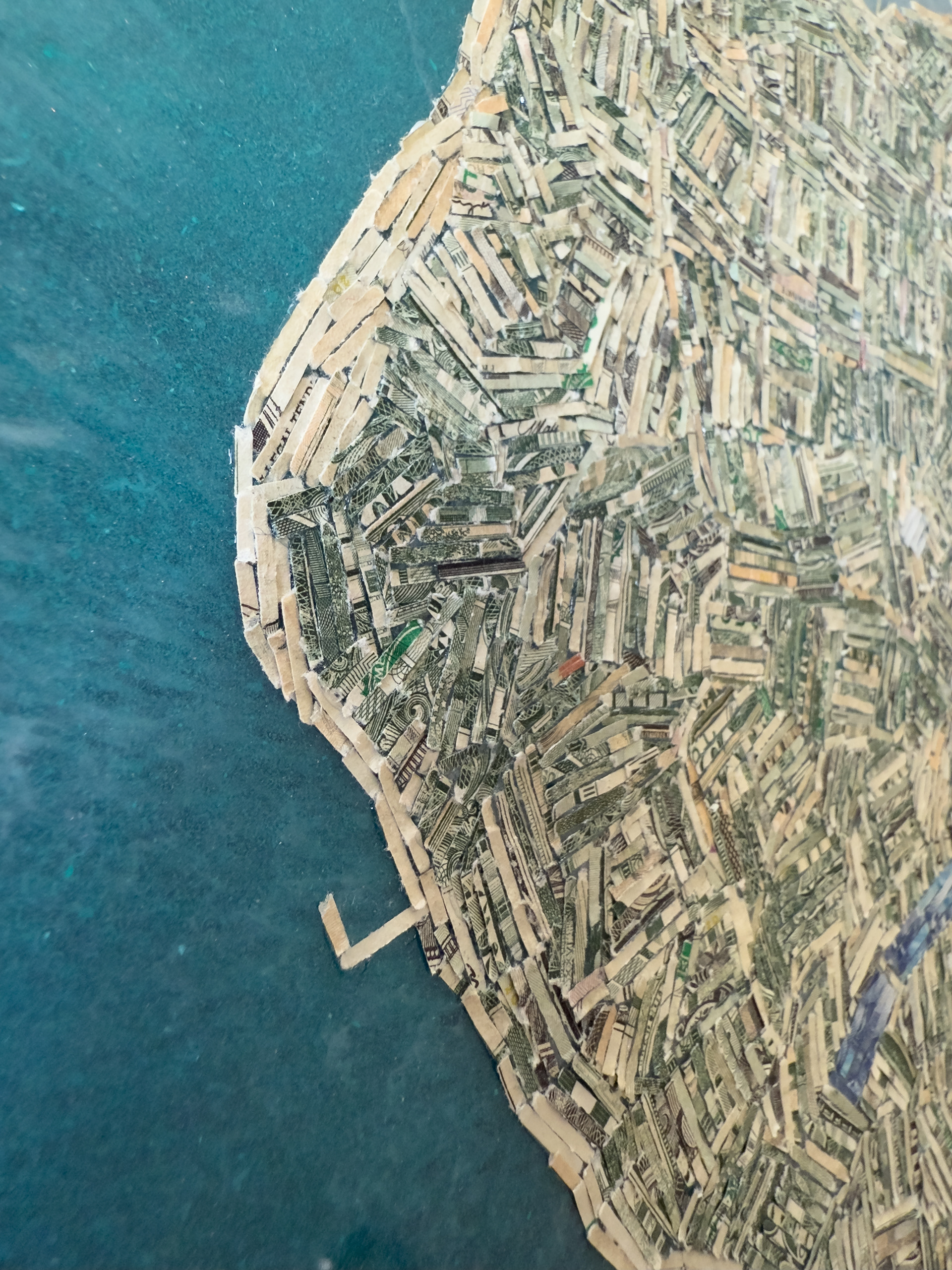


“Fragments of Paradise” reimagines Necker Island through a landscape constructed entirely from shredded currency, transforming a symbol of luxury into a meditation on wealth, isolation, and exclusivity. Suspended within vast surrounding waters, the island appears both protected and detached — a private world shaped by access and economic power.
Built from destroyed fragments of money, the work turns currency into geography itself. What once functioned as exchange is reconstructed into territory, privilege, and separation. The island becomes a portrait of modern aspiration, where paradise is no longer purely natural, but engineered through capital and controlled access.
The surrounding ocean acts as both beauty and barrier — a quiet reminder of the invisible distance between those who inhabit these worlds and those who remain outside them. Through fragmentation and reconstruction, “Fragments of Paradise” questions the fragile foundations beneath luxury, permanence, and the dream of escape.
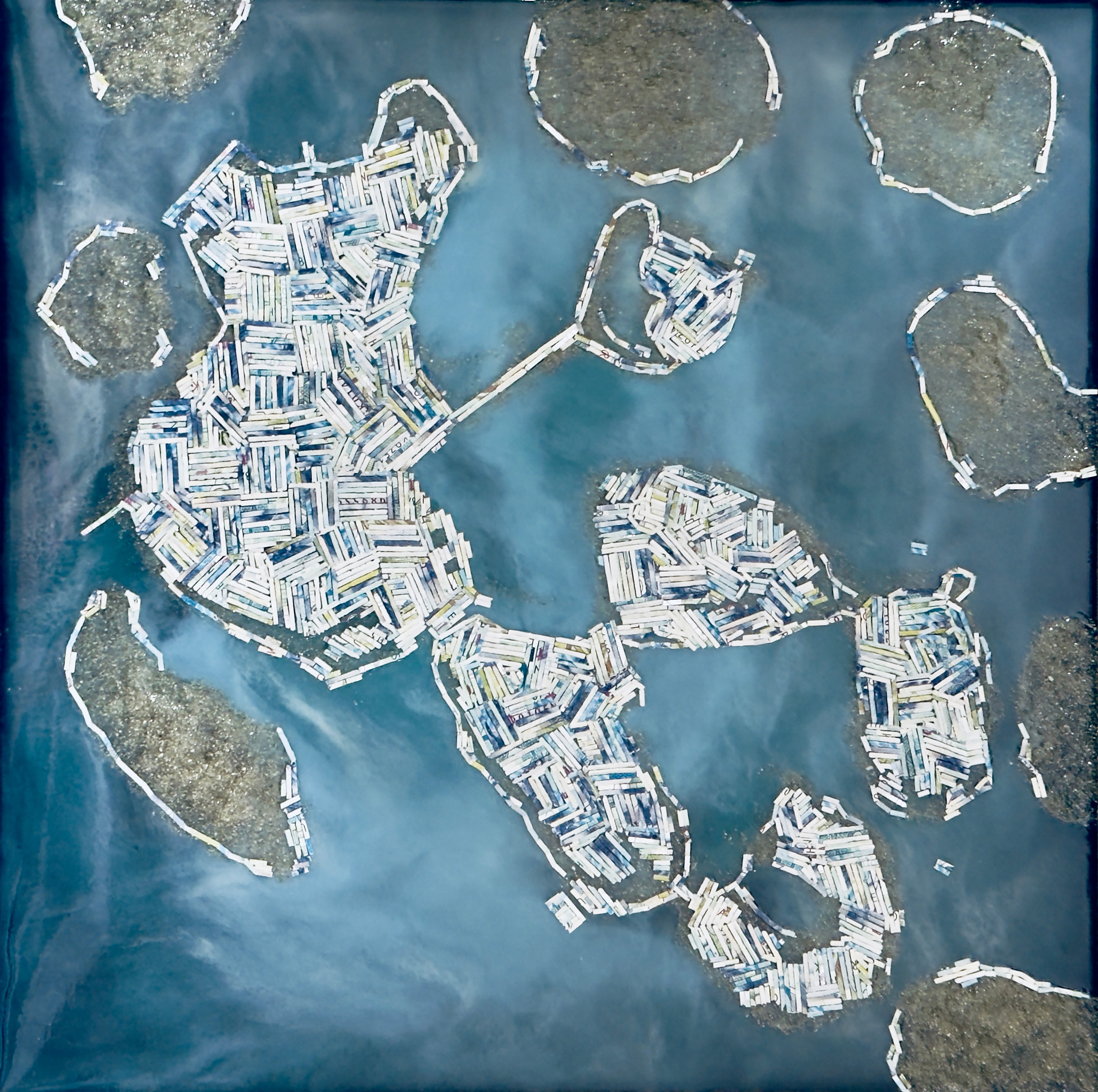


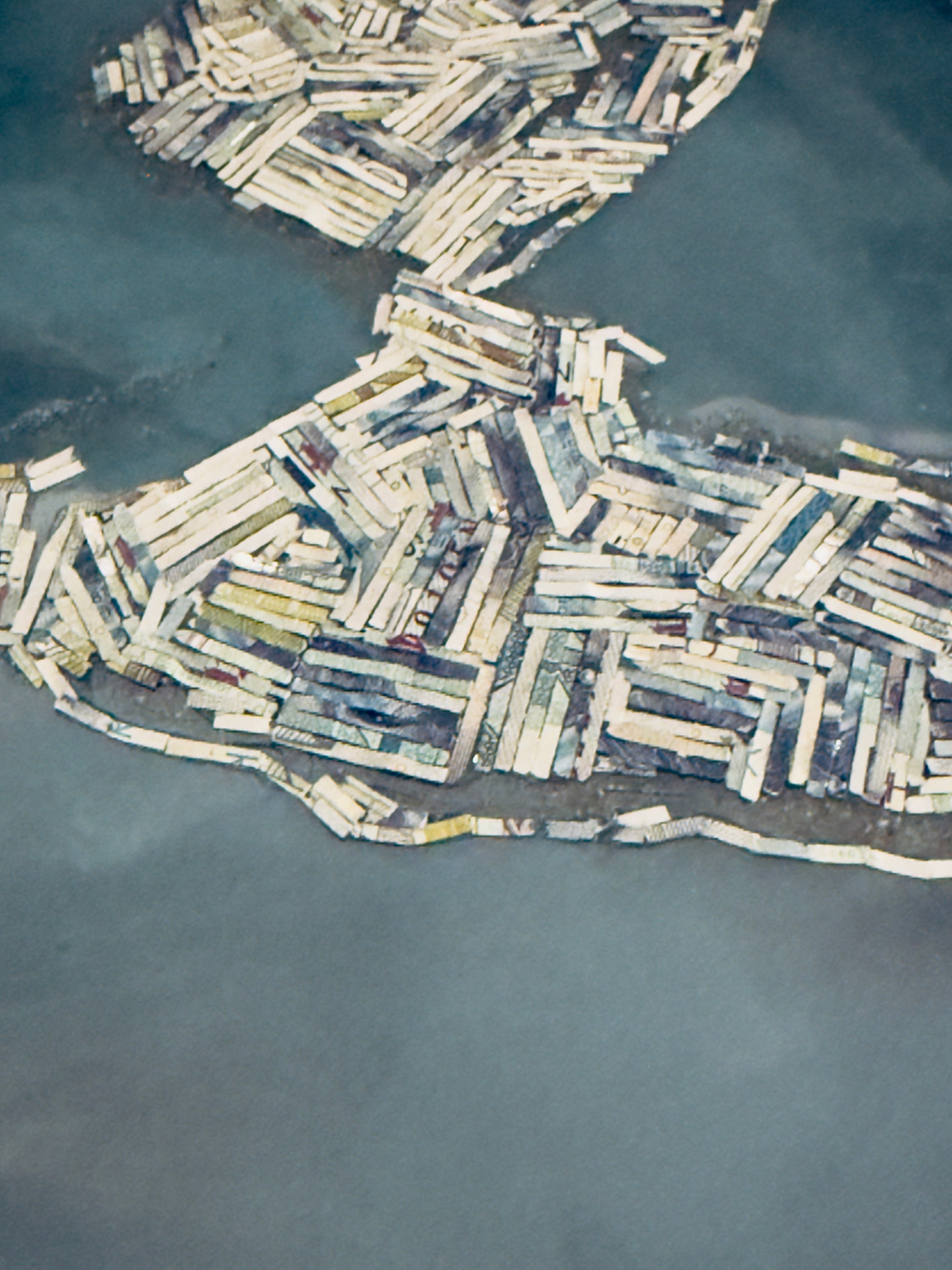
“Currency of Dreams” reimagines Dubai’s World Islands through a landscape constructed entirely from shredded currency, transforming one of the world’s most ambitious luxury developments into a meditation on wealth, aspiration, and illusion.
Suspended within vast surrounding waters, the fragmented islands appear both beautiful and artificial — engineered territories born from capital, desire, and the human pursuit of exclusivity. By rebuilding the islands from destroyed money, the work collapses the boundary between currency and geography, suggesting that modern dreams are increasingly constructed, purchased, and separated by wealth itself.
The isolated forms evoke both freedom and detachment, reflecting a world where paradise can be manufactured, owned, and disconnected from ordinary reality. “Currency of Dreams” explores the fragile relationship between luxury and permanence, questioning whether these landscapes represent achievement, illusion, or the physical architecture of modern ambition.


“Currency of Perspective” reconstructs Manhattan from shredded currency, transforming one of the world’s most recognizable financial and cultural centers into a fragmented aerial landscape built entirely from the material that helped define it.
Seen from above, the city appears monumental yet fragile — an intricate network of ambition, power, density, and constant motion suspended between dark surrounding waters. By using destroyed money to rebuild the island, the work collapses the boundary between currency and civilization itself, suggesting that modern urban identity is inseparable from systems of capital, value, and economic pursuit.
The towering geometry of Manhattan becomes more than architecture; it becomes a portrait of human aspiration shaped by finance, competition, and scale. Through fragmentation and reconstruction, “Currency of Perspective” invites viewers to step back from the mythology of the city and reconsider the structures that sustain it — and the cost of living inside them.

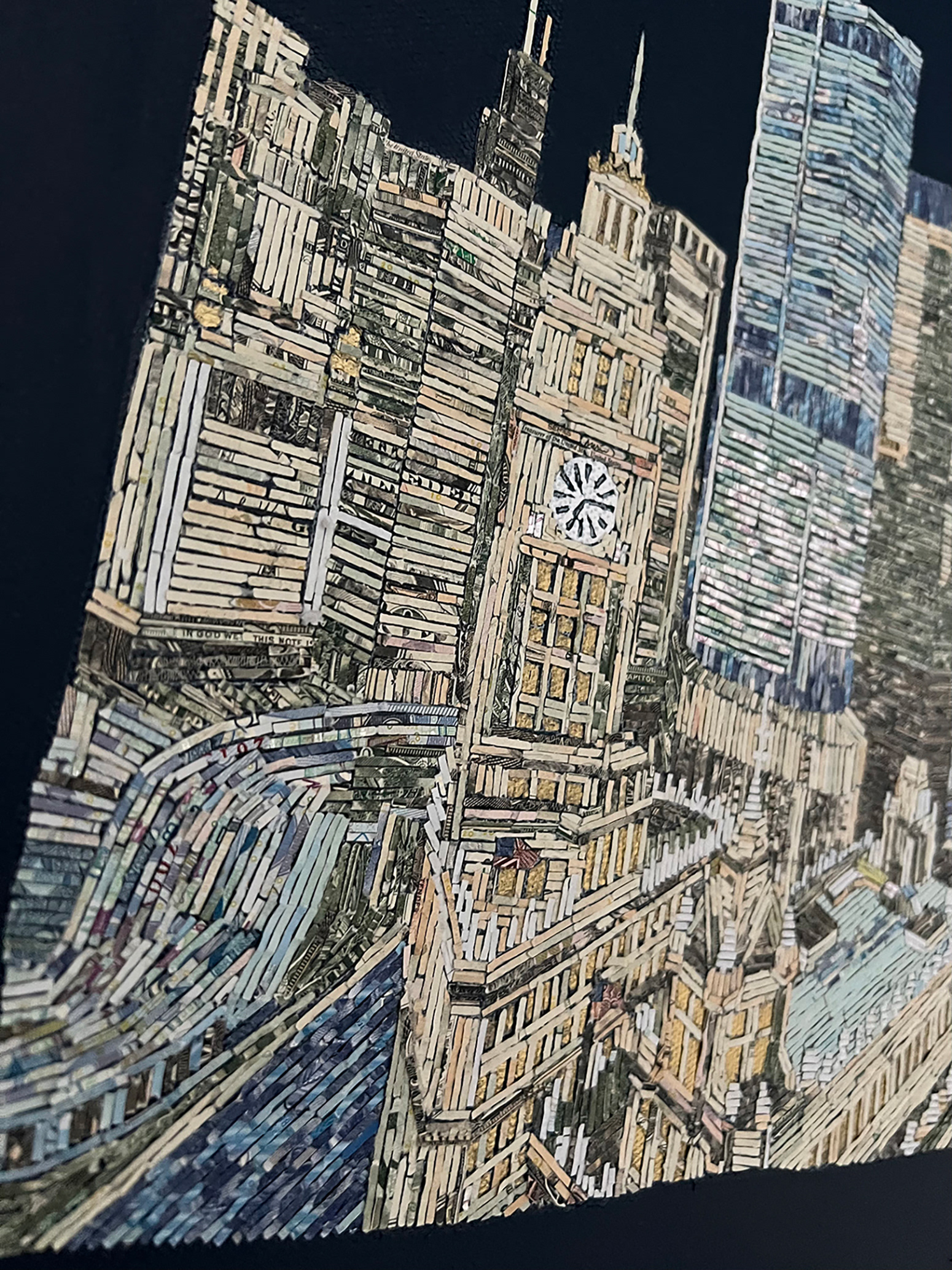
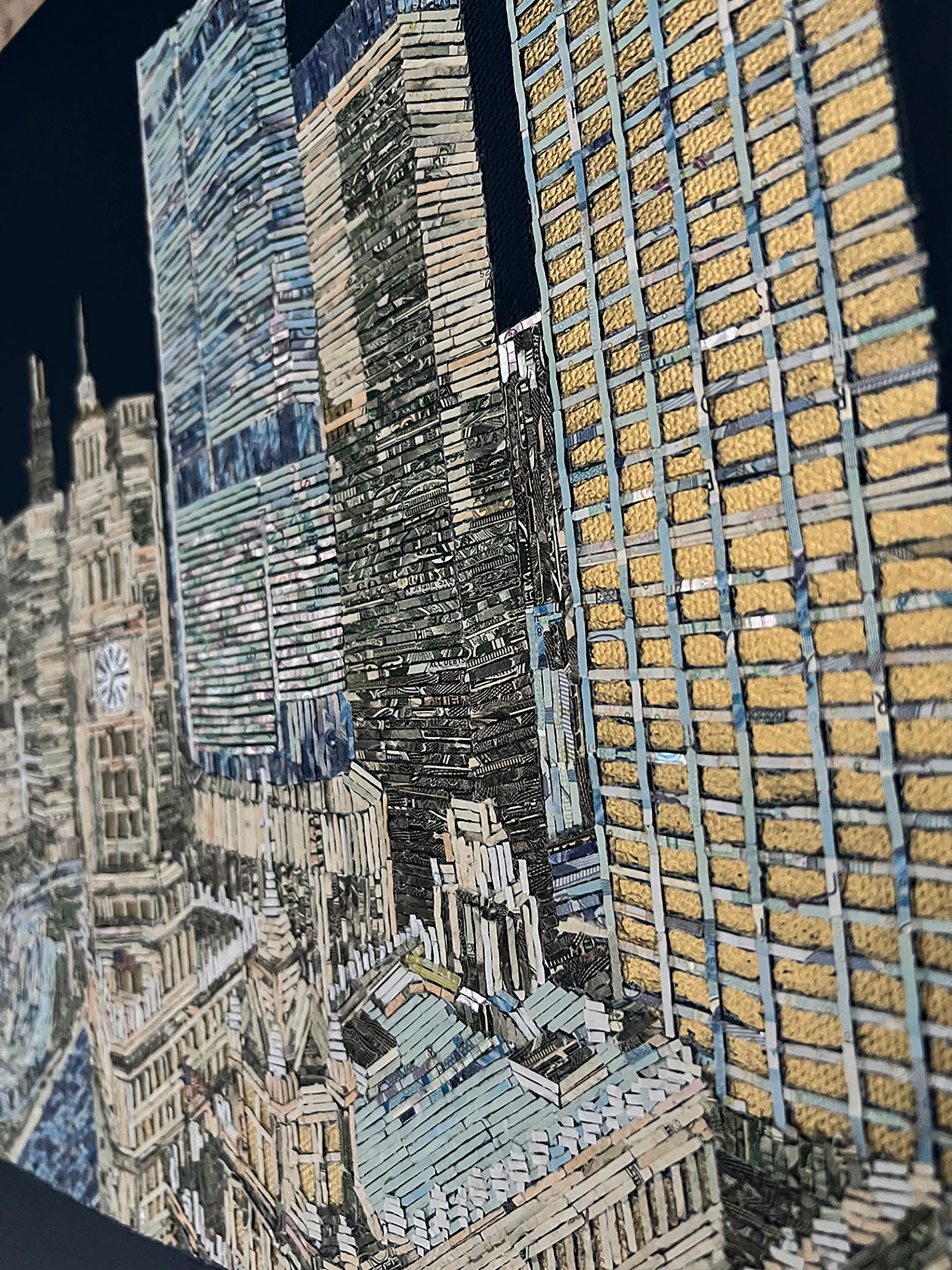
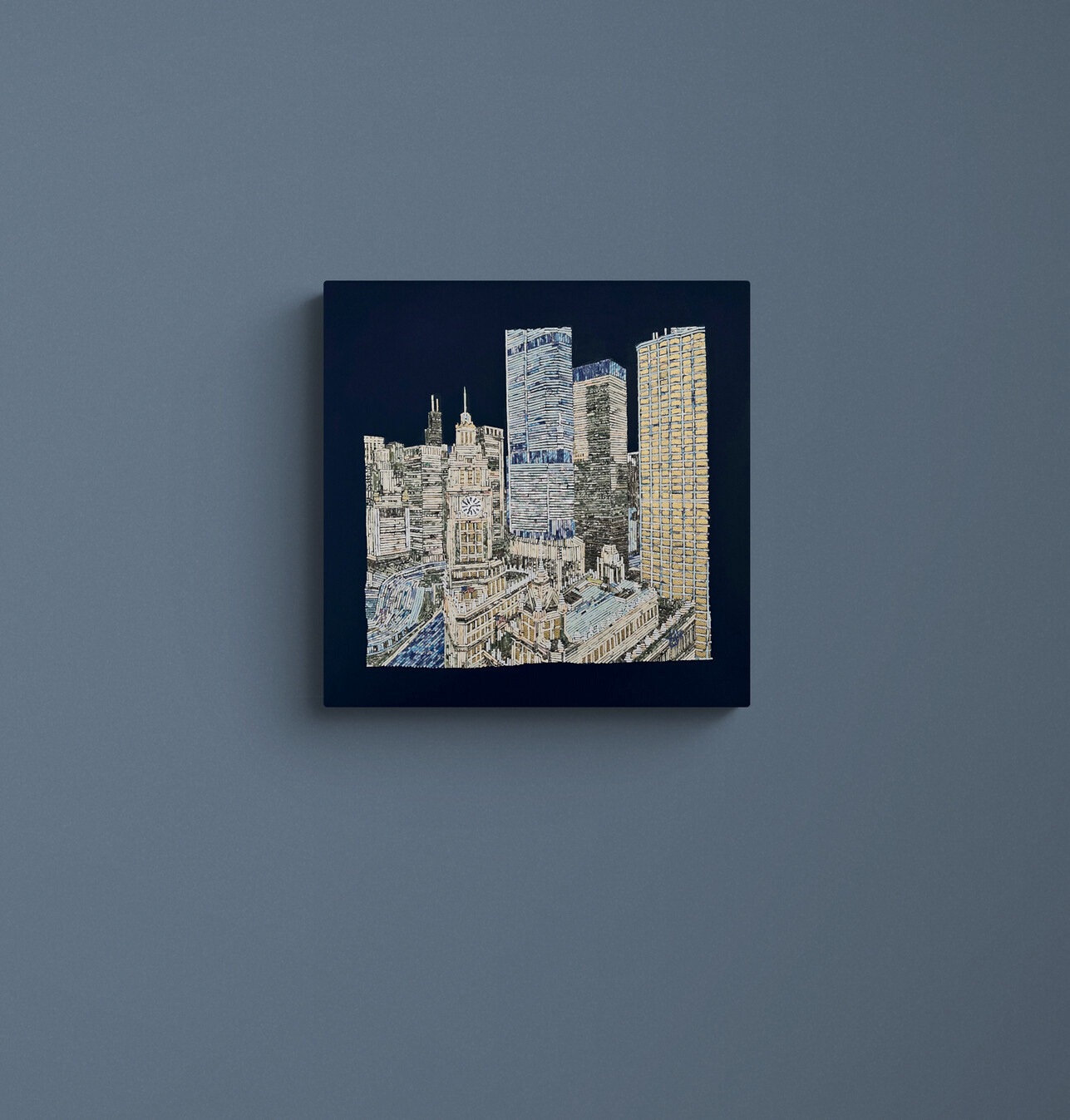
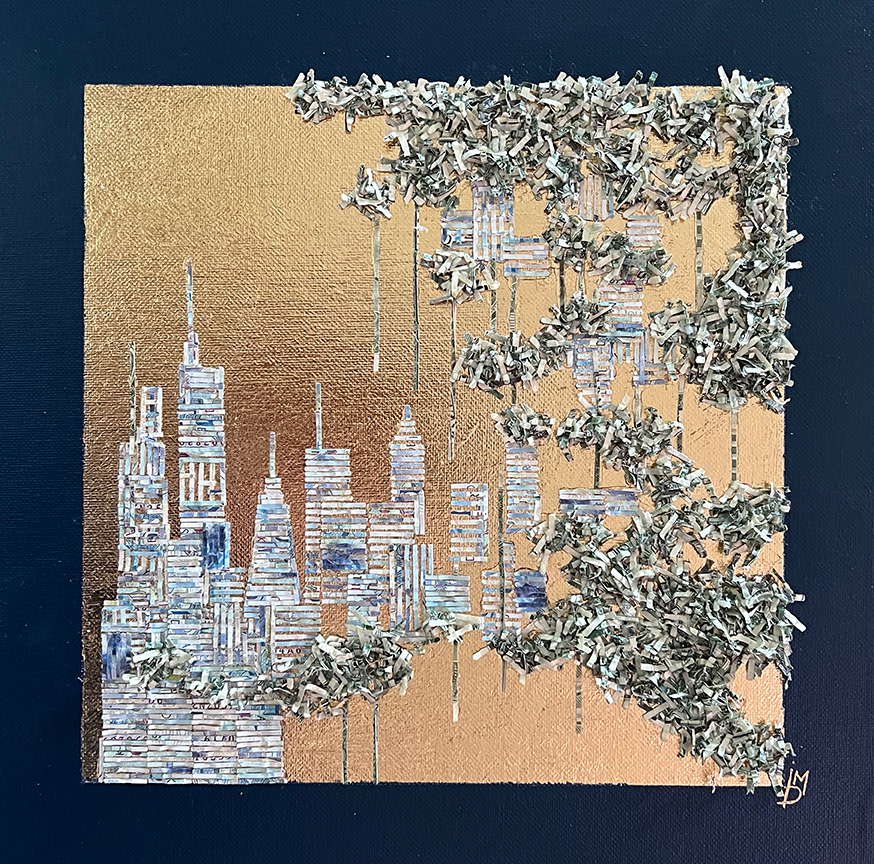
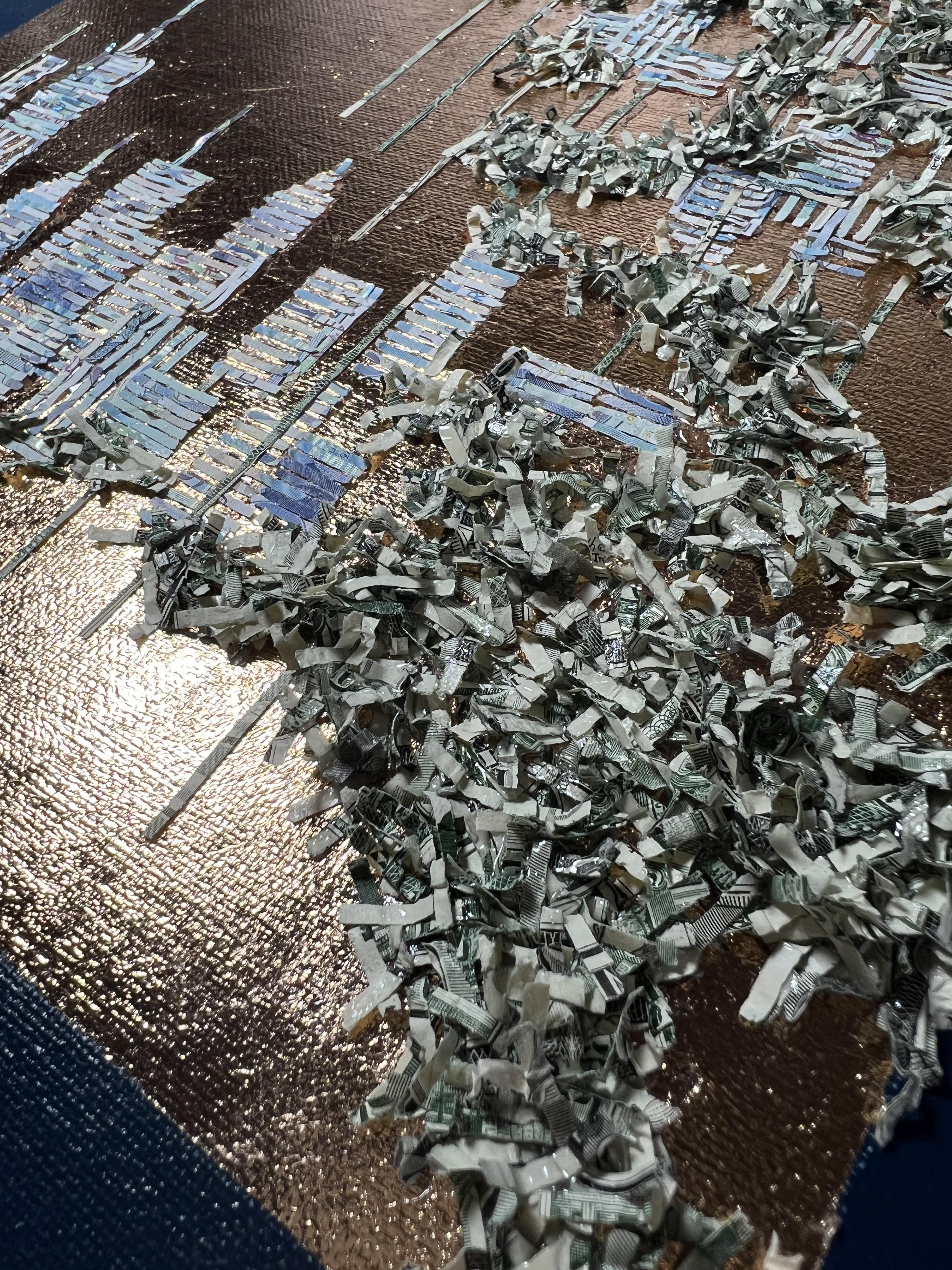
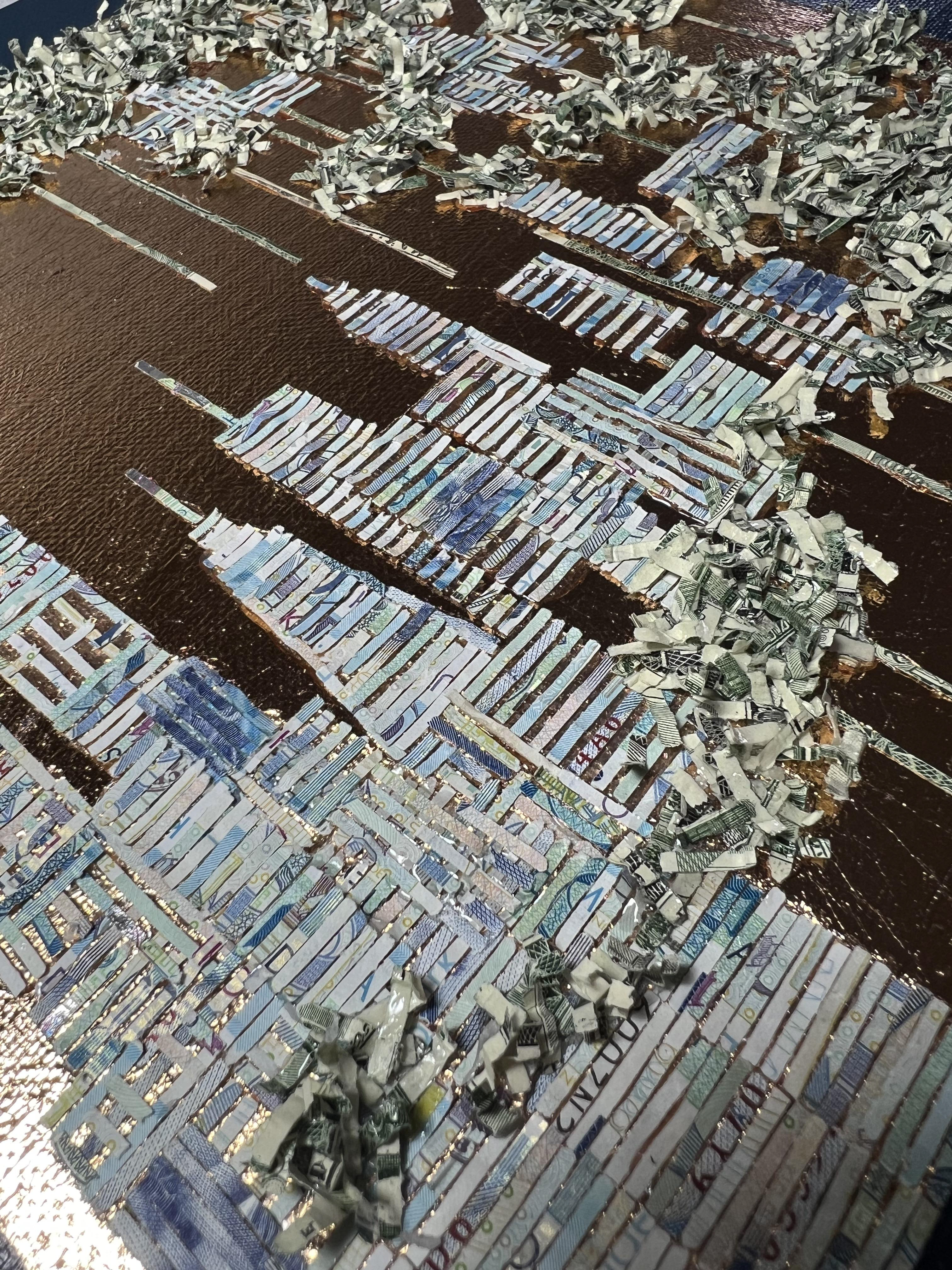
“Currency of Reflection” reconstructs downtown Chicago from shredded currency, transforming the city’s monumental skyline into a meditation on grandeur, ambition, and the hidden cost beneath modern achievement. Rising from darkness, the illuminated towers appear powerful and permanent, yet every structure is built from fragments of destroyed money — material once tied to labor, survival, desire, sacrifice, and human time.
From a distance, the city radiates beauty, progress, and success. Up close, it reveals a more fragile reality: countless invisible transactions, personal struggles, exhausted lives, risks, and ambitions layered into the architecture of the modern metropolis. The skyline becomes more than a portrait of a city; it becomes a reflection of the systems people dedicate themselves to sustaining, often at profound personal cost.
By reconstructing Chicago from fragmented currency, the work questions what truly lies beneath urban magnificence. “Currency of Reflection” invites viewers to consider not only the power and aspiration represented by the skyline, but also the human sacrifices, economic pressures, and invisible labor required to keep such visions standing.
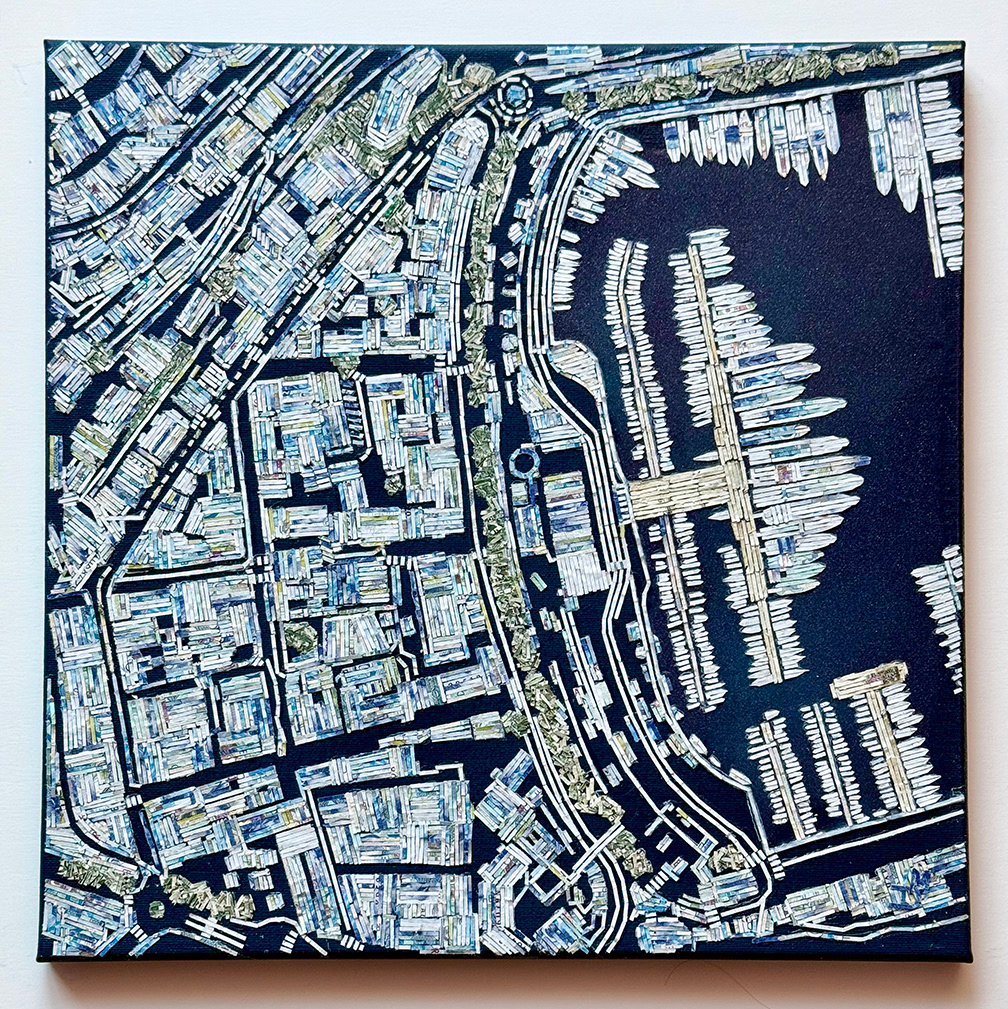
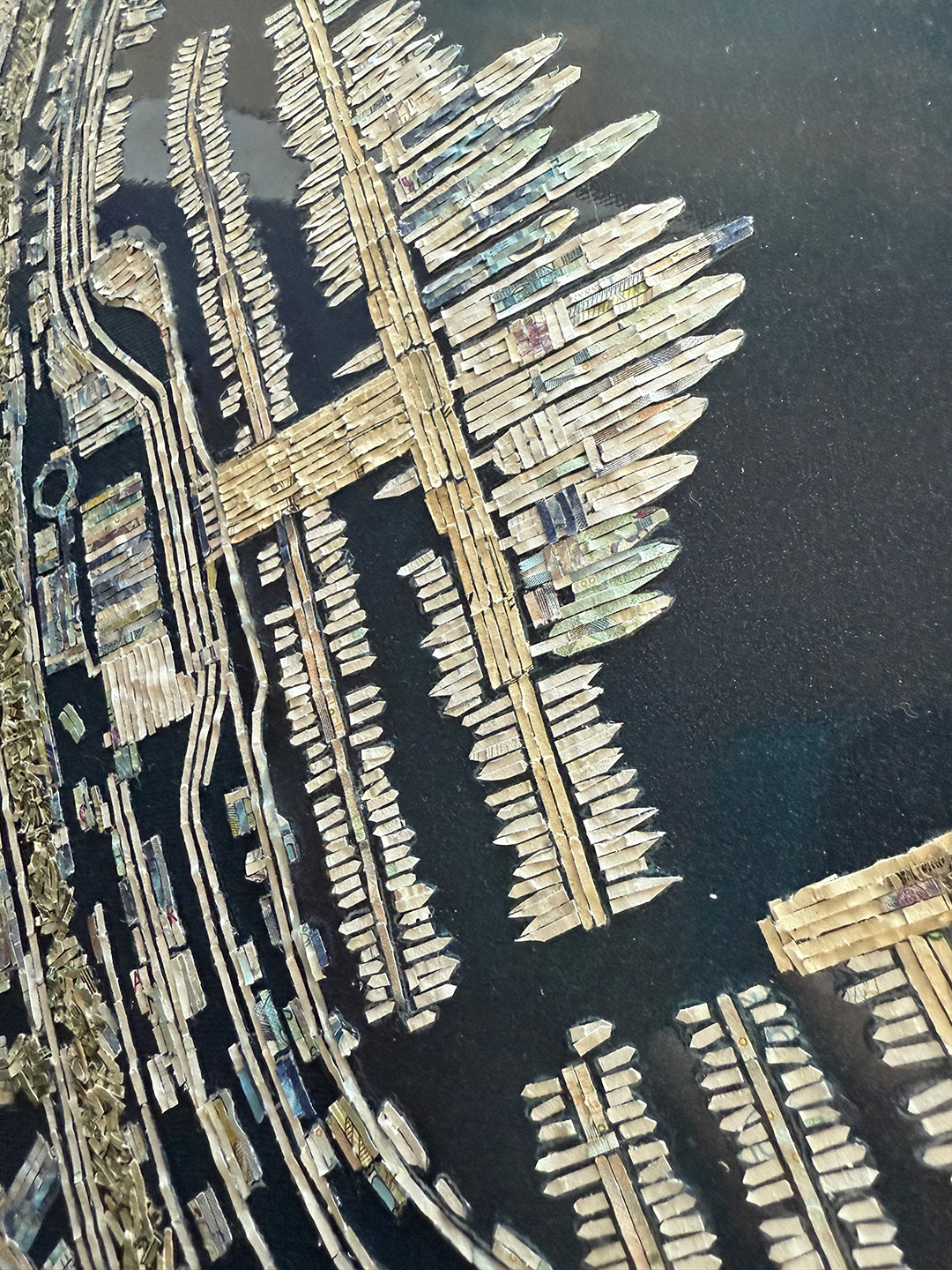
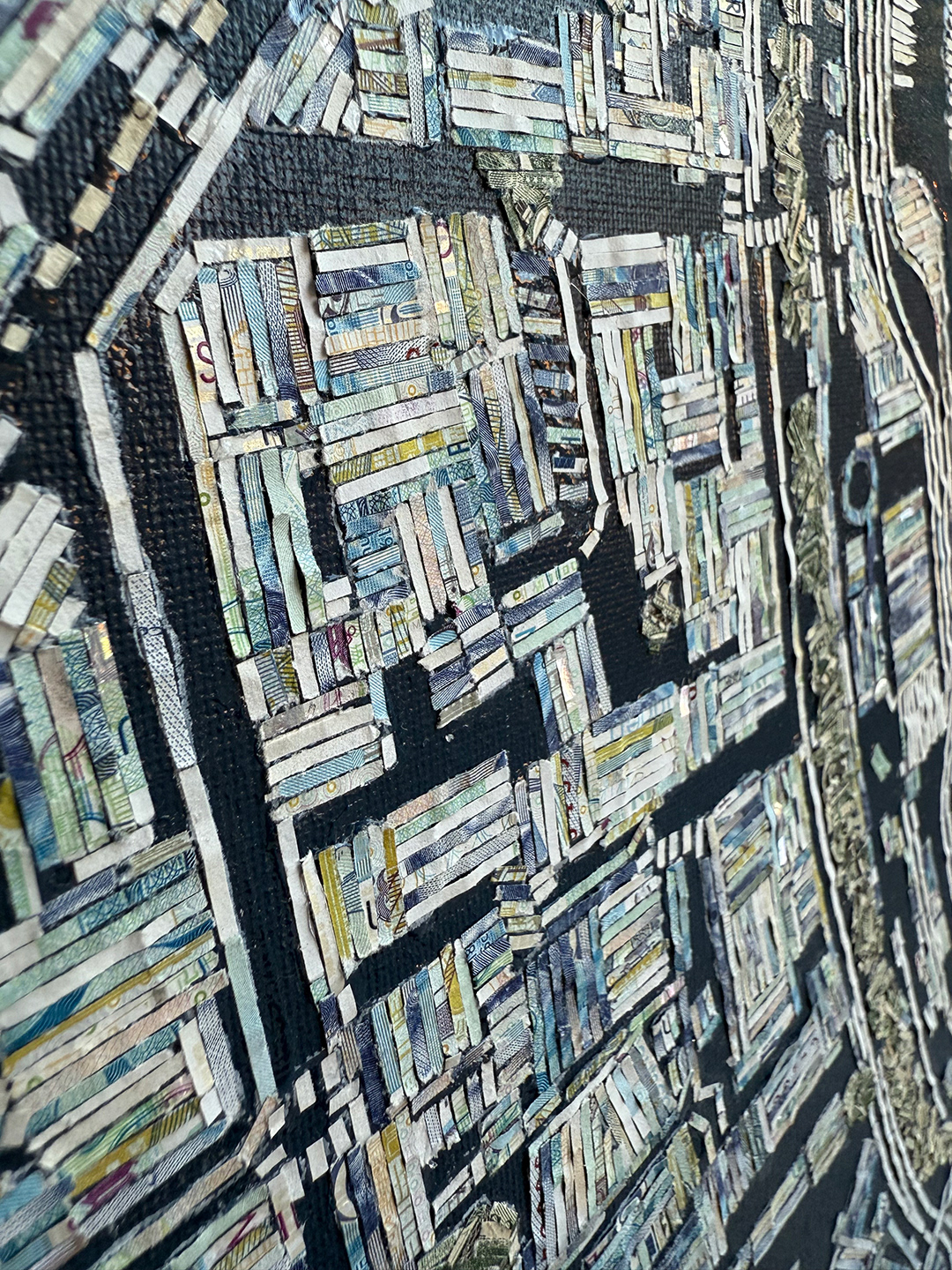
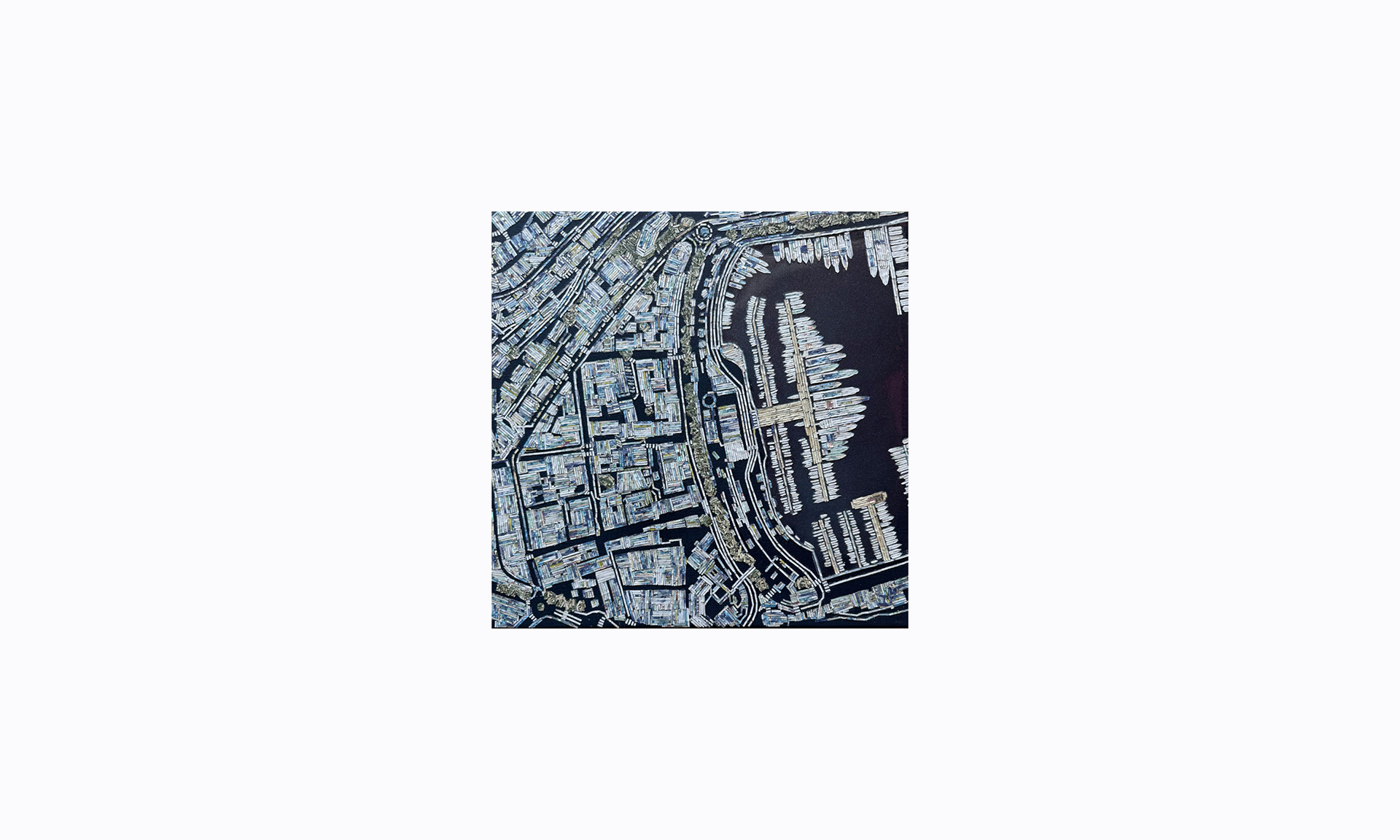
“Currency of Wealth” reconstructs Monaco from shredded currency, transforming one of the world’s most concentrated symbols of luxury and financial privilege into a meditation on ambition, exclusivity, and the hidden architecture of wealth.
Seen from above, the city appears precise, elegant, and almost untouchable — a carefully engineered landscape where land, status, and capital exist in extraordinary concentration. The marinas filled with yachts, the geometric urban density, and the controlled shoreline become visual symbols of a world shaped by access, power, and economic insulation.
Built entirely from fragments of destroyed money, the work exposes the fragile foundation beneath this spectacle of refinement. Every structure is assembled from remnants once tied to labor, risk, sacrifice, and human pursuit. What appears as glamour and permanence from a distance is revealed, up close, as a reconstruction of countless invisible transactions and ambitions.
“Currency of Wealth” explores the tension between admiration and imbalance, questioning the true cost of environments built around concentrated privilege. The piece invites viewers to reflect on how wealth not only shapes cities, but also defines access, aspiration, and the invisible boundaries between those inside these worlds and those looking in from beyond them.

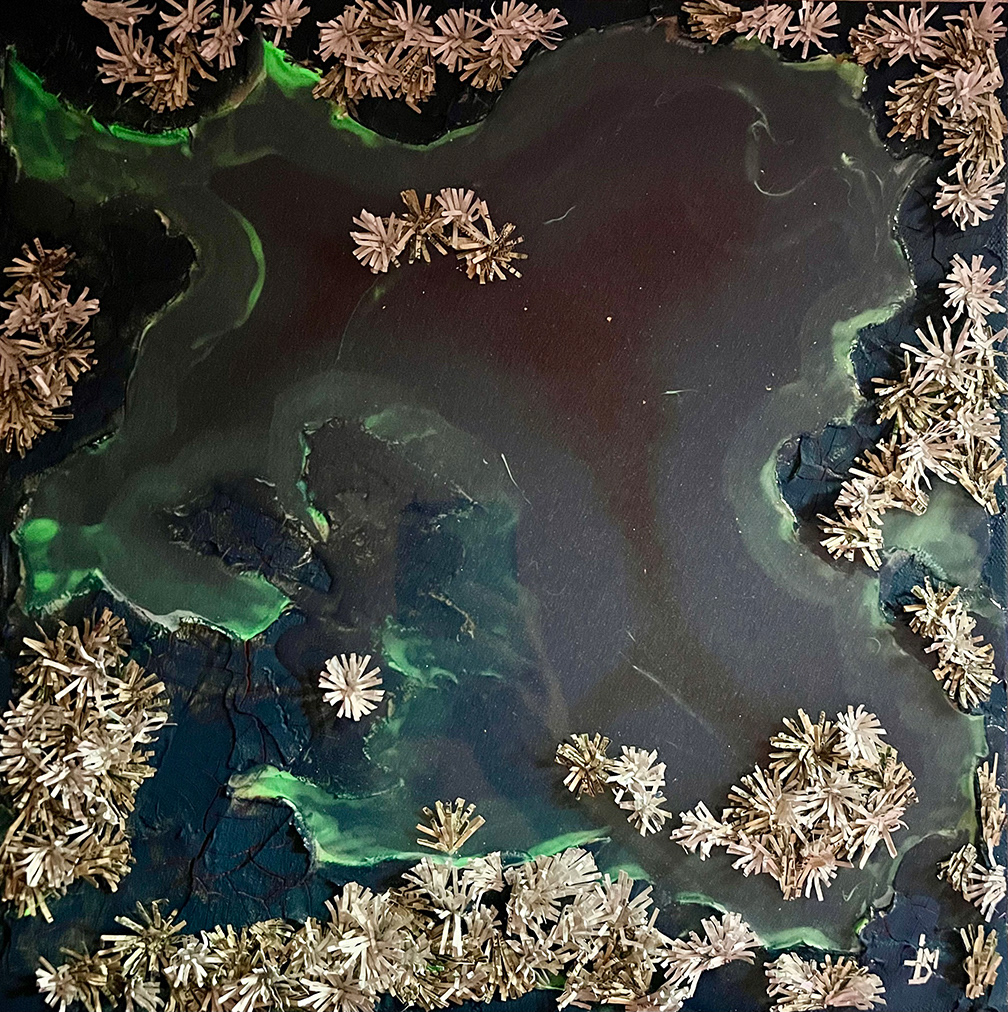

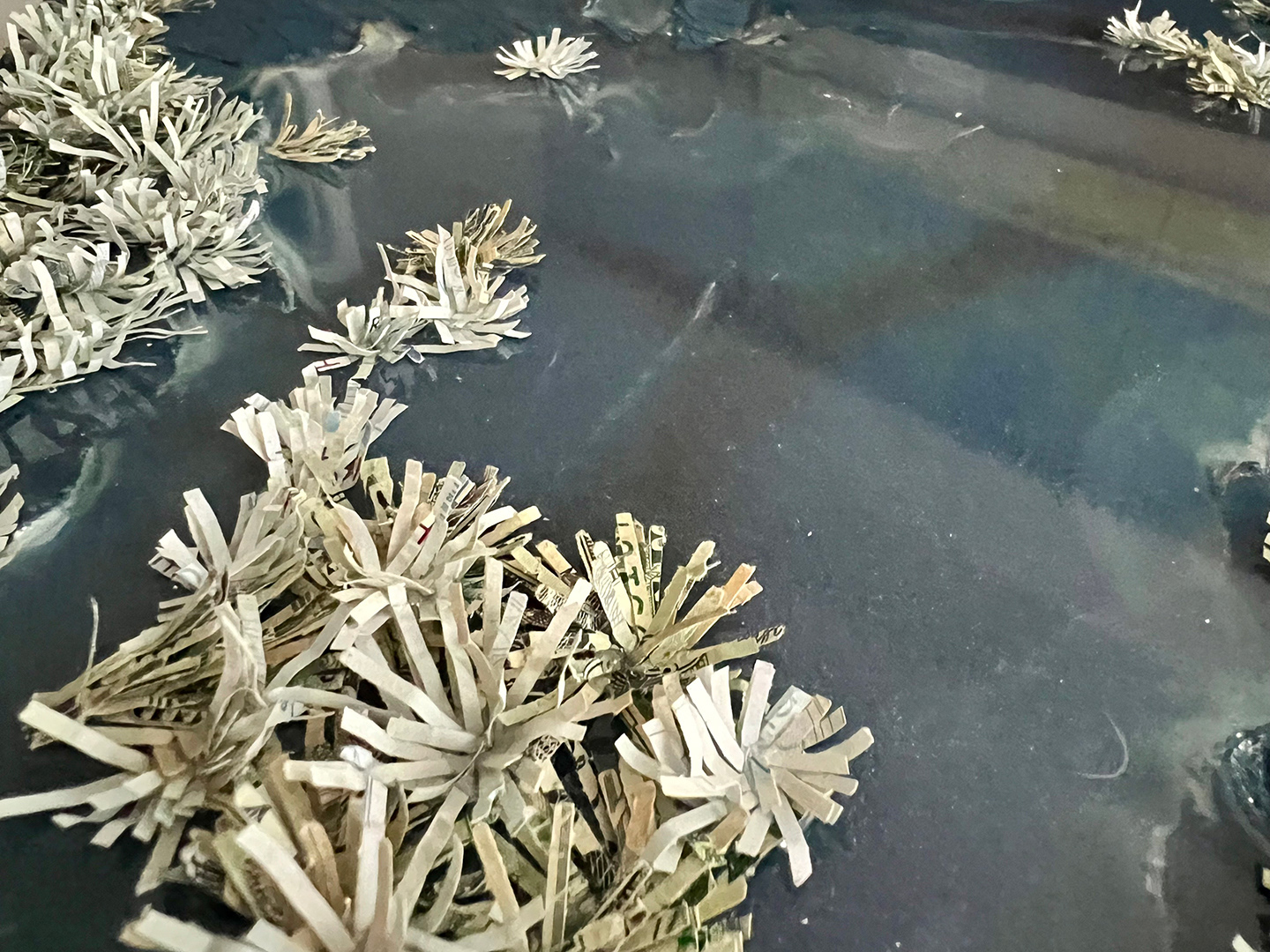
“Dark Tides of Greed” transforms the ocean into a silent warning about the cost of unchecked consumption and economic obsession. Across the dark resin sea, coral-like formations constructed from shredded currency emerge as fragile remnants of a damaged ecosystem, suggesting a world where nature itself has become reshaped by human greed and financial pursuit.
What should symbolize life, balance, and renewal instead appears fractured, bleached, and unstable. The money fragments become both material and metaphor — artificial growth replacing organic survival, wealth expanding while ecosystems collapse. The dark surrounding waters evoke pollution, rising instability, and the growing distance between modern progress and ecological responsibility.
Through beauty and decay, “Dark Tides of Greed” reflects on the hidden consequences of a world driven by extraction, excess, and profit. The work invites viewers to confront the fragile boundary between prosperity and destruction, asking what remains of the natural world when economic ambition begins to consume the systems that sustain life itself.

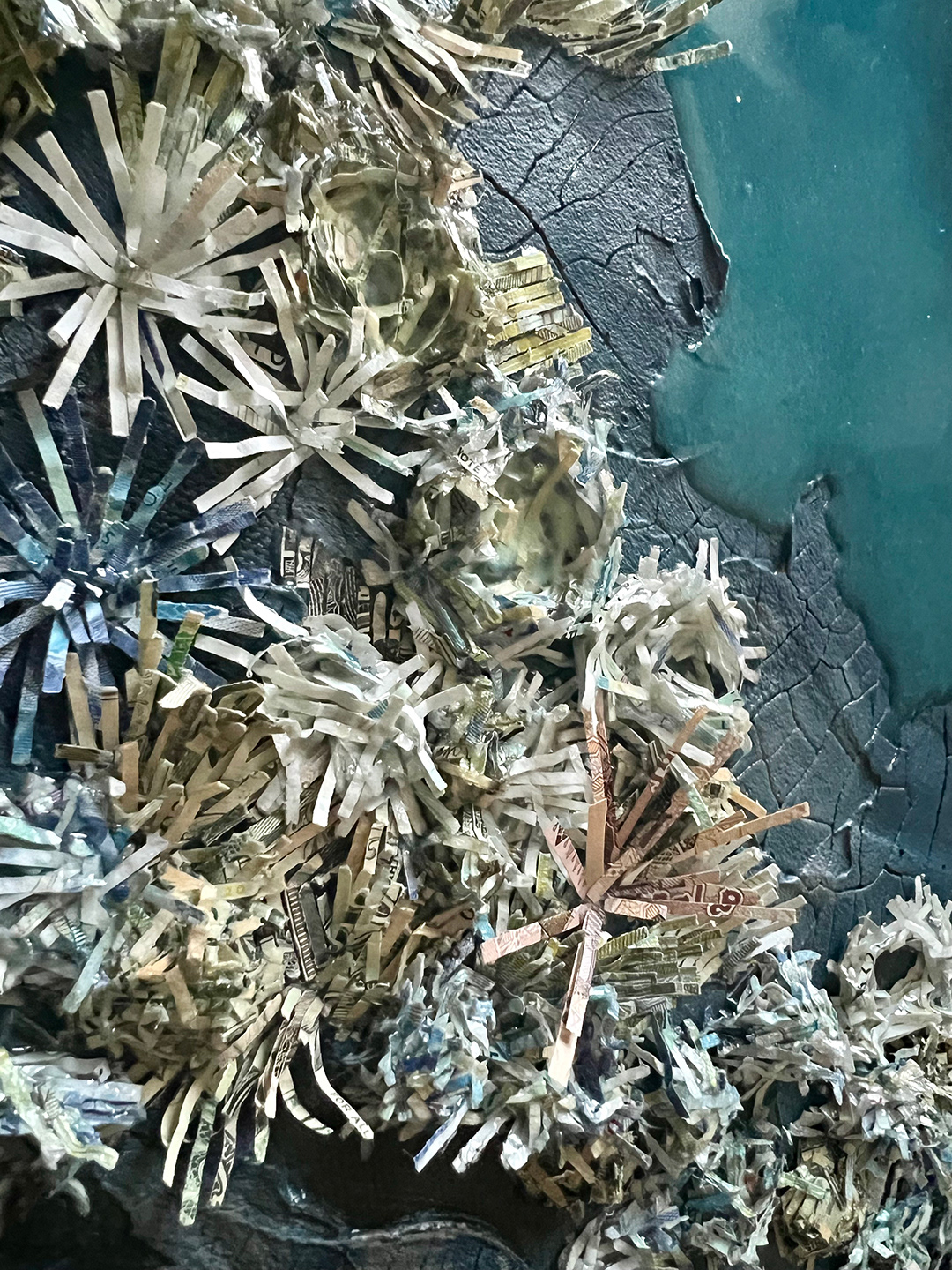
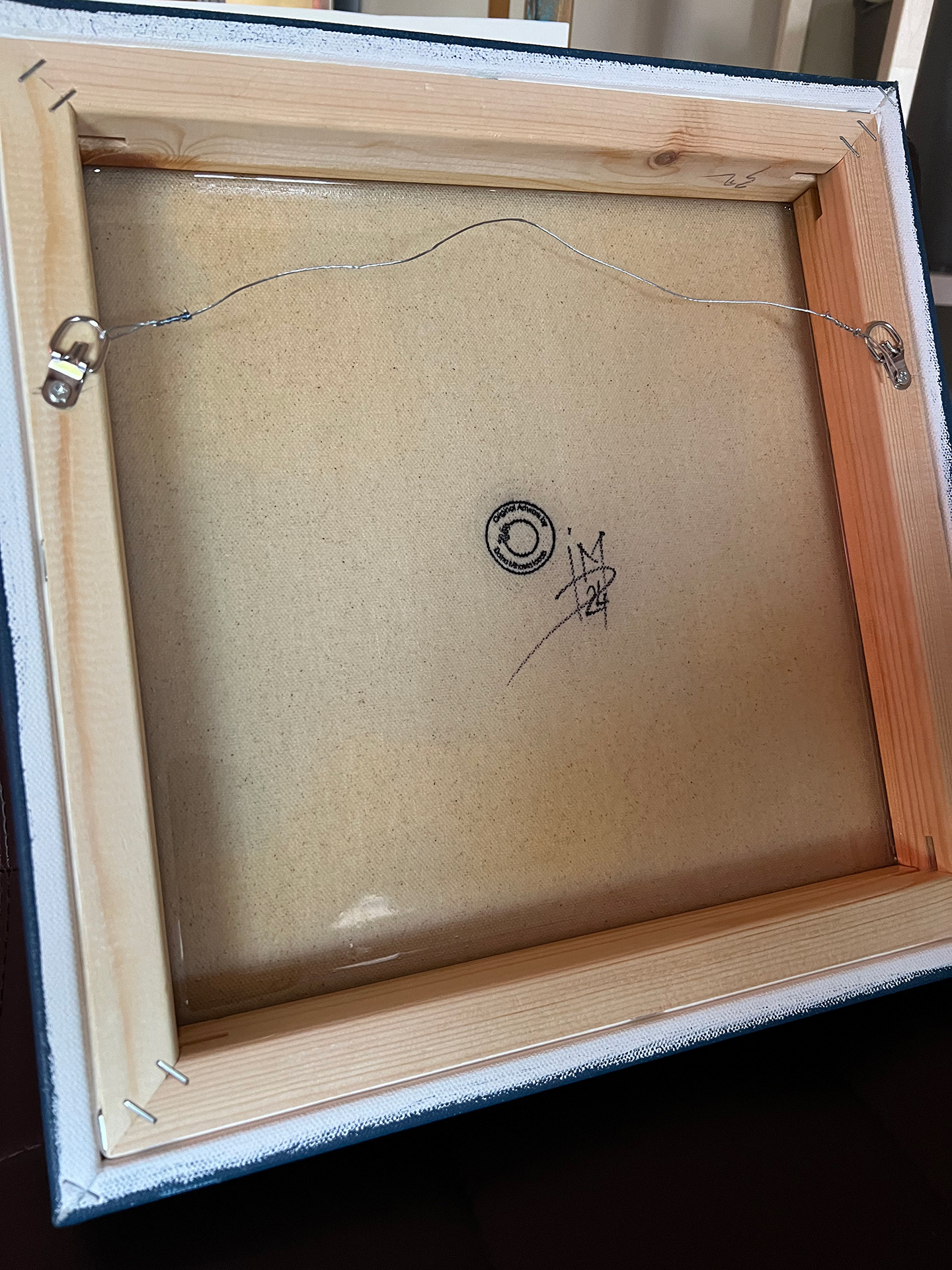

“Ebb and Ruin” reflects on the fragile boundary between natural life and human consumption, portraying a deteriorating marine landscape where beauty and collapse exist simultaneously. The darkened shoreline and coral-like formations constructed from shredded currency suggest an ecosystem slowly eroded by greed, pollution, and the relentless pursuit of economic growth.
The calm central waters create a deceptive sense of stillness, while the surrounding cracked textures and fragmented formations reveal signs of exhaustion and decay beneath the surface. The money fragments become symbols of human ambition embedded directly into environmental destruction — artificial value replacing ecological balance.
Through contrast between serenity and deterioration, “Ebb and Ruin” explores the silent consequences of excess and exploitation. The work invites viewers to consider how the pursuit of wealth can gradually transform living ecosystems into fragile remnants, leaving behind not prosperity, but erosion, imbalance, and loss.

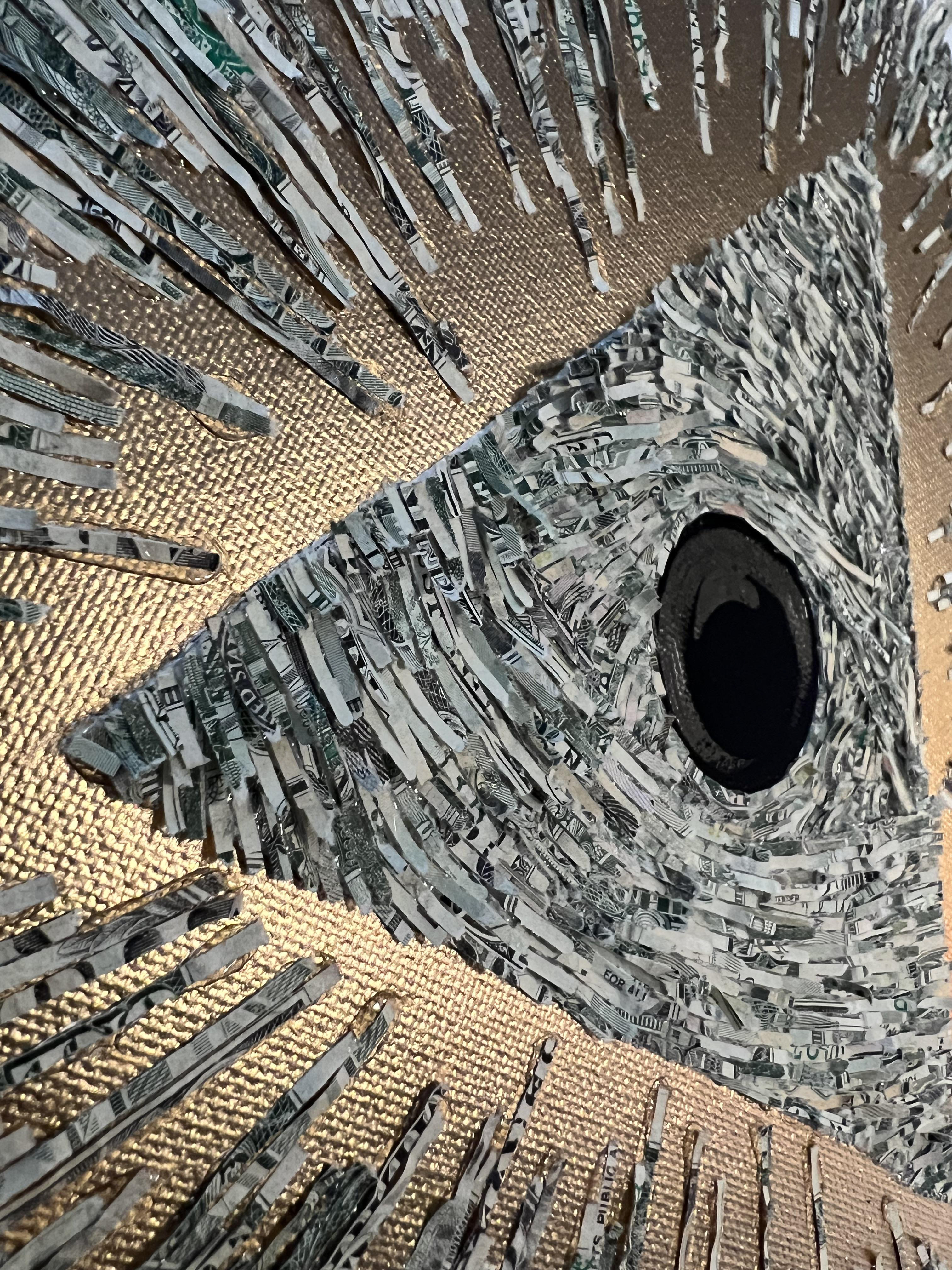

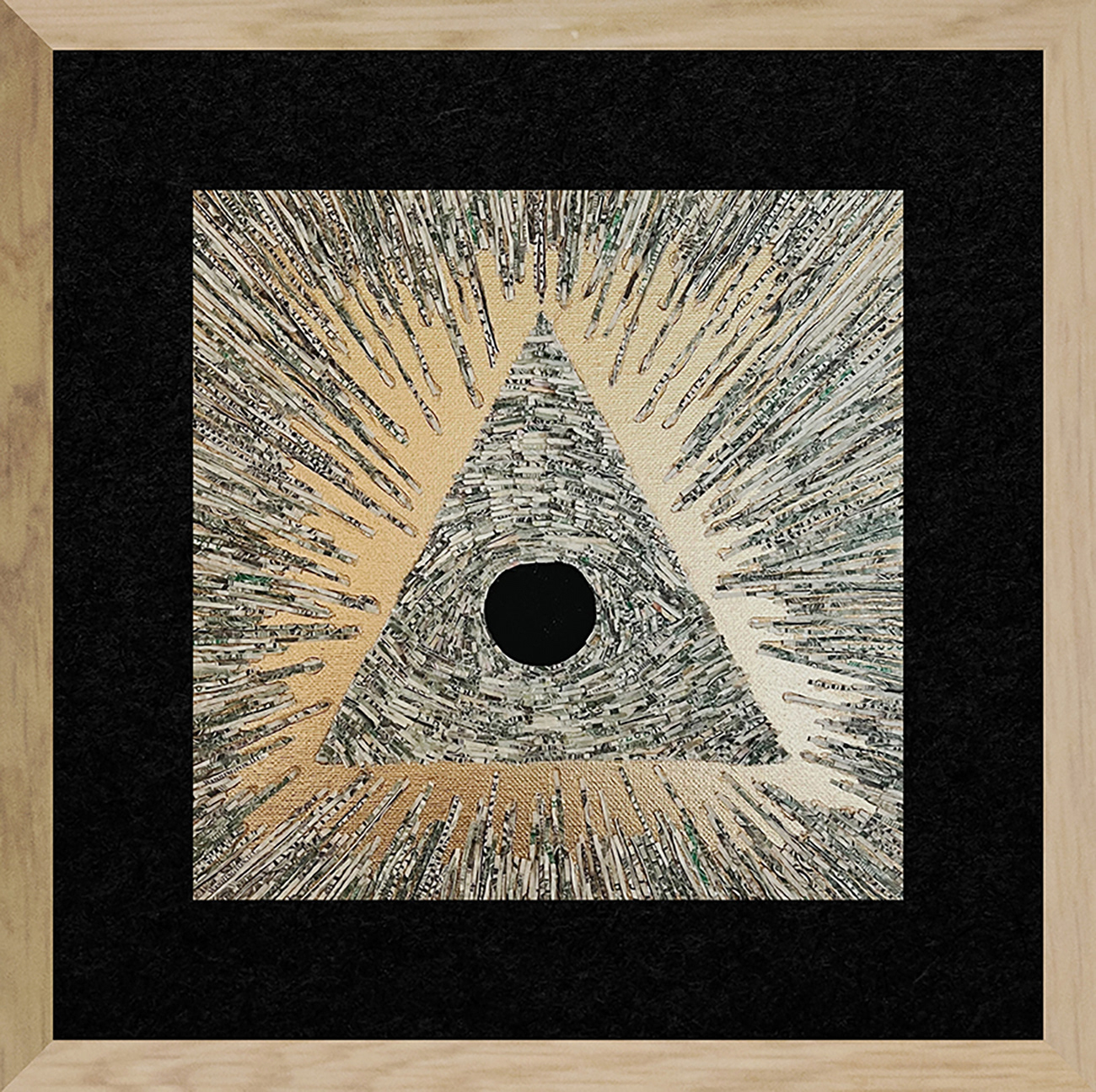
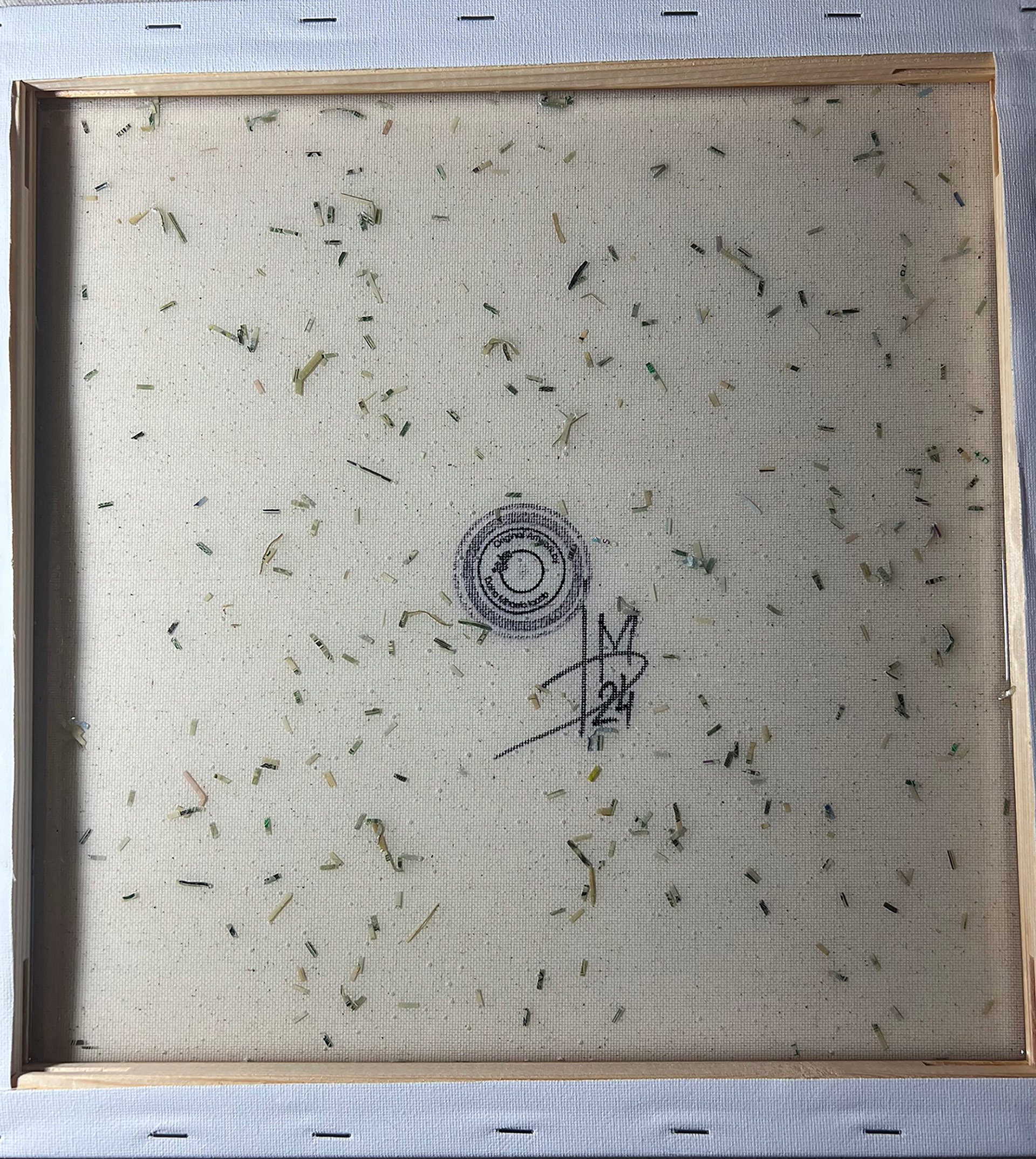
“Divine Capital” explores the intersection of wealth, belief, and power through one of the most enduring symbols of control and influence: the all-seeing eye. Constructed entirely from shredded currency, the work transforms money into a sacred icon, questioning how modern society increasingly treats capital not simply as exchange, but as ideology, authority, and object of devotion.
The radiating fragments surrounding the central form evoke both illumination and surveillance, suggesting a force that is simultaneously worshipped and feared. At the center, the dark void within the eye becomes a symbol of insatiable desire — an emptiness that cannot be fully satisfied despite endless accumulation.
By merging spiritual symbolism with fragmented currency, “Divine Capital” reflects on the quiet transformation of wealth into modern mythology. The work invites viewers to consider how financial systems shape belief, identity, morality, and aspiration, often occupying a place once reserved for faith itself.



“Echoes of Fortune” reconstructs the Las Vegas Strip from shredded currency, transforming one of the world’s most recognizable landscapes of entertainment, excess, and illusion into a meditation on desire, risk, and the psychology of wealth.
Viewed from above, the city becomes a glowing network of calculated attraction — a place engineered to seduce through spectacle, aspiration, and the promise of transformation. Built entirely from fragments of destroyed money, the work collapses the boundary between currency and fantasy, suggesting a world where value itself becomes performance.
Behind the geometry of streets, casinos, and illuminated structures lies a quieter reality: countless hopes, losses, ambitions, addictions, and sacrifices woven into the architecture of the city. What appears glamorous and limitless from a distance reveals itself, up close, as a fragile construction built from fragmented human pursuit.
“Echoes of Fortune” reflects on the emotional economy of modern desire — the endless cycle of risk, reward, illusion, and longing that fuels places where dreams are constantly bought, sold, and reinvented beneath the glow of artificial paradise.


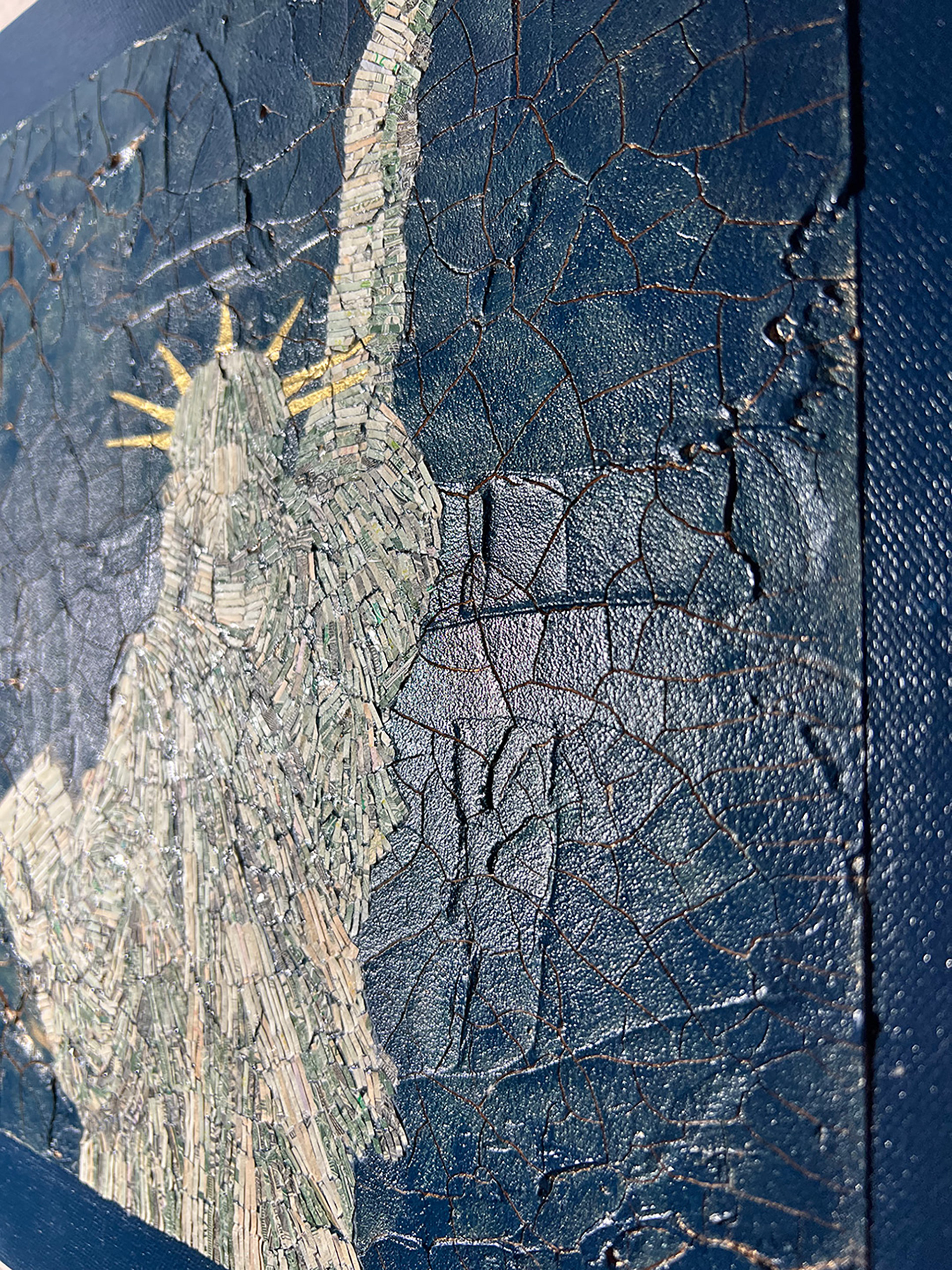

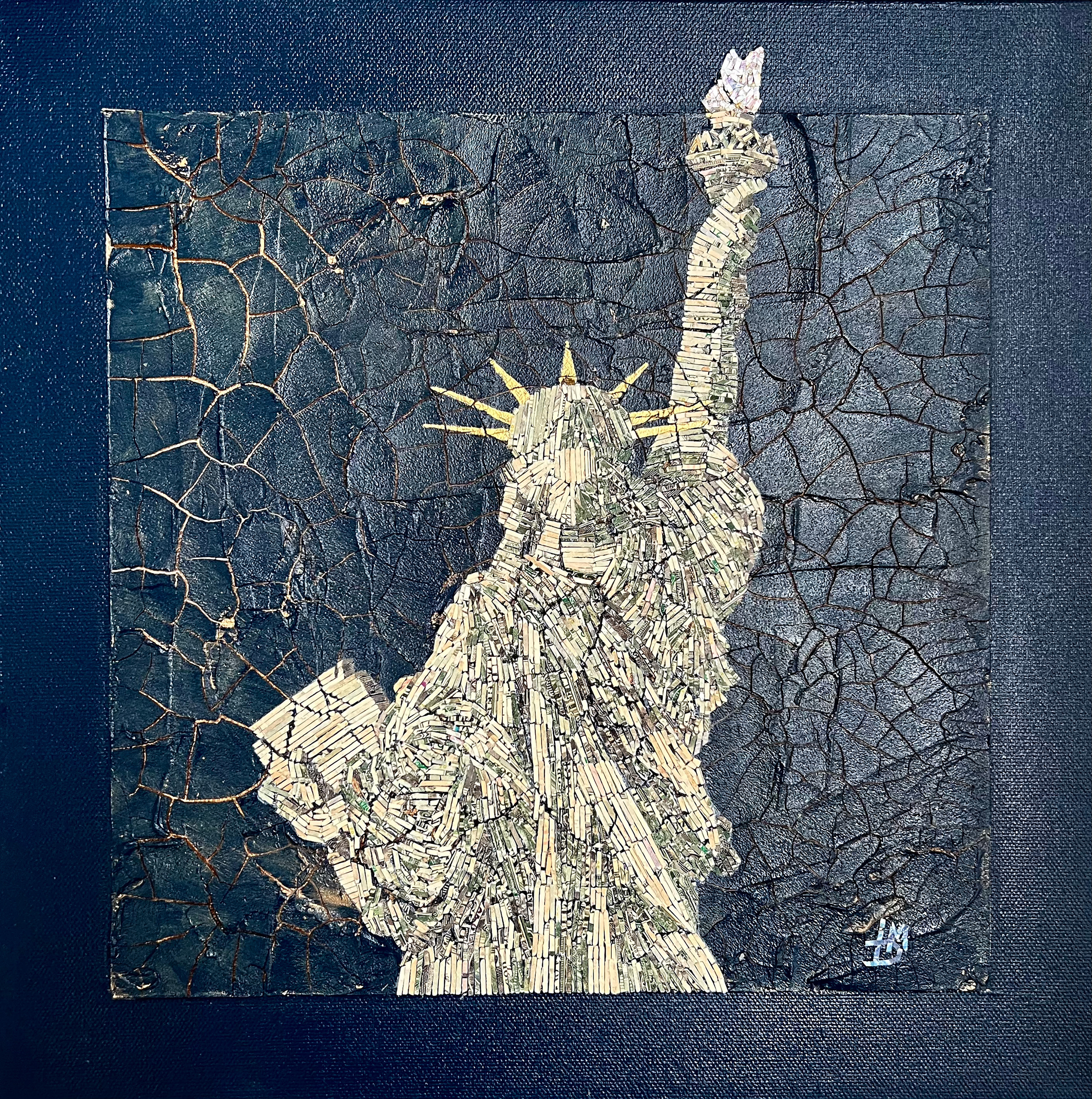
“Echoes of Liberty” presents the Statue of Liberty in one of her most unsettling forms — turned away from the viewer, silent, unreachable, and seemingly withdrawn from the ideals she was created to embody. Constructed entirely from shredded currency, the figure rises before a barren desert of cracked earth and emptiness, transforming one of the world’s greatest symbols of hope into a monument to greed, exhaustion, and moral erosion.
The decision to hide the statue’s face changes everything. Liberty no longer looks toward humanity; she turns her back on it. The absence of direct gaze creates a profound sense of abandonment, as though the promises of freedom, equality, and opportunity have slowly collapsed beneath the weight of wealth worship, unchecked ambition, and economic obsession.
The shredded currency forming her body becomes deeply symbolic — liberty itself rebuilt from fragmented systems of value, labor, sacrifice, and consumption. Money no longer functions merely as material; it becomes the substance from which modern identity and power are constructed. The torch still rises into the darkness, but its meaning has changed. It no longer illuminates salvation alone; it exposes the cost of societies that placed profit above humanity and excess above balance.
The cracked desert surrounding the figure evokes environmental collapse, spiritual emptiness, and the consequences of civilizations that consume faster than they preserve. What was once fertile with promise now appears scorched by greed and isolation. The work suggests that the greatest collapse may not be physical, but ideological — the slow transformation of freedom into transaction, and hope into spectacle.
“Echoes of Liberty” is not simply a portrait of a statue. It is a reflection of a civilization confronting the distance between its ideals and the world it ultimately created.

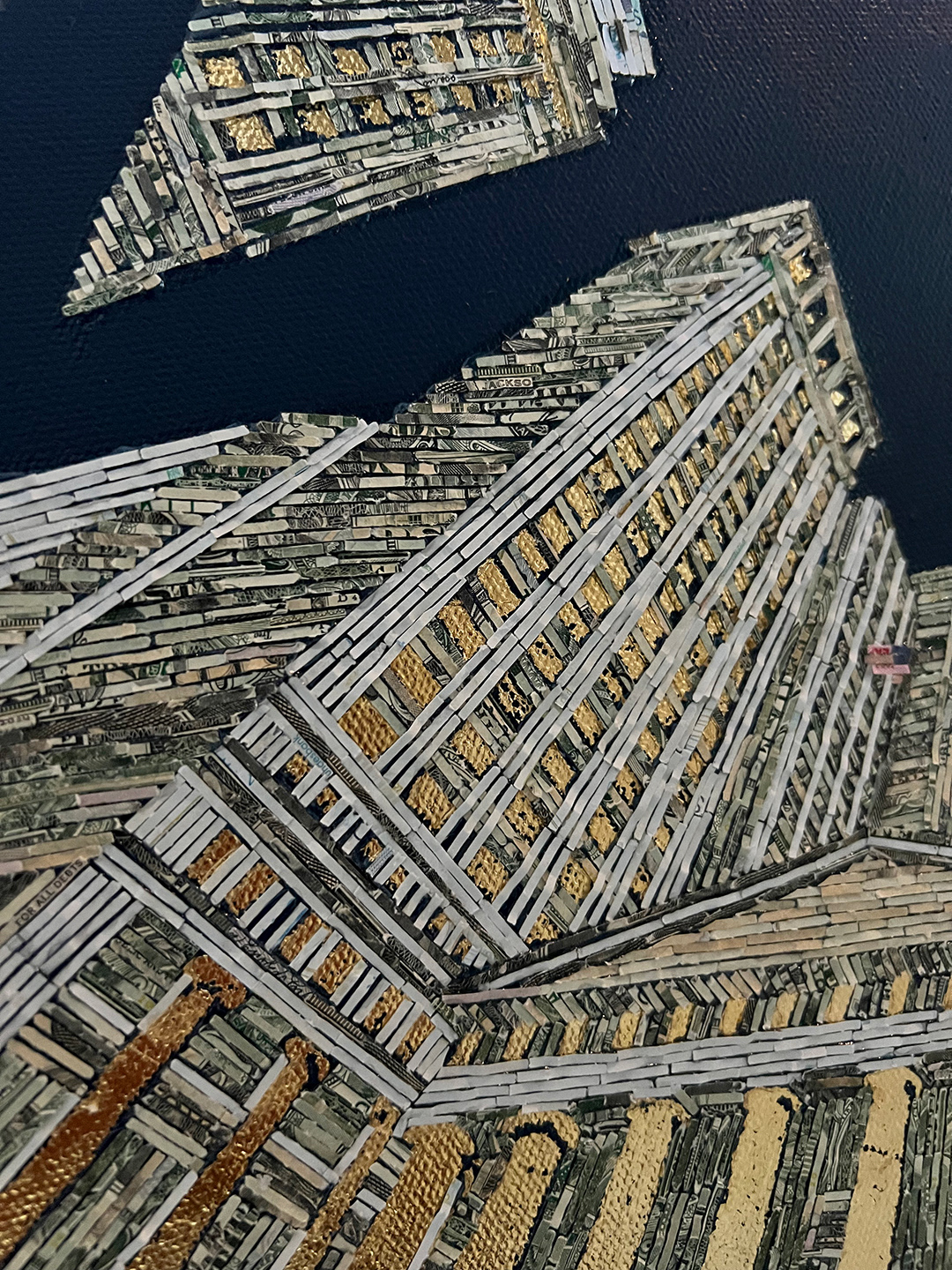
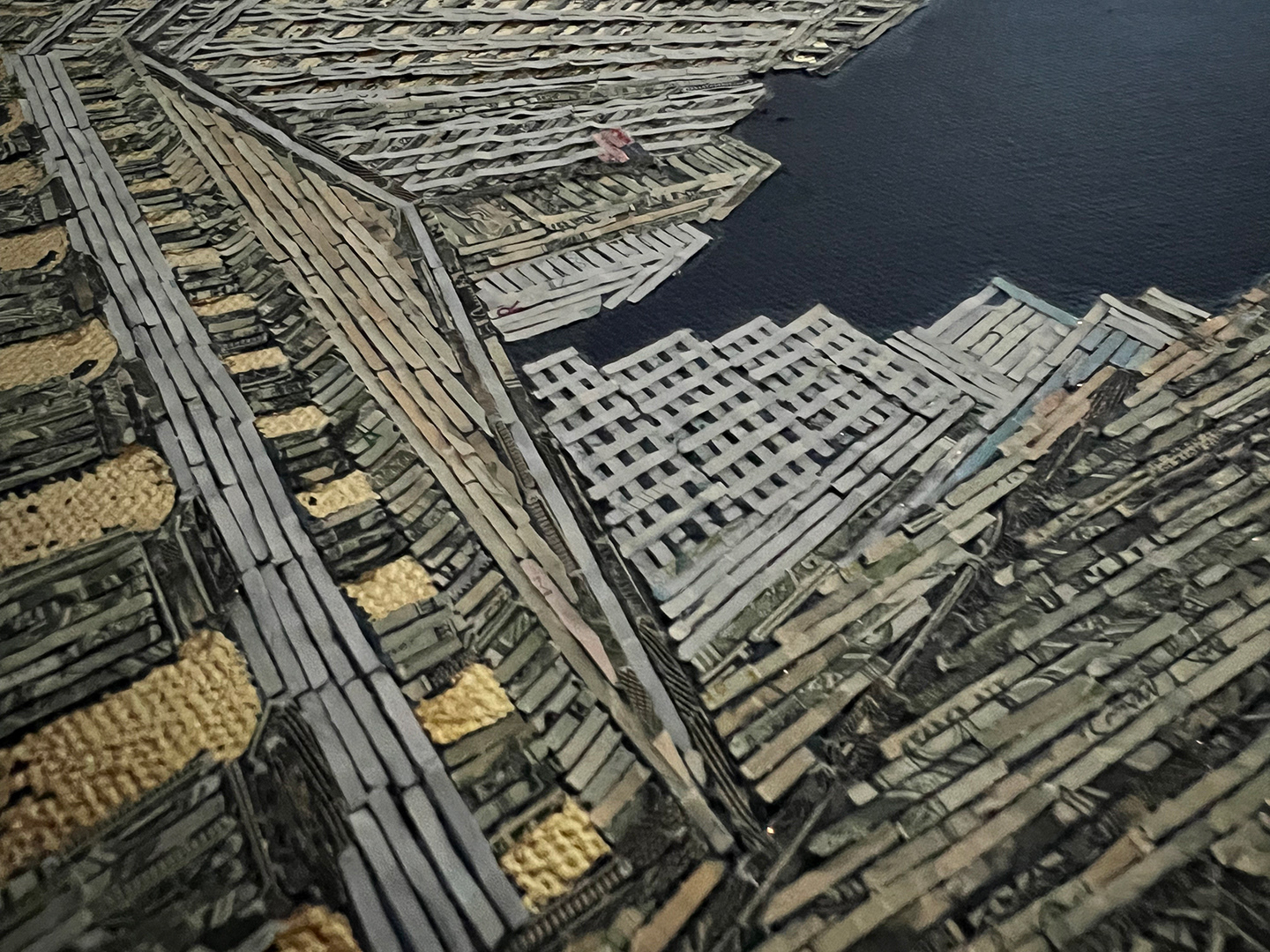

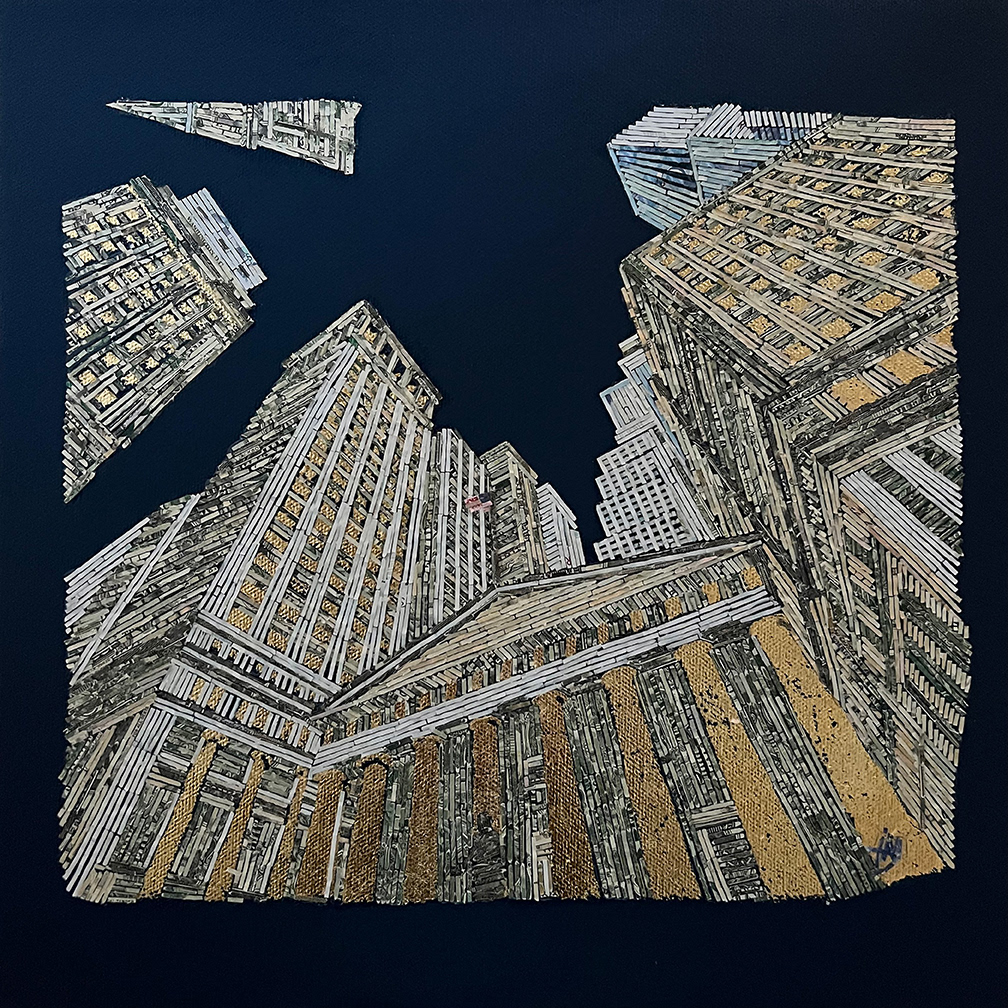
“Facade of Fortune” reimagines Chicago’s financial district through the fragmented architecture of shredded currency, placing the iconic Chicago Board of Trade Building at the center of a towering landscape shaped by ambition, commerce, and economic power.
Built entirely from destroyed money, the structures appear monumental and permanent from a distance, yet fragile upon closer inspection — exposing the instability hidden beneath the image of financial strength and success. The upward perspective places the viewer beneath overwhelming symbols of wealth, competition, and institutional authority, reflecting the psychological weight of systems driven by accumulation and endless growth.
“Facade of Fortune” questions the seductive image of prosperity projected by financial power while revealing the invisible human pressure and sacrifice embedded within its foundations.


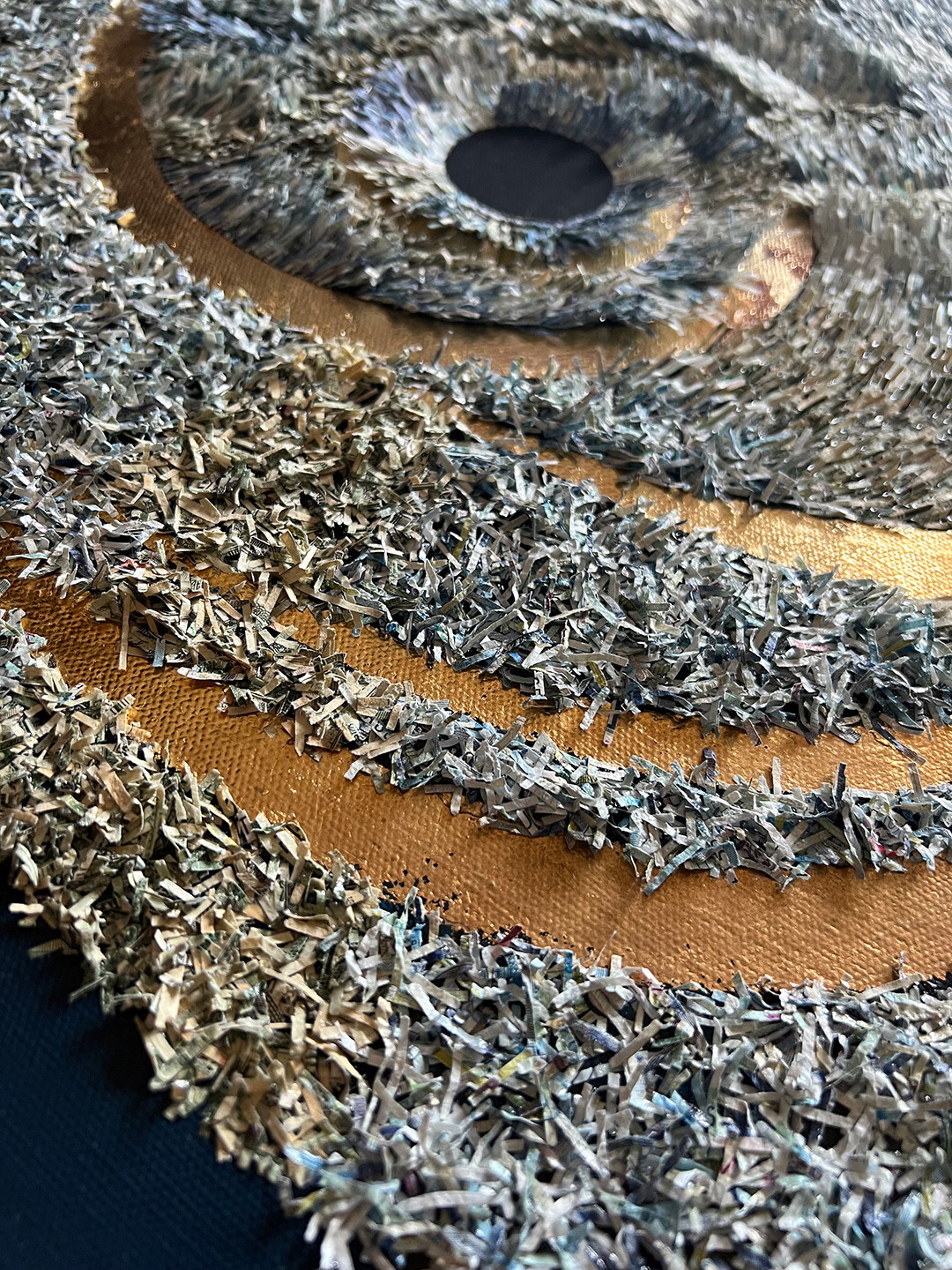
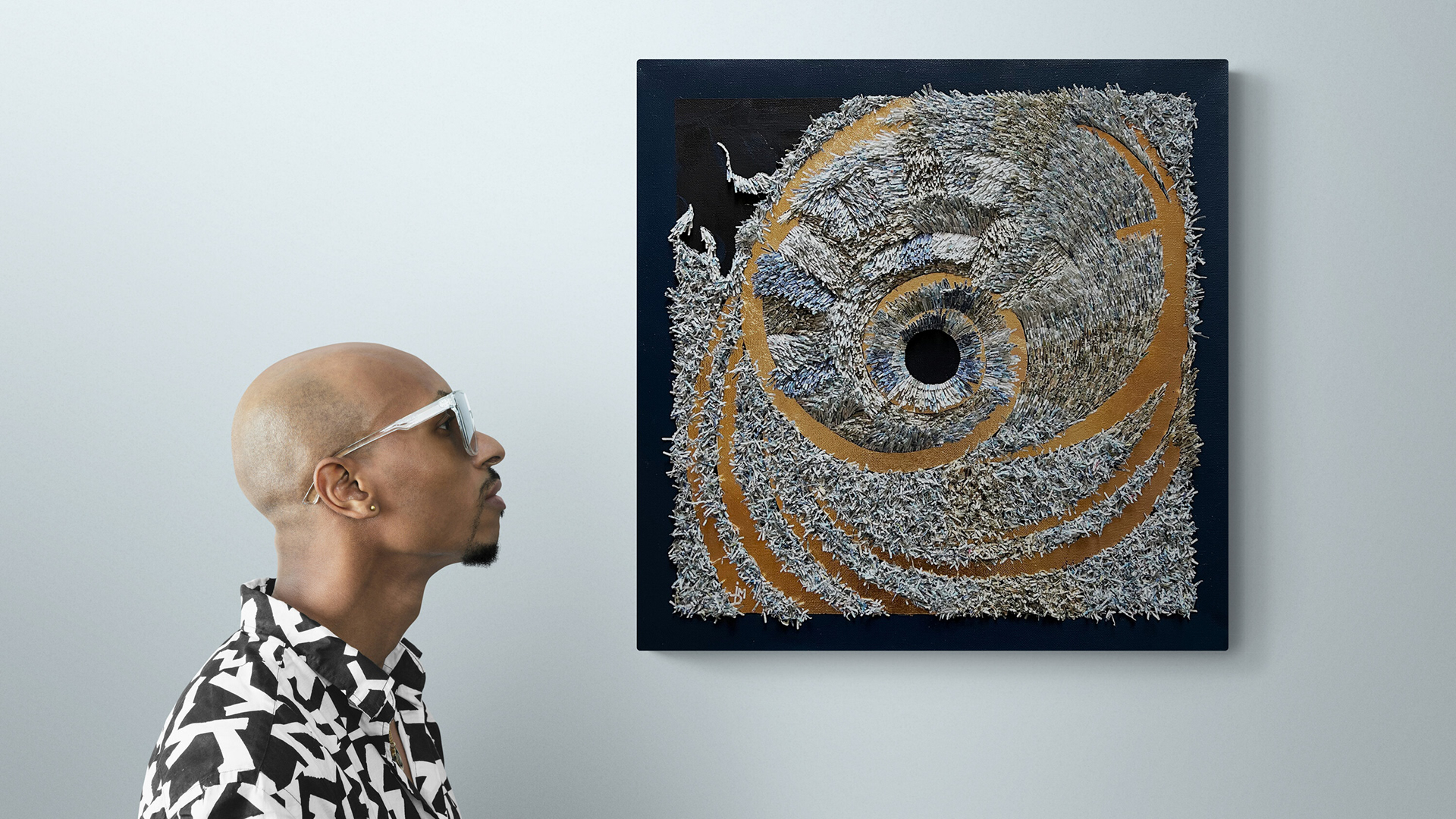
“Fiscal Abyss” transforms the human eye into a vortex of consumption, obsession, and psychological entrapment. Constructed entirely from shredded currency, the work explores how wealth and financial pursuit can gradually reshape perception itself, blurring the boundary between identity, desire, and economic survival.
The eye does not simply observe — it absorbs. The spiraling layers surrounding the dark center evoke an endless cycle of accumulation, ambition, anxiety, and collapse, pulling the viewer inward toward a void that can never truly be filled. What appears hypnotic from a distance becomes deeply unsettling up close, revealing fragments of destroyed money embedded into every surface of perception.
At its core, “Fiscal Abyss” reflects on the psychological power of financial systems and the way modern society increasingly views the world through the lens of value, profit, and scarcity. The work asks whether the greatest abyss is economic collapse itself — or the moment human vision becomes consumed entirely by the pursuit of more.

Fortune Metropolis
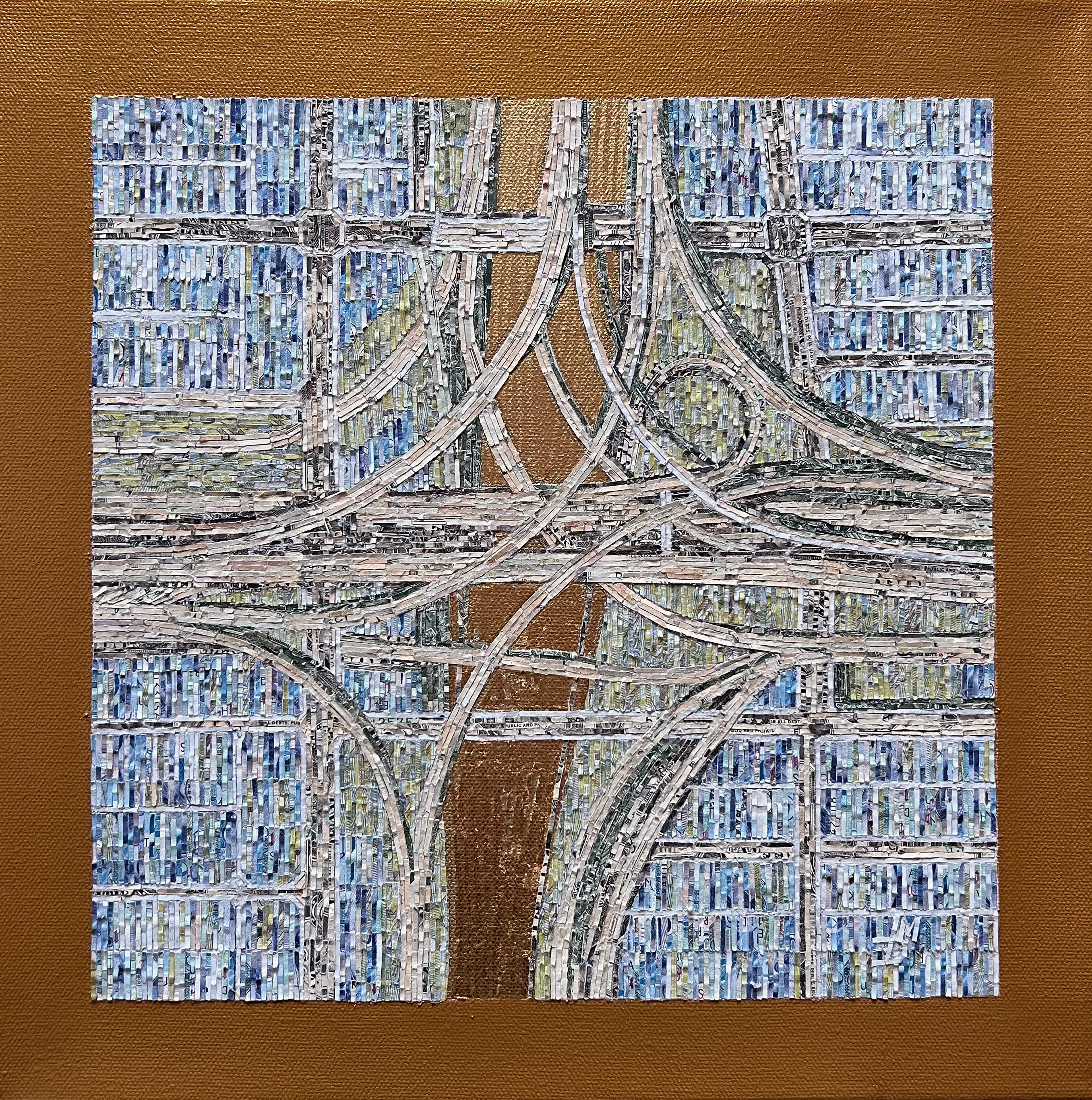
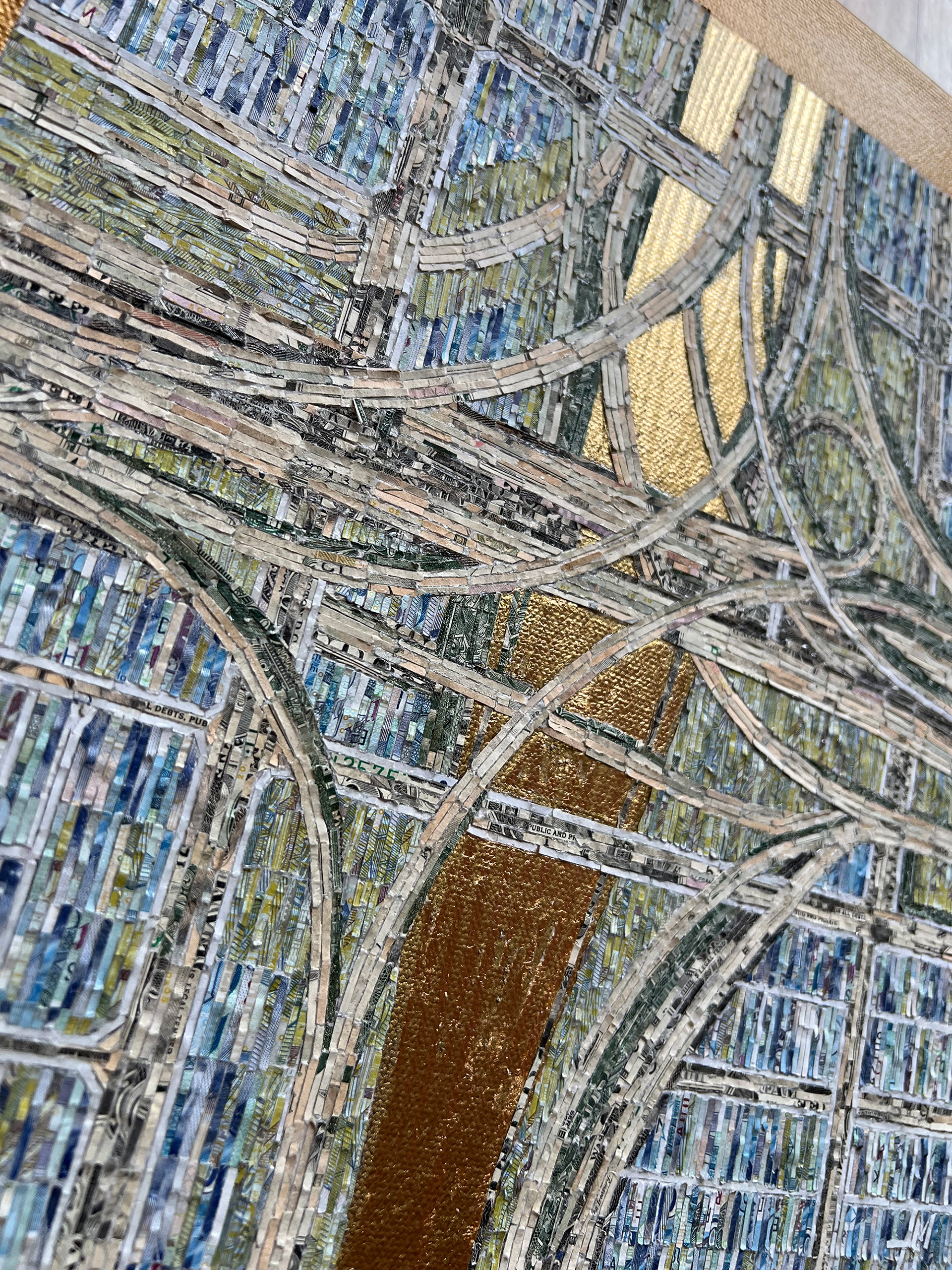
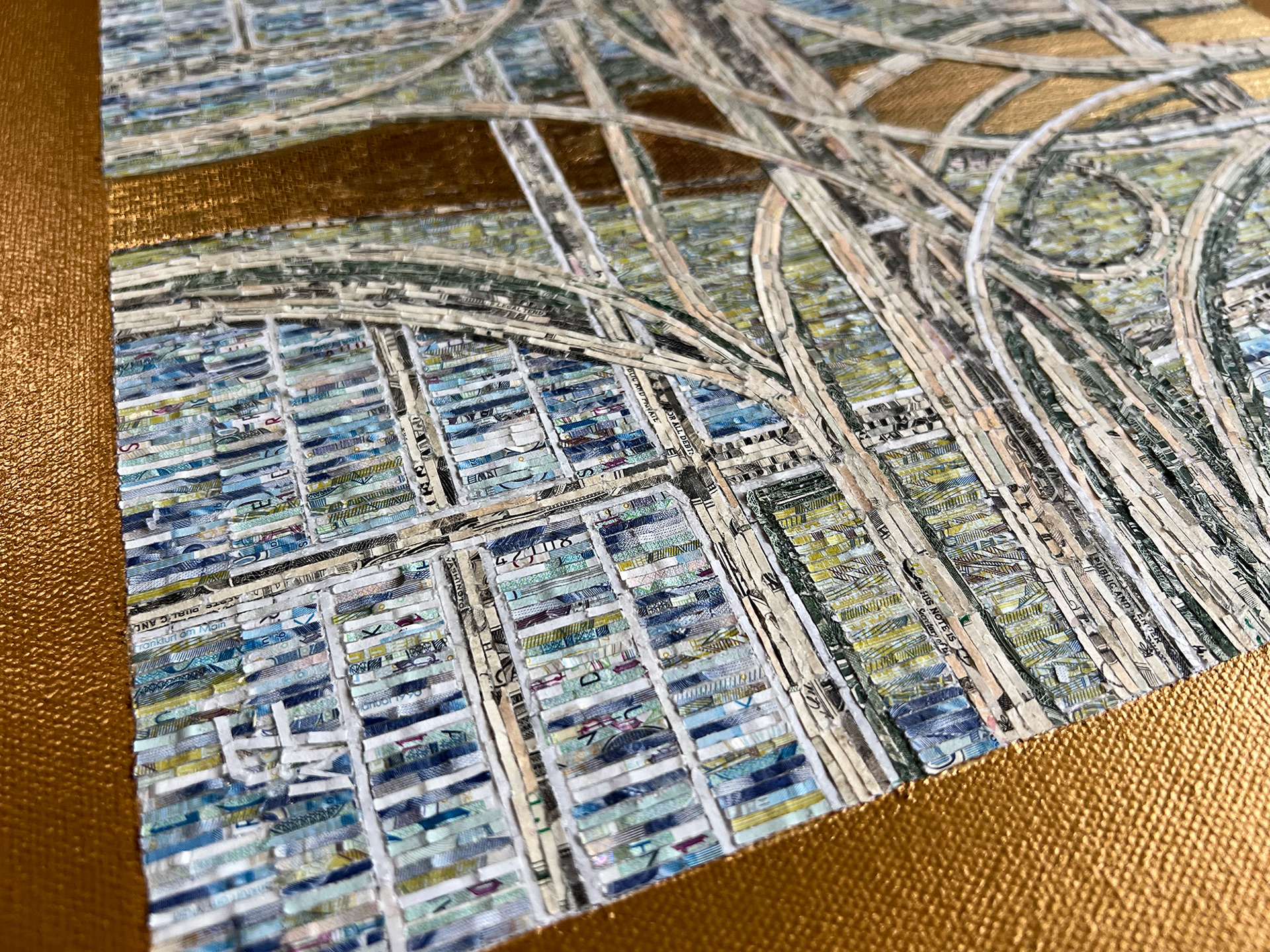
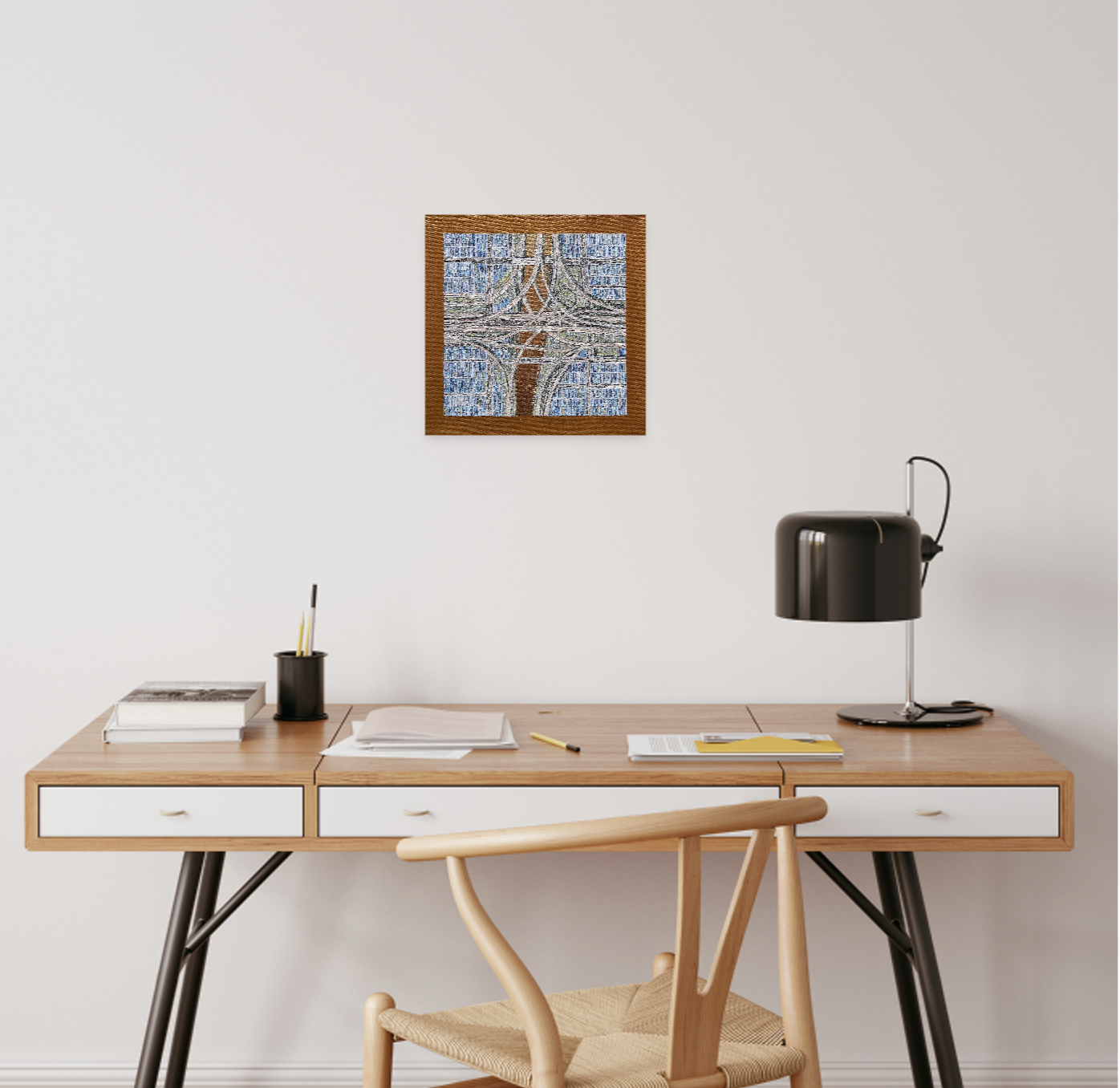
“Golden Labyrinth” reimagines the vast highway system of Los Angeles, California, as a sprawling maze of ambition, movement, and economic pursuit. Constructed entirely from shredded currency, the intersecting freeways and dense urban structures transform the city into a symbol of modern acceleration — a landscape where progress, productivity, and wealth have become inseparable from daily existence.
The intricate network of highways evokes both connection and entrapment. Every route appears to lead somewhere, yet endlessly overlaps and loops back into itself, reflecting the psychological condition of contemporary society: constantly moving, constantly pursuing, yet rarely arriving. The golden spaces cutting through the composition suggest the seductive promise of prosperity hidden within the maze, while the fragmented currency exposes the fragile foundation beneath it.
Viewed from above, Los Angeles becomes less a city and more a mechanism powered by consumption, labor, ambition, and financial dependency. “Golden Labyrinth” reflects on the complexity of systems that promise freedom and opportunity while quietly absorbing the lives moving through them, questioning whether modern civilization has created pathways toward fulfillment — or simply more elaborate forms of confinement.
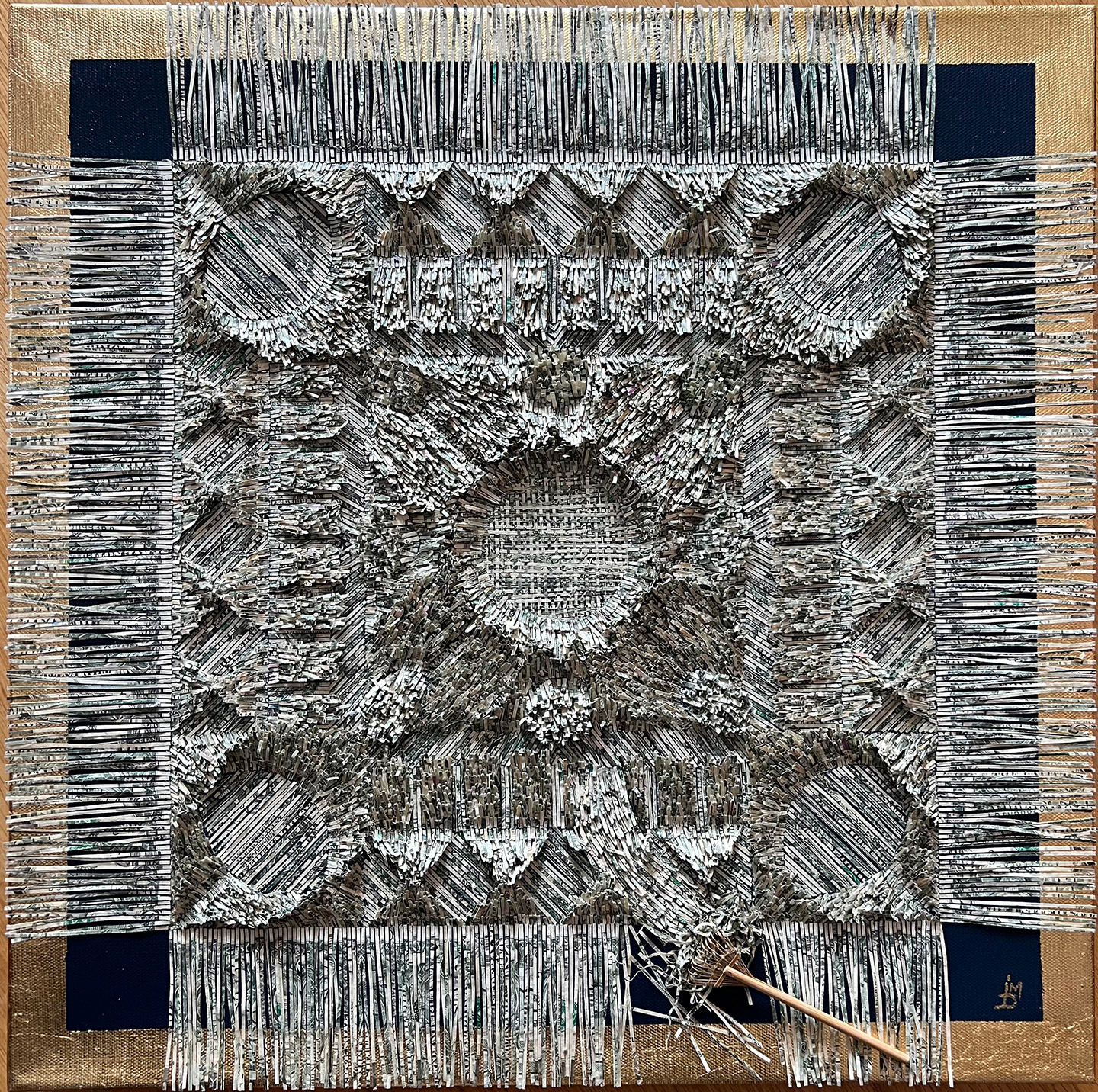
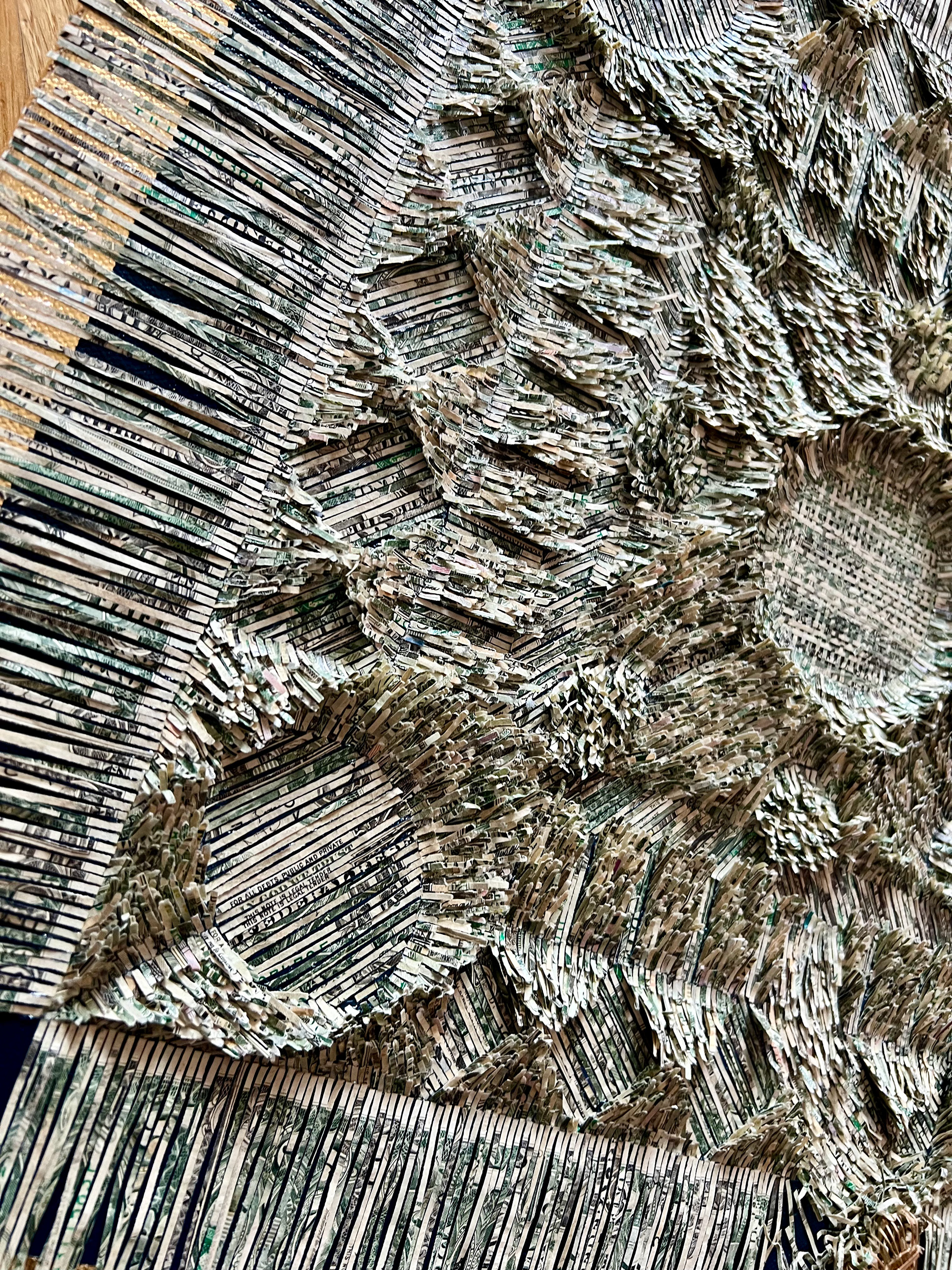
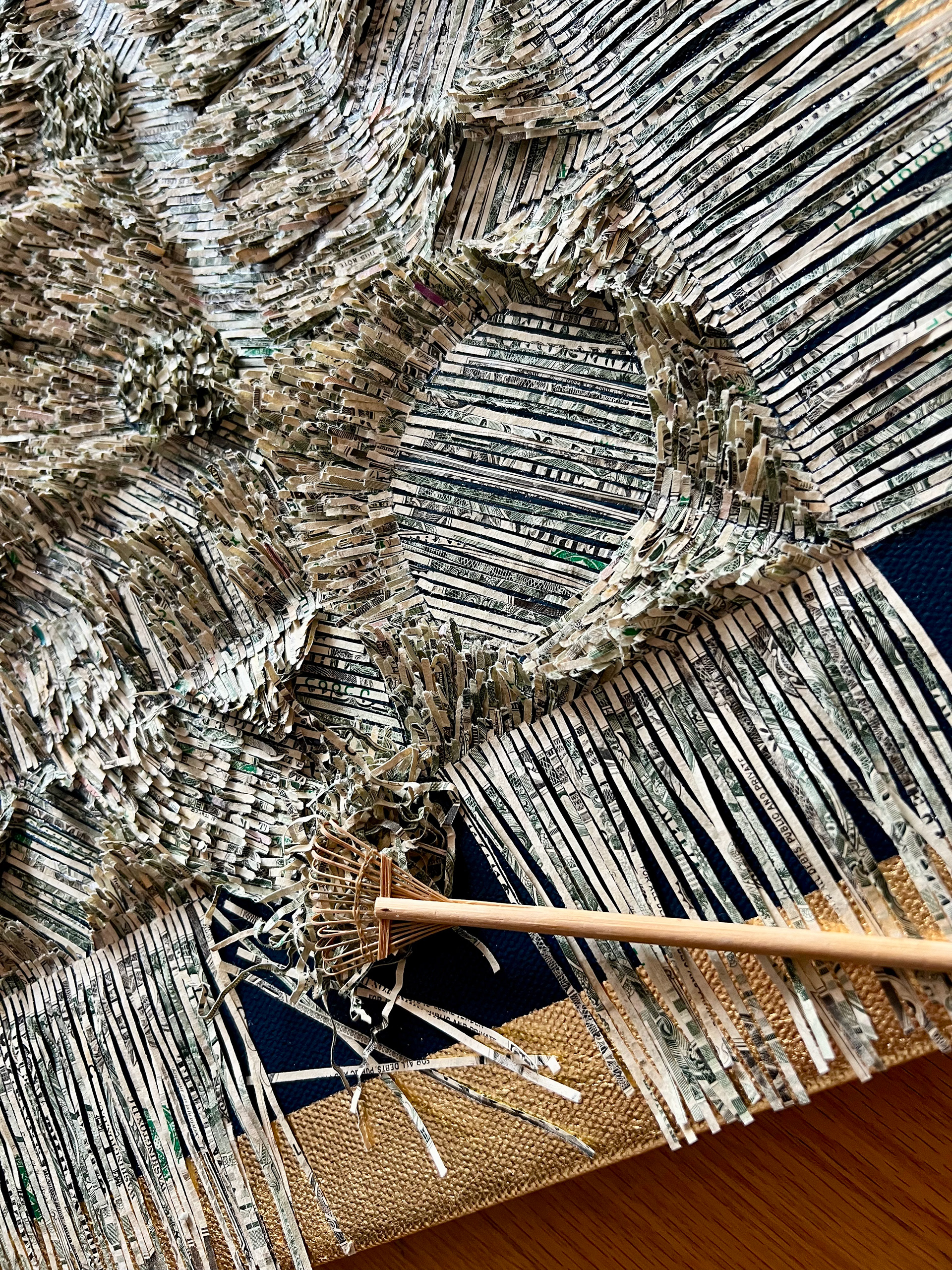
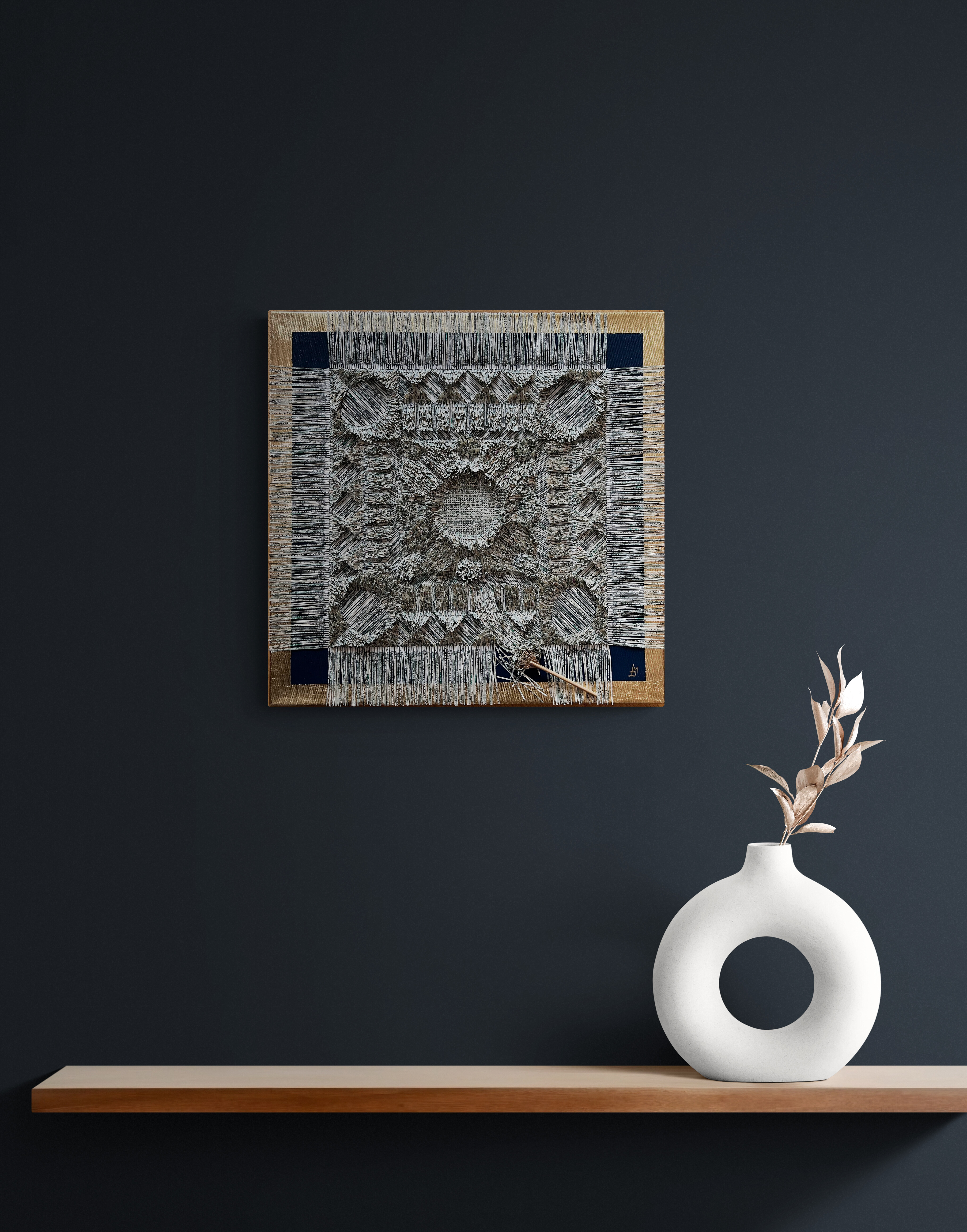
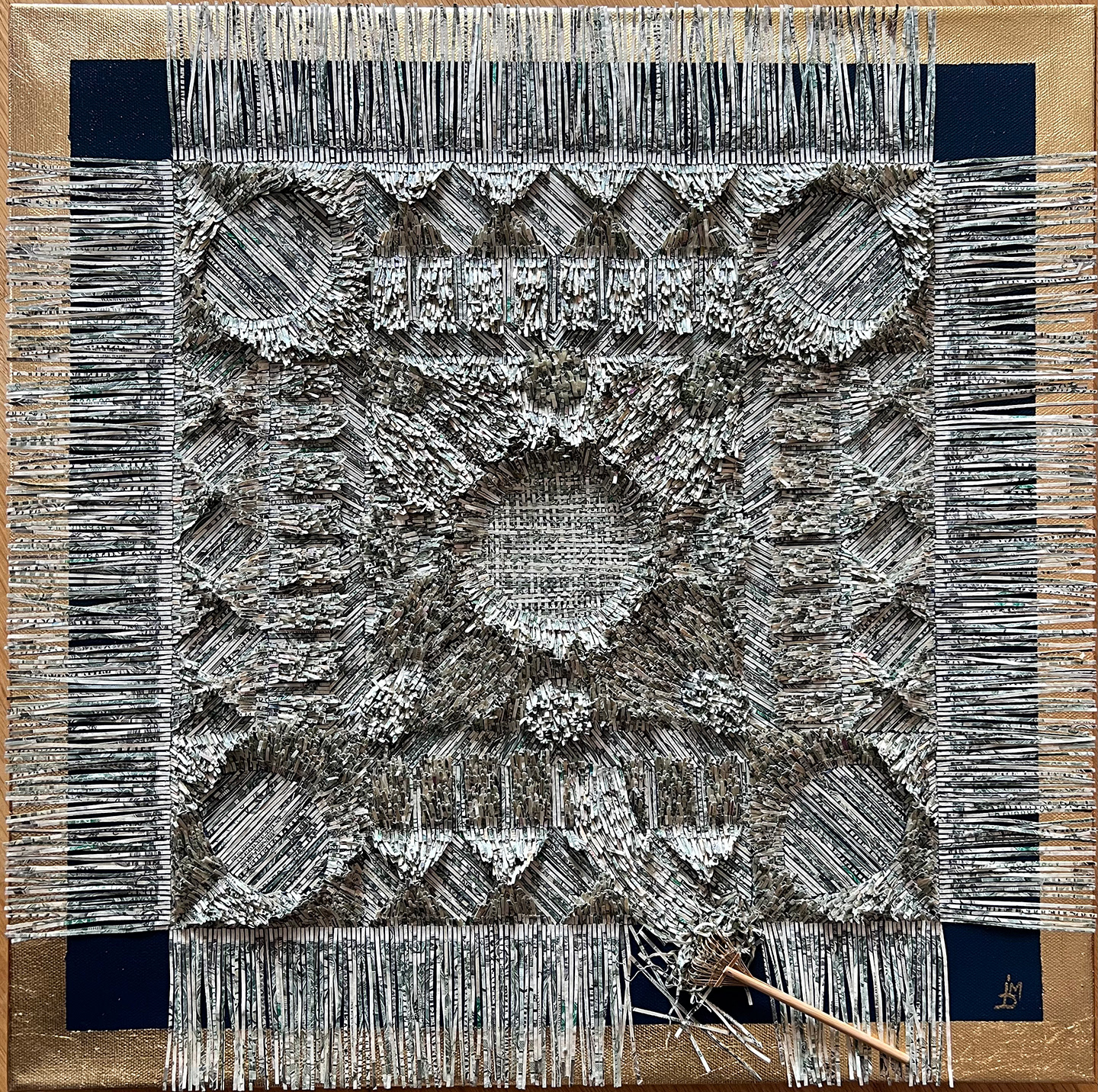
“Greed” transforms shredded currency into a dense, almost suffocating structure of repetition, accumulation, and consumption. The composition resembles an expanding mechanism or ritualistic architecture built entirely from fragments of value, suggesting a force that continuously feeds itself without limit.
The symmetrical forms create a hypnotic sense of order, yet the deeper the viewer looks, the more unstable and overwhelming the structure becomes. Layers of currency collapse into one another, forming a visual cycle of acquisition and excess where abundance no longer produces fulfillment, only deeper hunger. At the center, the darkened core functions like a void — a symbolic emptiness hidden beneath endless accumulation.
The fork emerging at the bottom of the work becomes one of its most critical symbols. Traditionally associated with nourishment and survival, here it is transformed into a tool of endless consumption, reaching directly into the structure itself as if feeding from the machinery of wealth and desire. It suggests an appetite that can no longer distinguish between necessity and excess — a civilization consuming beyond balance, endlessly extracting from the very systems sustaining it.
The suspended and unraveling fragments along the edges reinforce the idea of structures slowly collapsing under the weight of obsession. Despite the precision of the construction, the work carries a growing sense of instability and erosion, reflecting how greed expands beyond material desire into psychological, moral, and societal decay.
“Greed” explores the paradox of modern wealth: the more that is accumulated, the greater the emptiness it attempts to conceal. The work invites viewers to confront the fragile boundary between prosperity and self-destruction, questioning how much can be consumed before the structure itself begins to unravel.


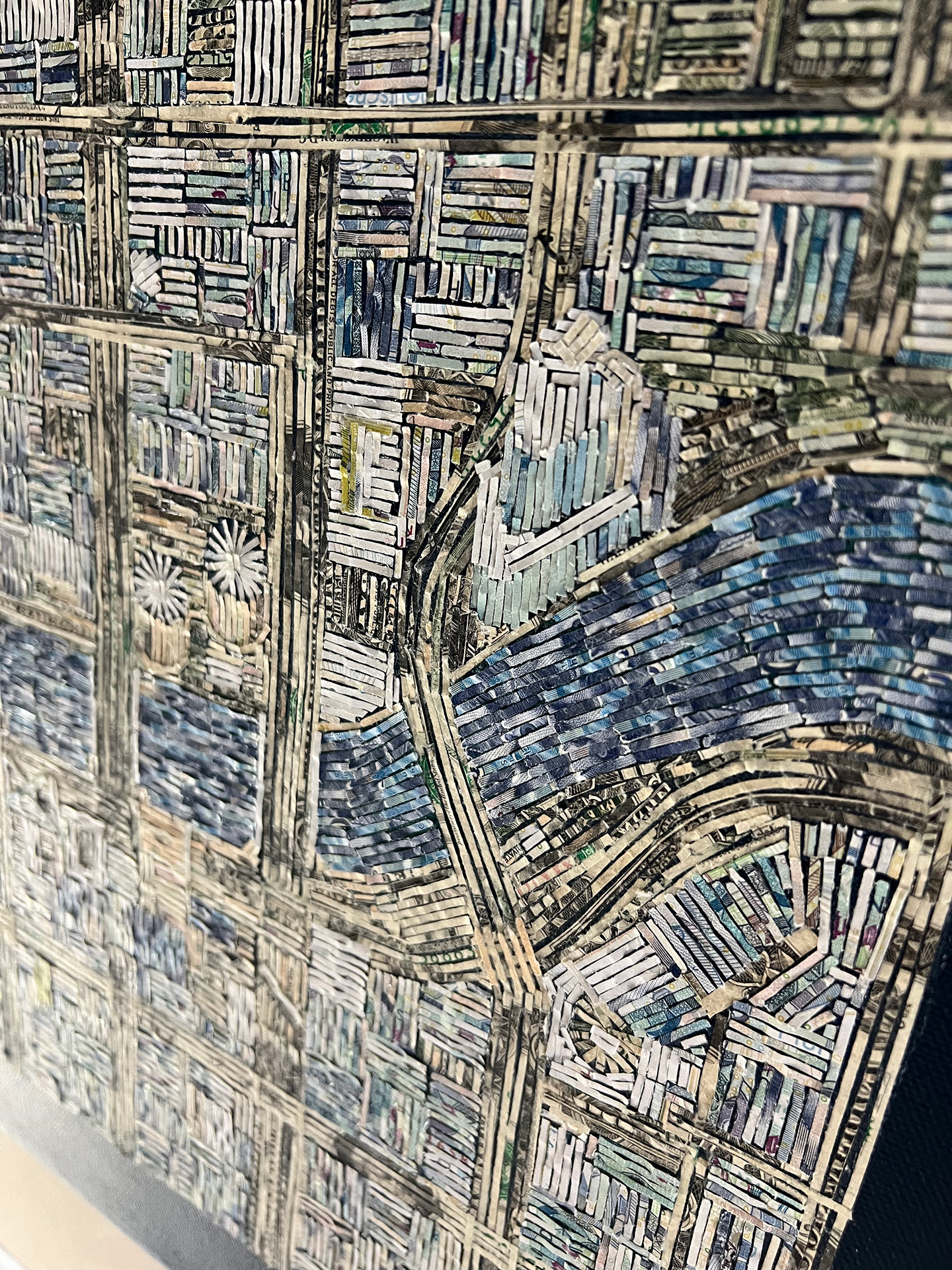

“Luminous Wealth” reimagines Chicago as a glowing network of financial power, ambition, and hidden structures operating beneath the surface of modern life. Constructed from shredded currency, the city appears ordered and rational in daylight, yet in darkness its phosphorescent traces emerge like an invisible system revealing itself — a ghost architecture of wealth, influence, and control.
The illuminated pathways suggest that economic systems never truly sleep. Even when unseen, they continue to shape movement, opportunity, hierarchy, and human behavior. The glowing lines resemble energy flowing through a living organism, transforming the city into a pulsating structure powered not only by infrastructure, but by capital itself.
The contrast between the visible composition and its hidden luminescent layer becomes central to the meaning of the work. What appears stable and familiar by day reveals another reality in darkness — one where financial systems, institutional networks, and invisible forces quietly govern the modern world from beneath its surface.
“Luminous Wealth” reflects on the unseen mechanisms sustaining urban power and prosperity, questioning how much of modern civilization is built not on what we openly see, but on the hidden systems silently illuminating and directing our lives.
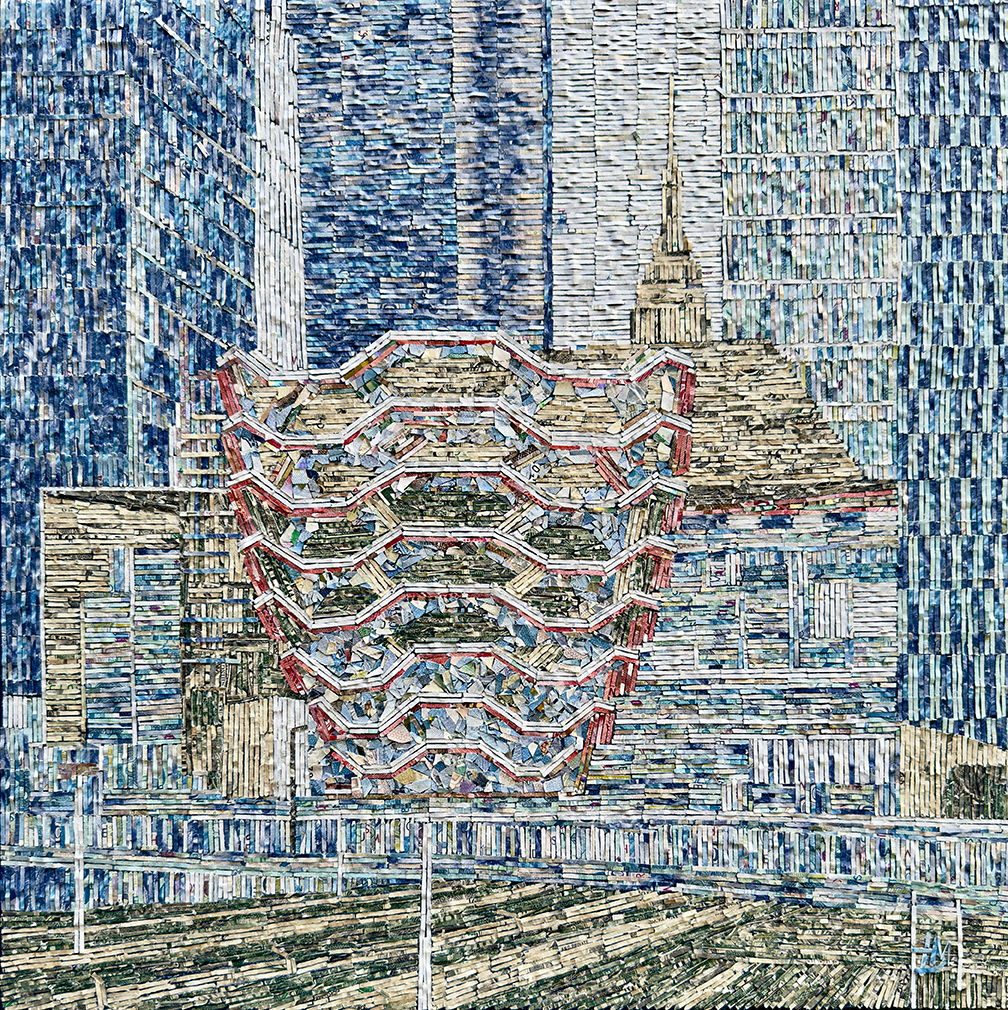
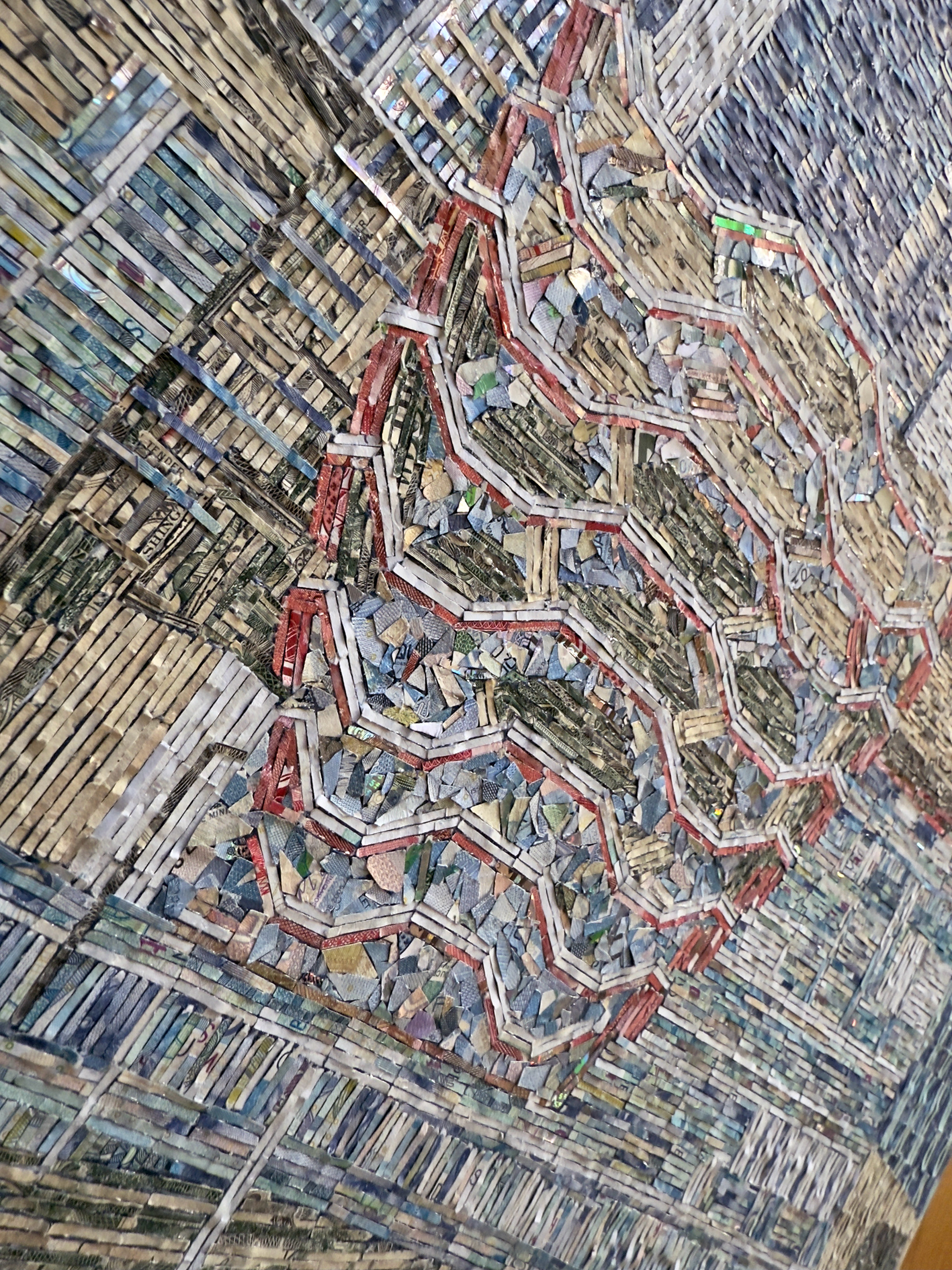
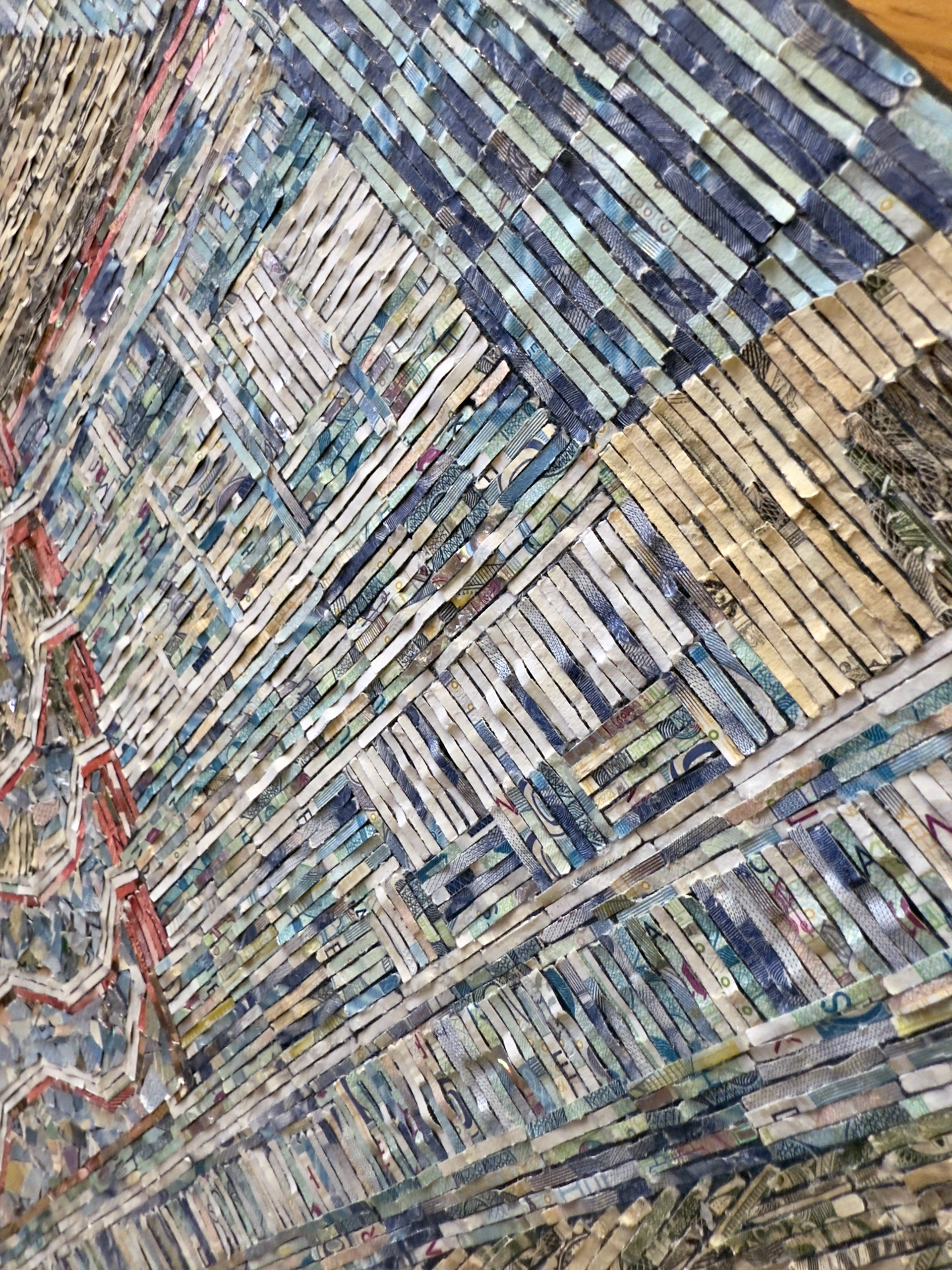
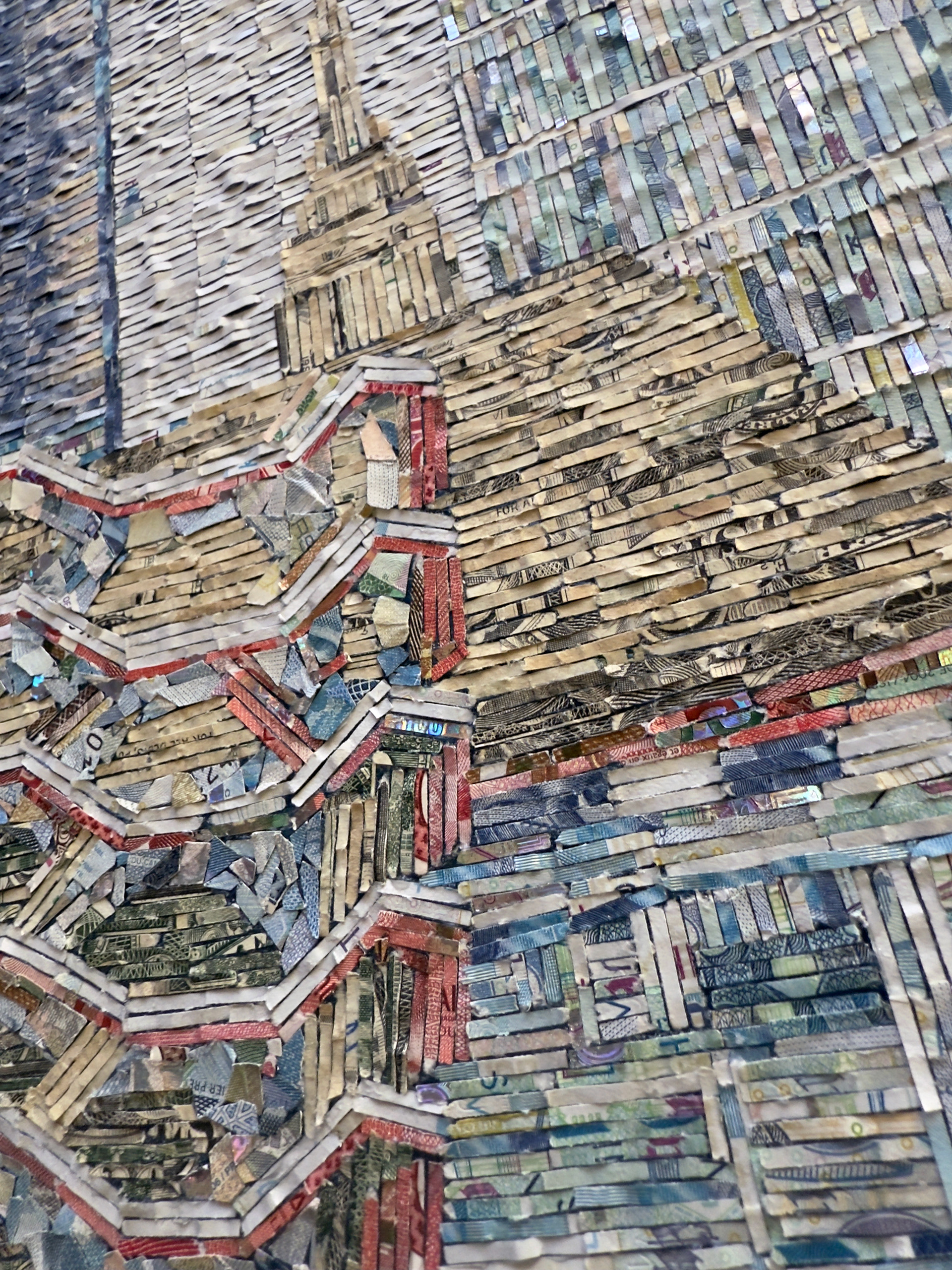
“Monument of Excess” reconstructs Hudson Yards as a towering symbol of modern ambition, luxury, and engineered prestige. At the center of the composition stands the Vessel — an architectural landmark celebrated for spectacle and attraction — transformed here into a monument built from fragmented currency, surrounded by the immense vertical power of New York’s financial skyline.
Constructed entirely from shredded money, the structure becomes both beautiful and unsettling. Its endless stairways and repeating geometric patterns suggest a cycle of perpetual ascent, ambition without destination, and a society endlessly climbing toward status, wealth, and visibility. The architecture appears monumental from a distance, yet fragile upon closer inspection, exposing the instability hidden beneath the polished surface of modern prosperity.
The surrounding towers amplify the psychological weight of the work, enclosing the viewer within a landscape shaped by capital, development, and economic influence. Nature is almost absent. Human experience becomes secondary to expansion, design, and financial symbolism. The city no longer feels organic, but engineered — a carefully constructed environment where wealth itself becomes spectacle.
“Monument of Excess” reflects on the transformation of urban space into an expression of luxury, aspiration, and concentrated power. The work questions whether modern monuments are built to inspire collective meaning — or simply to glorify the scale, influence, and permanence of wealth itself.
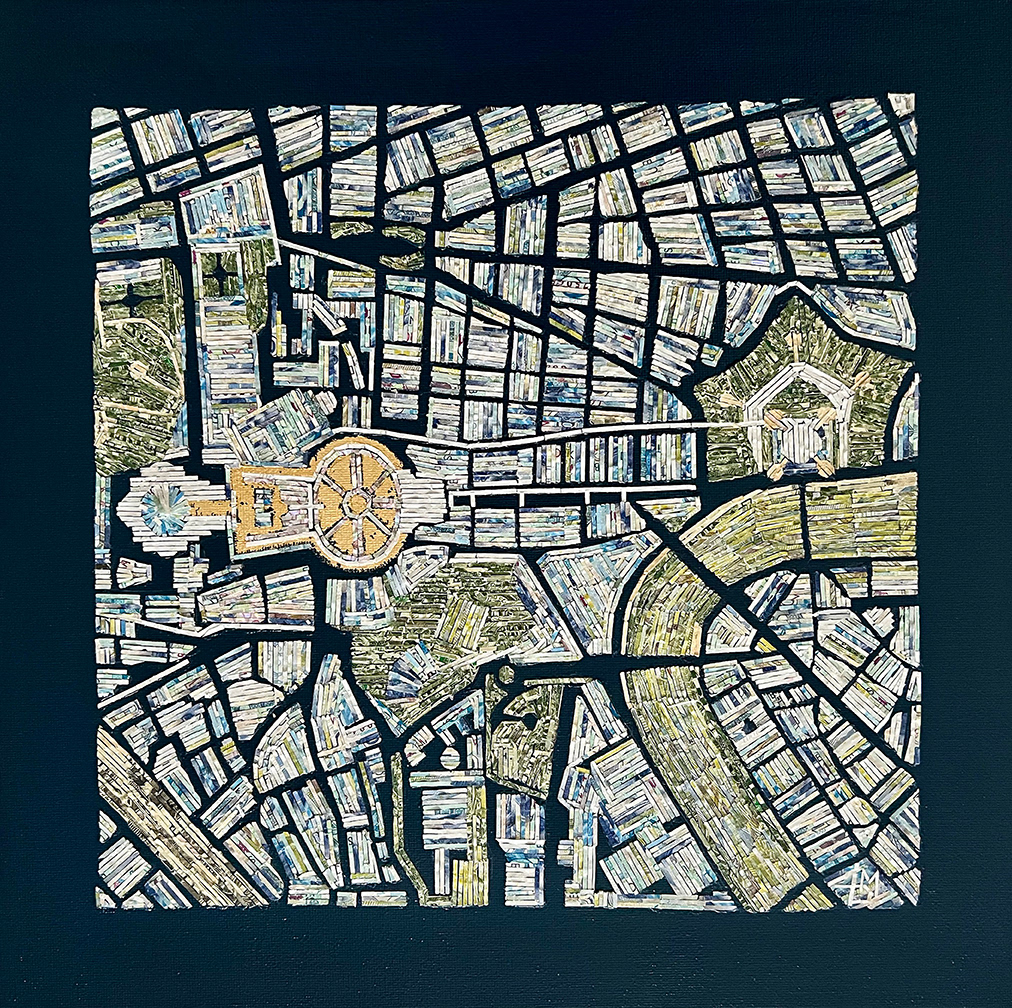
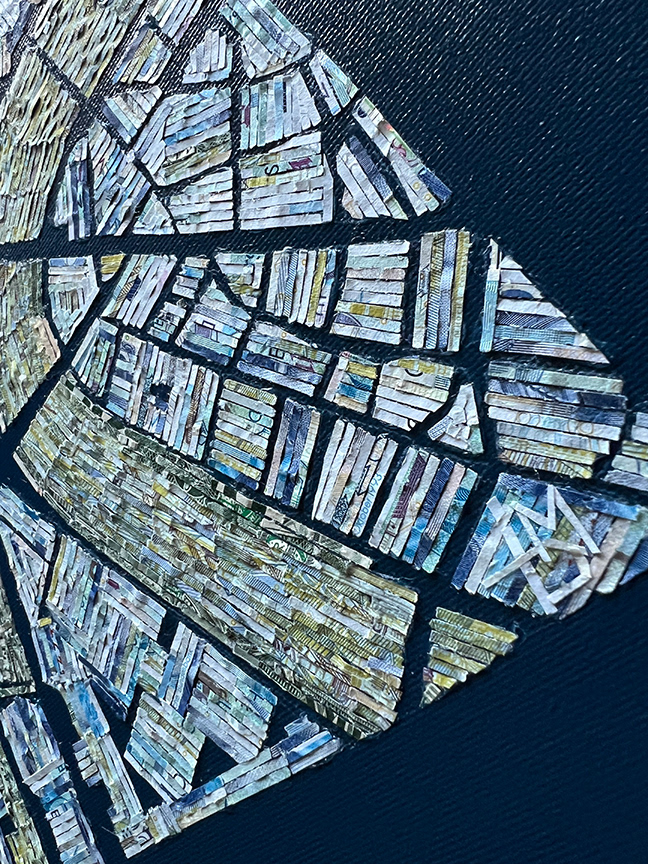
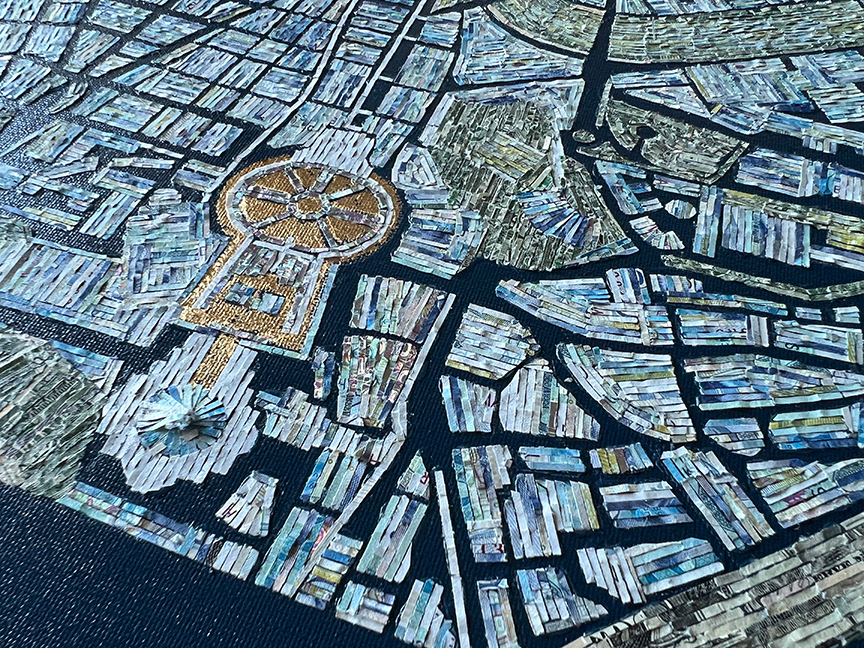

“The Currency of Faith” reconstructs the Vatican from shredded currency, transforming one of the world’s most enduring spiritual centers into a meditation on the intersection of belief, power, and material influence. Viewed from above, the ordered geometry of the city becomes more than architecture — it resembles a carefully designed system where devotion, authority, history, and wealth converge.
At the heart of the composition, the circular structure of St. Peter’s Square radiates outward like both a spiritual symbol and a mechanism of influence, surrounded by a network of fragmented streets and controlled spaces built entirely from destroyed money. The use of currency as material introduces a deliberate tension between the sacred and the transactional, questioning how institutions built around faith also exist within systems of economics, hierarchy, and global power.
The fragmented money composing the city suggests that belief itself can become intertwined with value — spiritual, political, and financial. What appears harmonious and monumental from a distance reveals itself, up close, as a fragile reconstruction assembled from remnants of human ambition, devotion, sacrifice, and control.
“The Currency of Faith” reflects on the complexity of institutions that shape both conscience and civilization, inviting viewers to consider where spirituality ends and power begins — and how closely the two have often existed throughout human history.

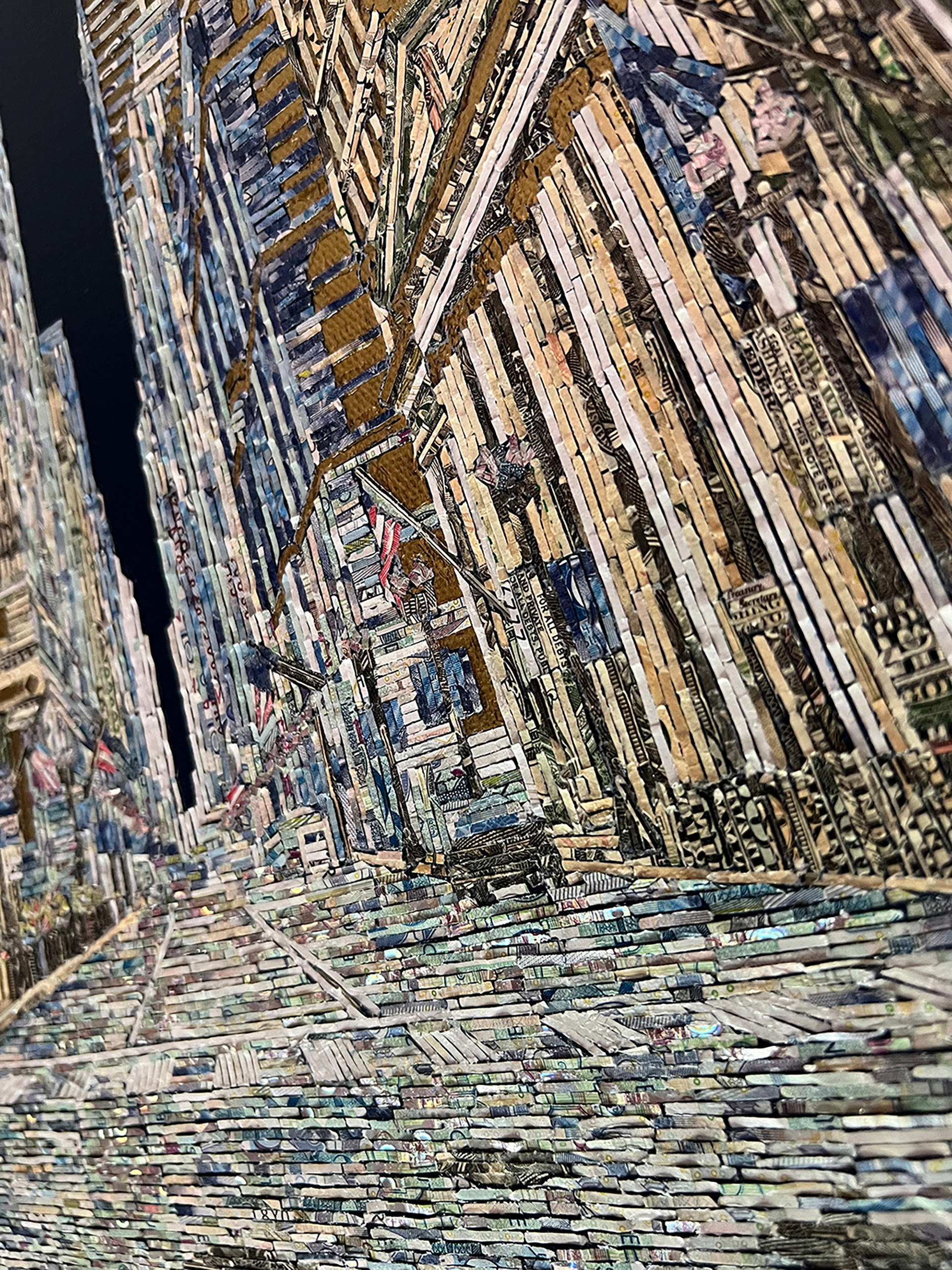
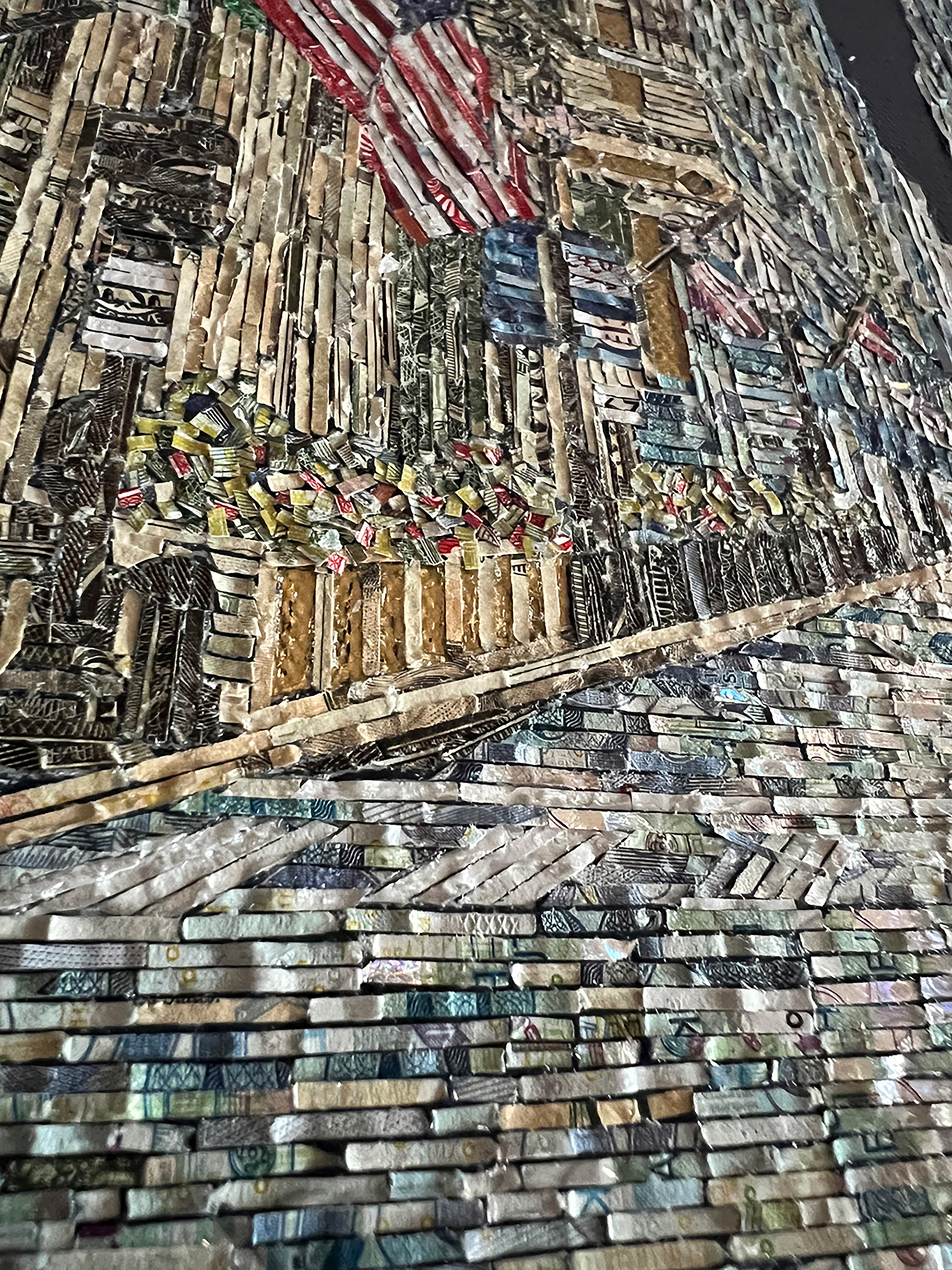
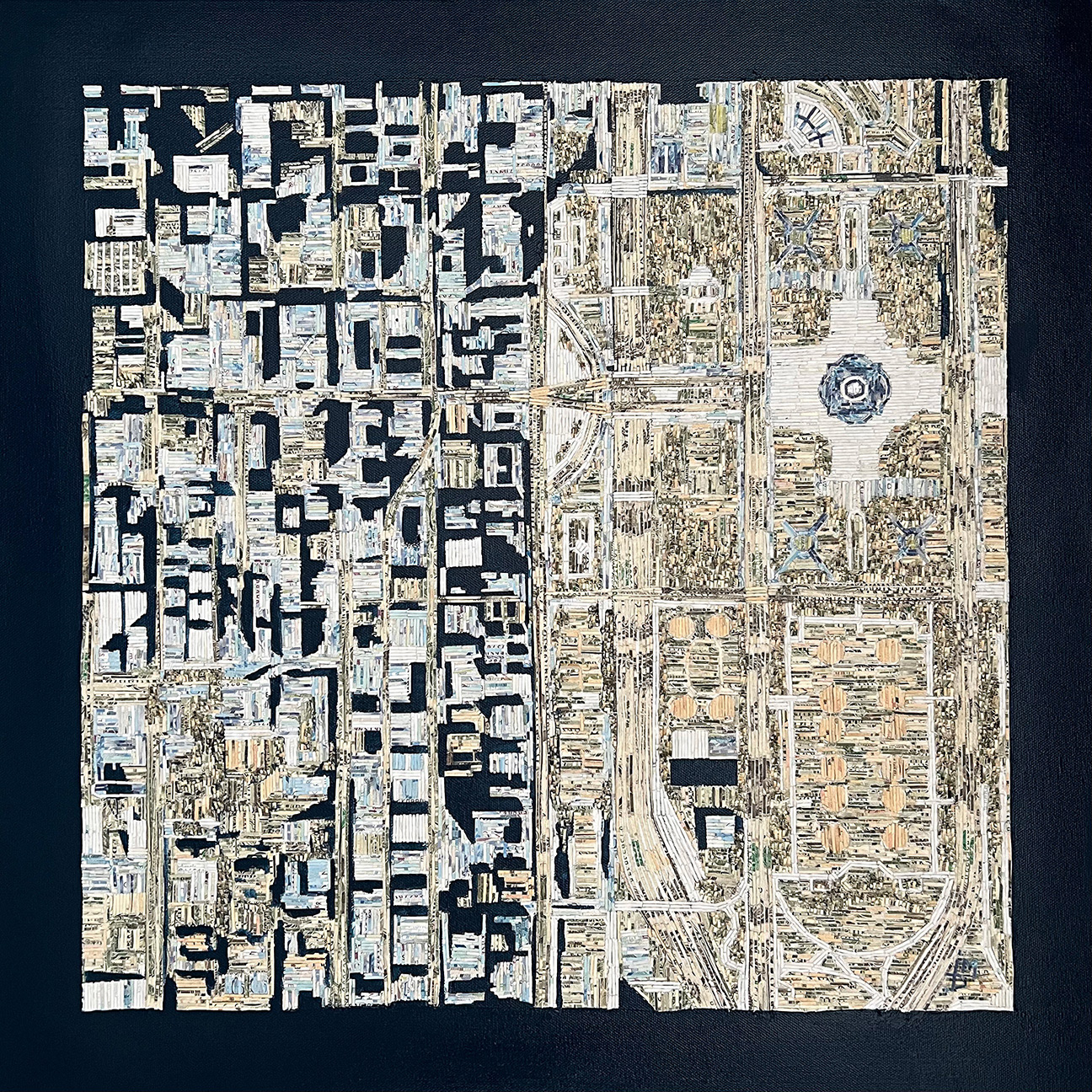
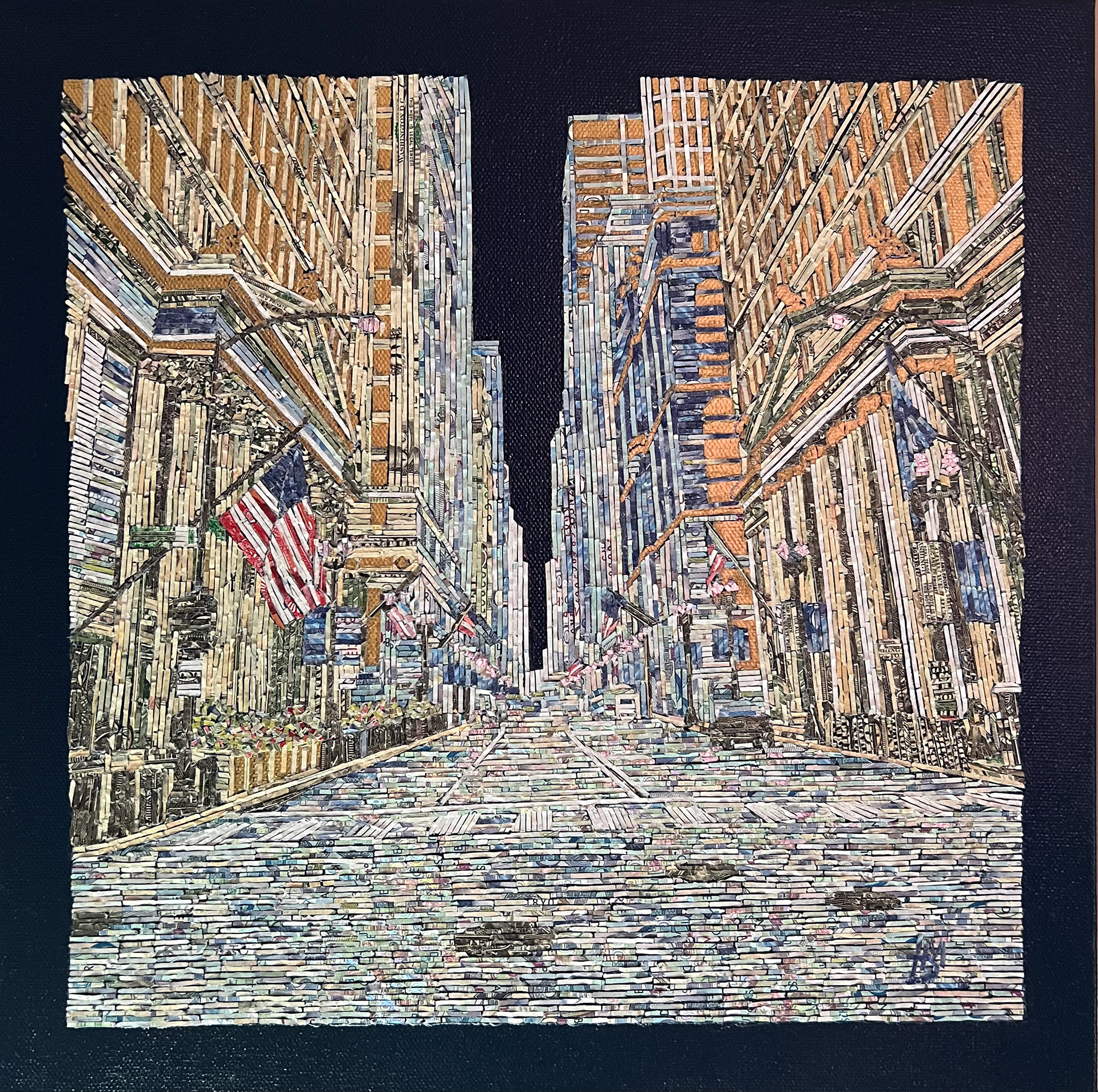
“The Fabric of Civilization” reconstructs the financial core of downtown Chicago entirely from shredded currency, transforming money itself into the physical material of the city. Streets, towers, façades, and public space are all woven from fragmented banknotes, suggesting that modern civilization is built not only around value — but directly from it.
The monumental architecture rises with precision and authority, reflecting the power and permanence associated with financial institutions and economic systems. Yet up close, the city reveals its true composition: thousands of destroyed currency fragments layered together like threads in a fabric, exposing how wealth, labor, debt, sacrifice, and human ambition are embedded into the foundations of urban life.
The streets themselves become symbolic. What people walk on, work within, and dedicate their lives toward is literally constructed from money, blurring the boundary between civilization and financial structure. The American flags and towering financial buildings reinforce the idea of a society deeply shaped by economic identity, where value extends beyond currency into power, status, and survival itself.
“The Fabric of Civilization” reflects on the invisible systems that hold modern society together while questioning the fragility beneath their appearance of strength. By transforming shredded money into architecture, the work suggests that civilization itself may be a carefully assembled construction of fragmented value — monumental, ambitious, and far more delicate than it appears.
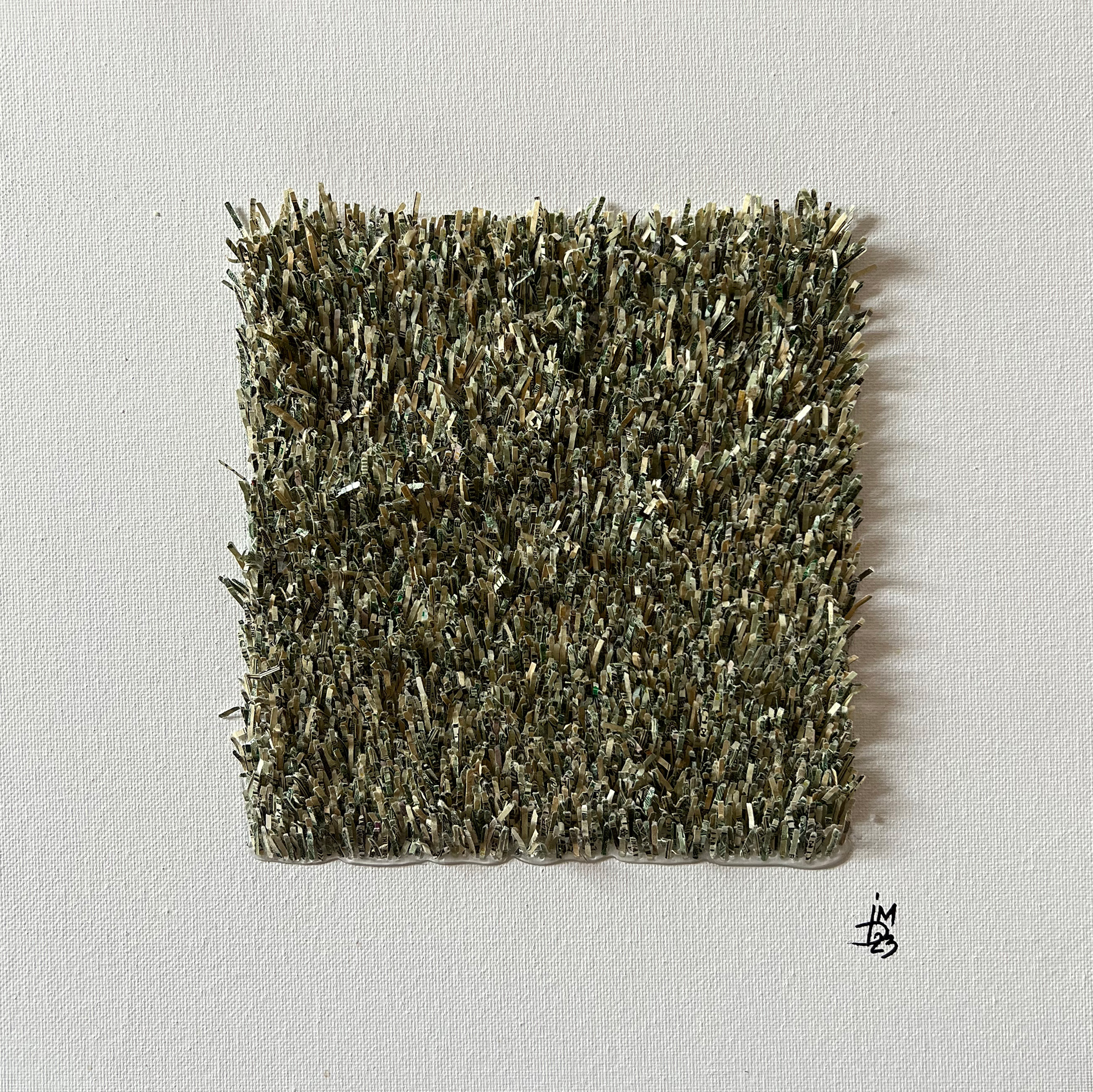
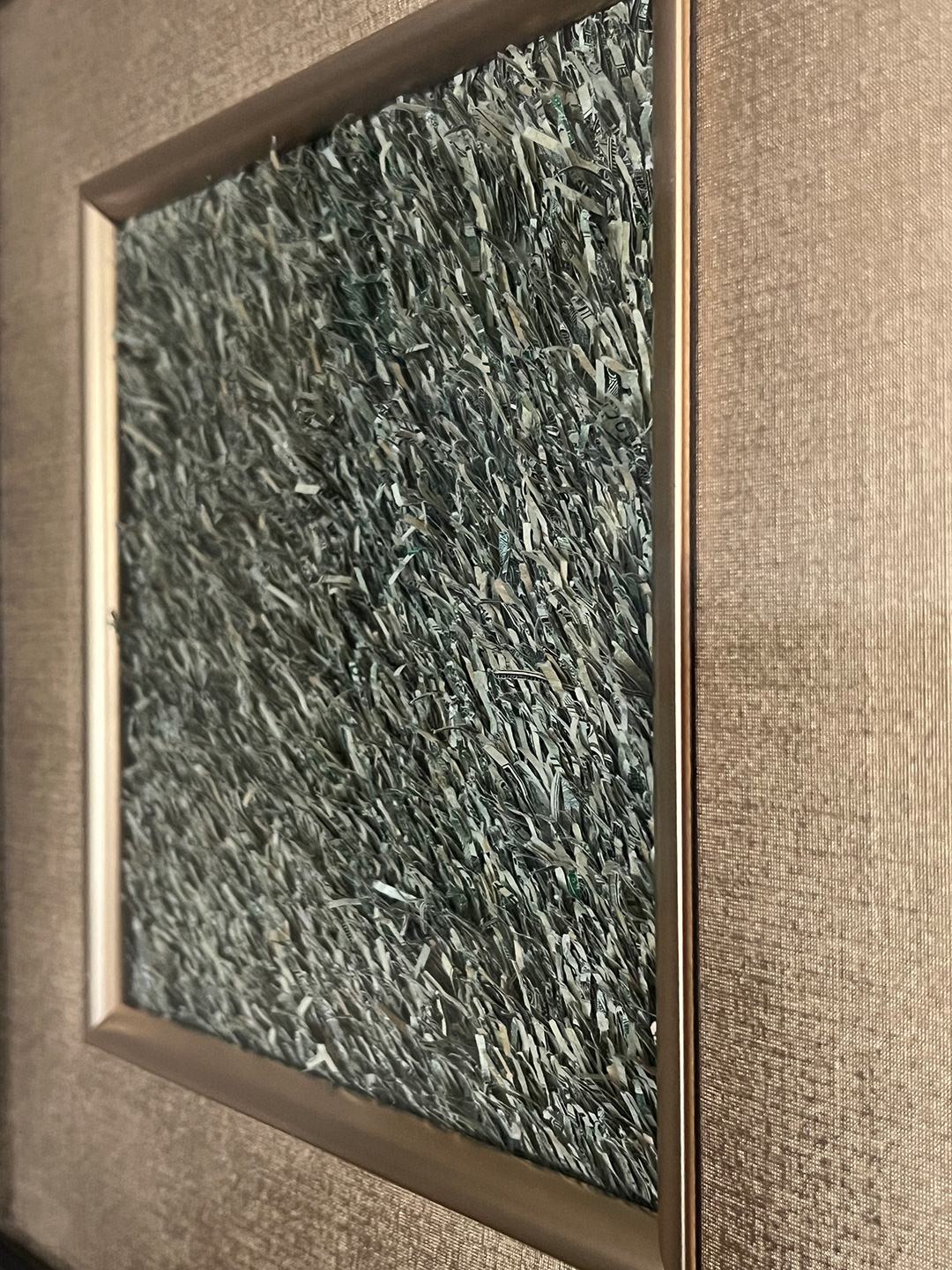
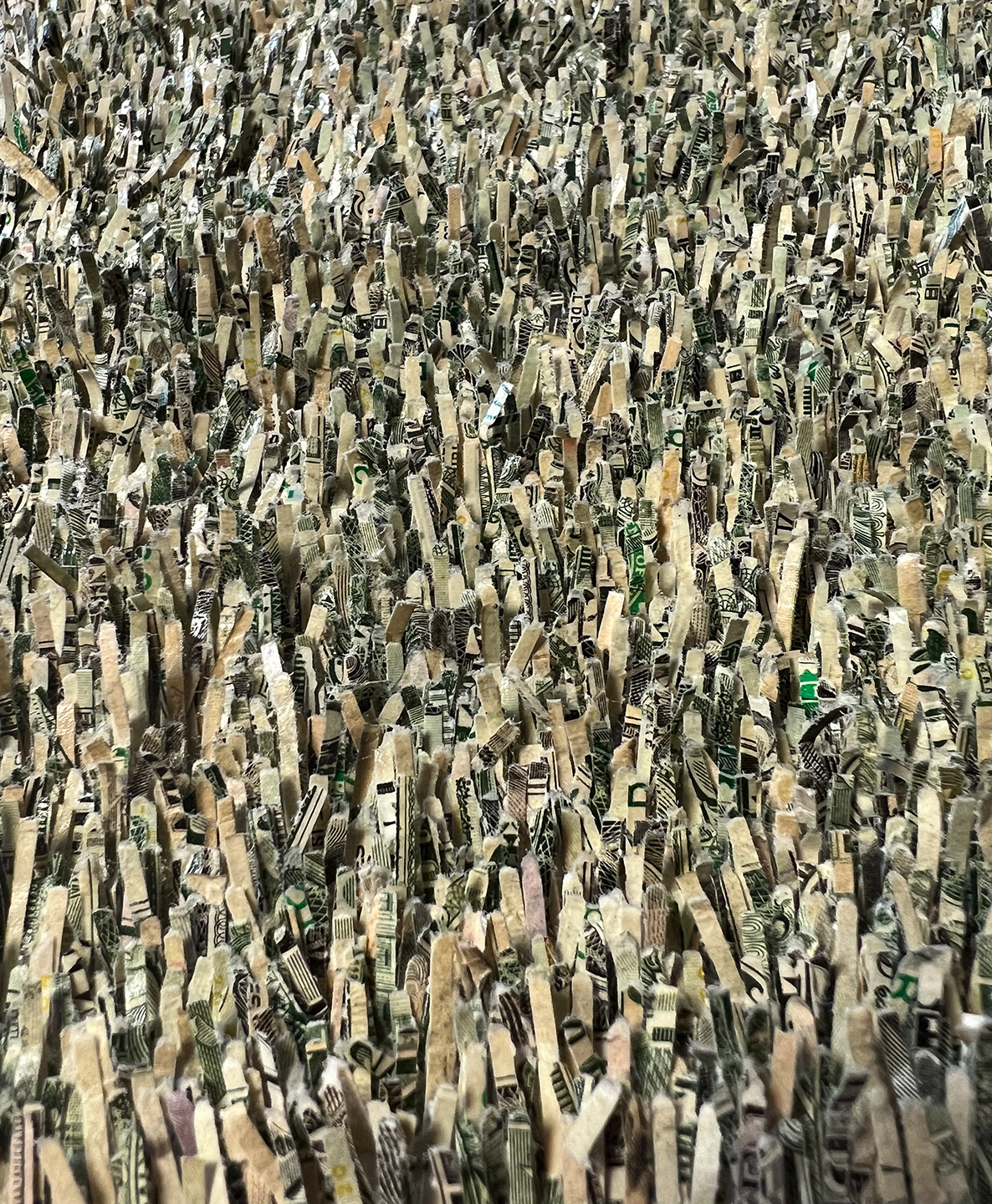
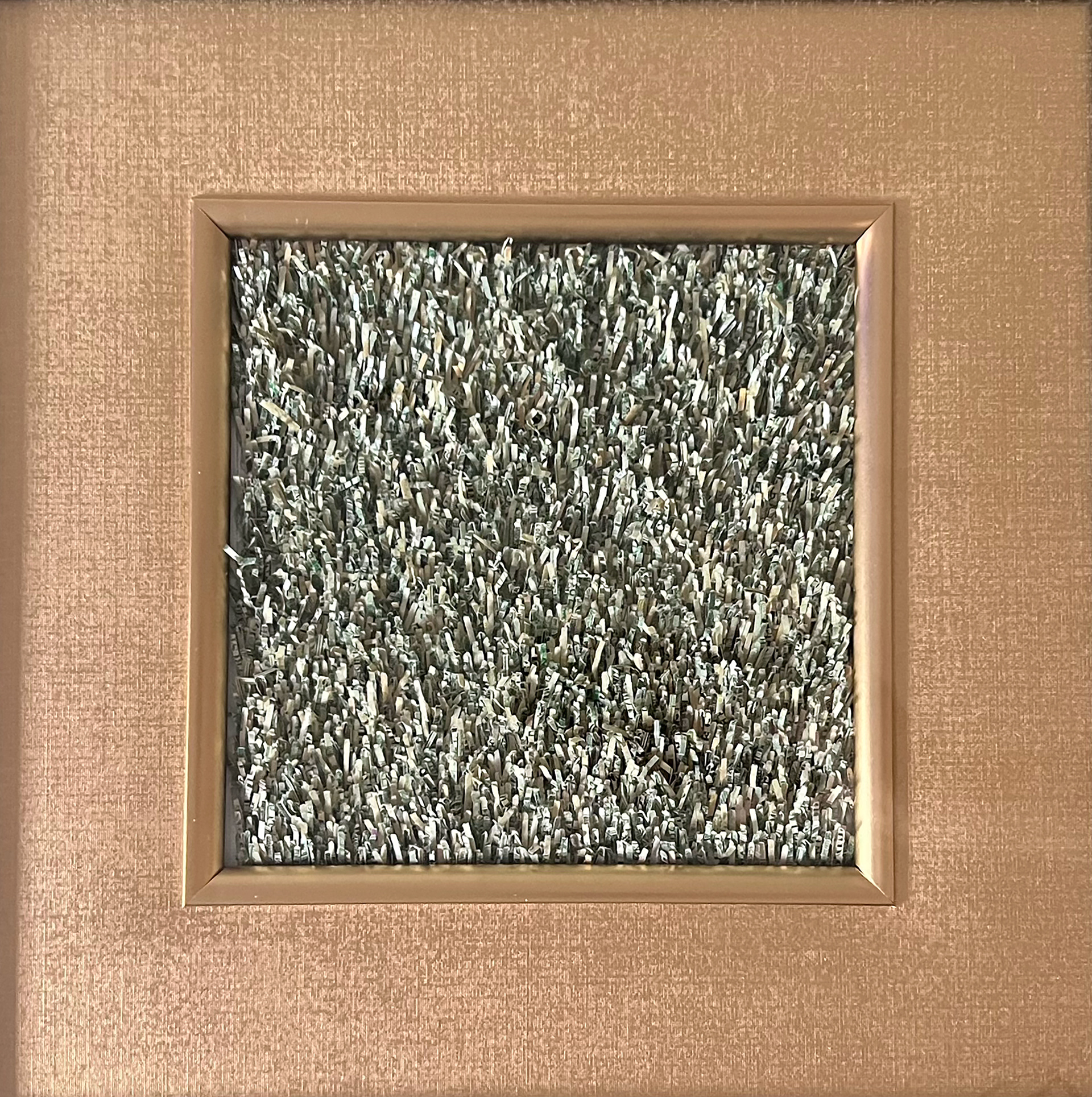
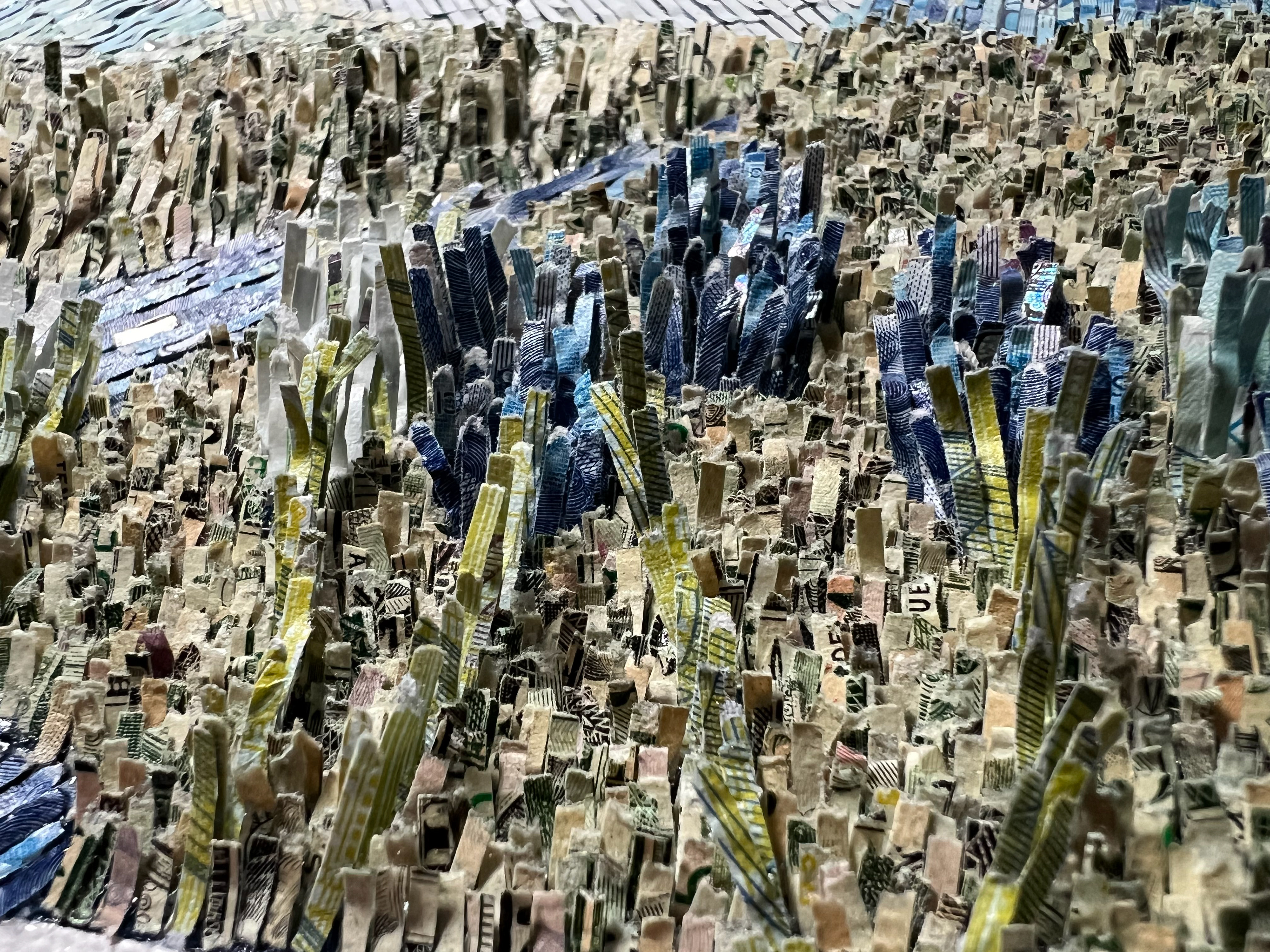
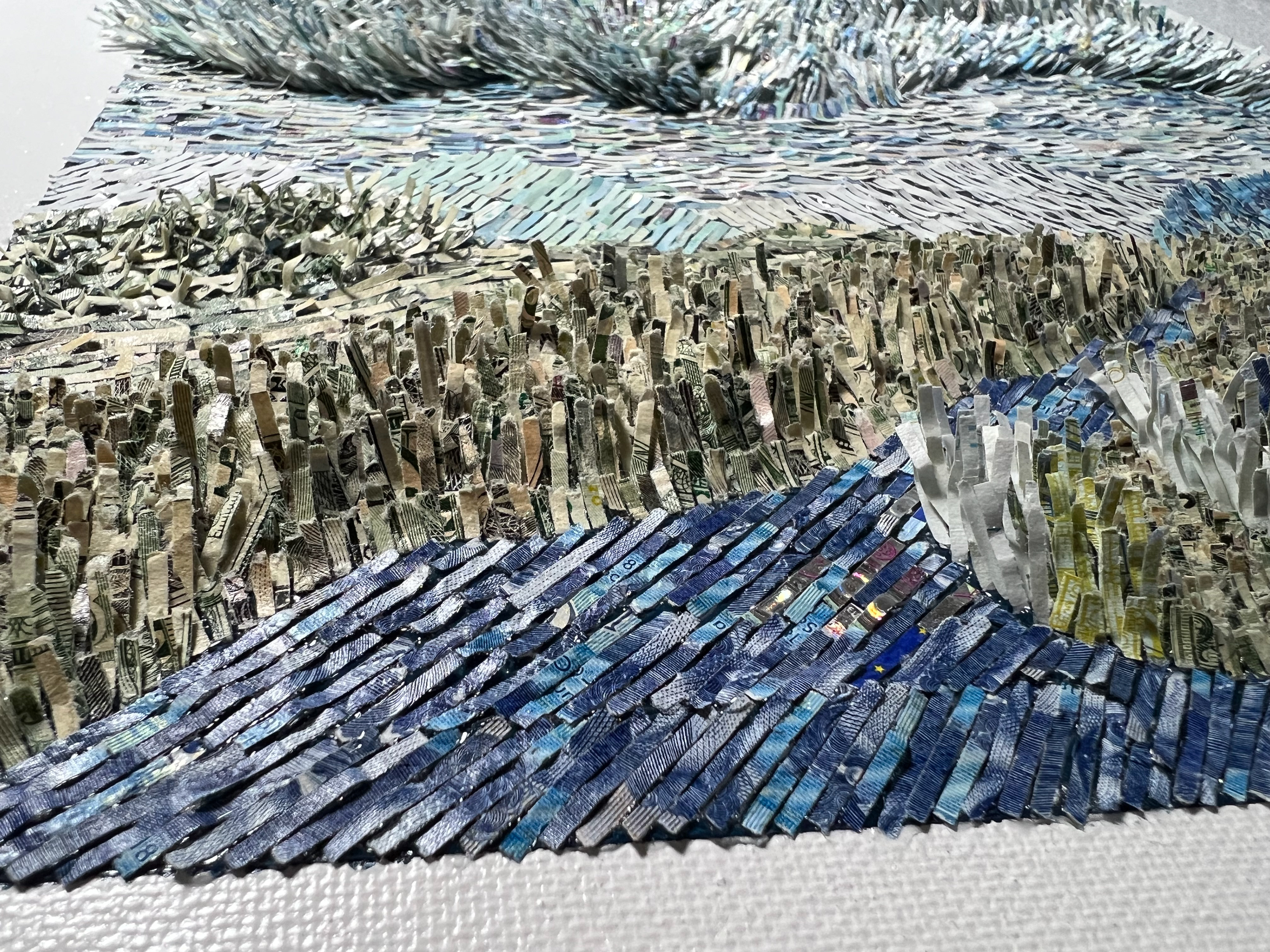
“The Grass Is Always Greener” transforms a familiar expression of envy and aspiration into a meditation on wealth, perception, and human desire. Constructed entirely from vertically layered fragments of shredded currency, the work resembles a perfectly manicured patch of grass — artificial, seductive, and quietly unsettling.
From a distance, the surface evokes abundance, growth, and prosperity. Up close, however, the “grass” reveals itself as money itself, suggesting a society where value has become inseparable from the way people measure happiness, success, and fulfillment. The work reflects the endless tendency to believe that fulfillment exists elsewhere — in greater wealth, different status, or lives perceived as more prosperous than our own.
Its minimal composition becomes part of its power. Isolated against the empty white space, the square of currency-grass functions almost like a psychological symbol: desire condensed into a single object. The texture feels alive yet synthetic, exposing how modern ambition often imitates natural human longing while being rooted in systems of consumption and comparison.
“The Grass Is Always Greener” reflects on the illusion of perpetual dissatisfaction — the belief that value always exists somewhere beyond reach — while questioning how deeply money shapes not only economies, but perception itself.

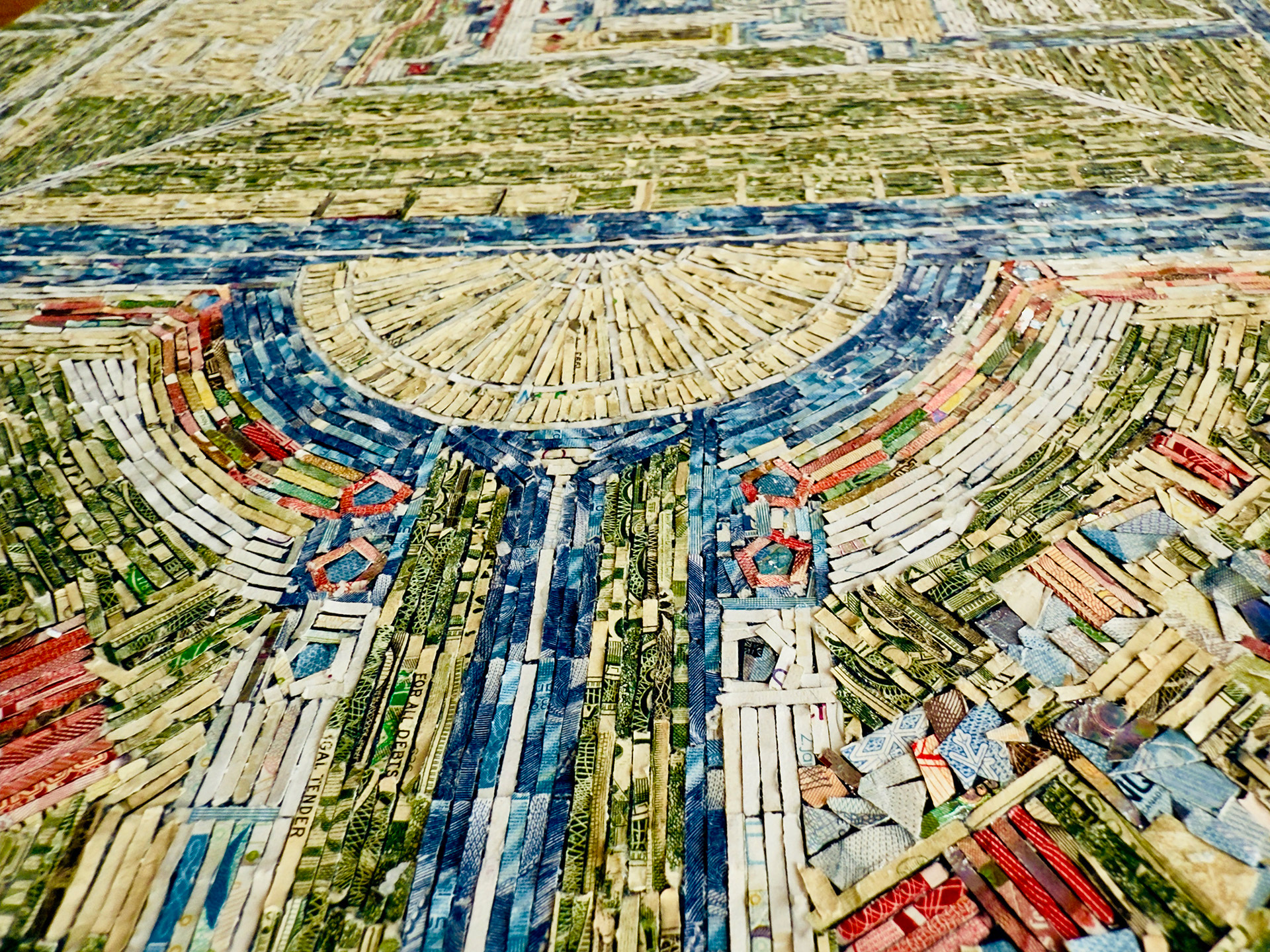

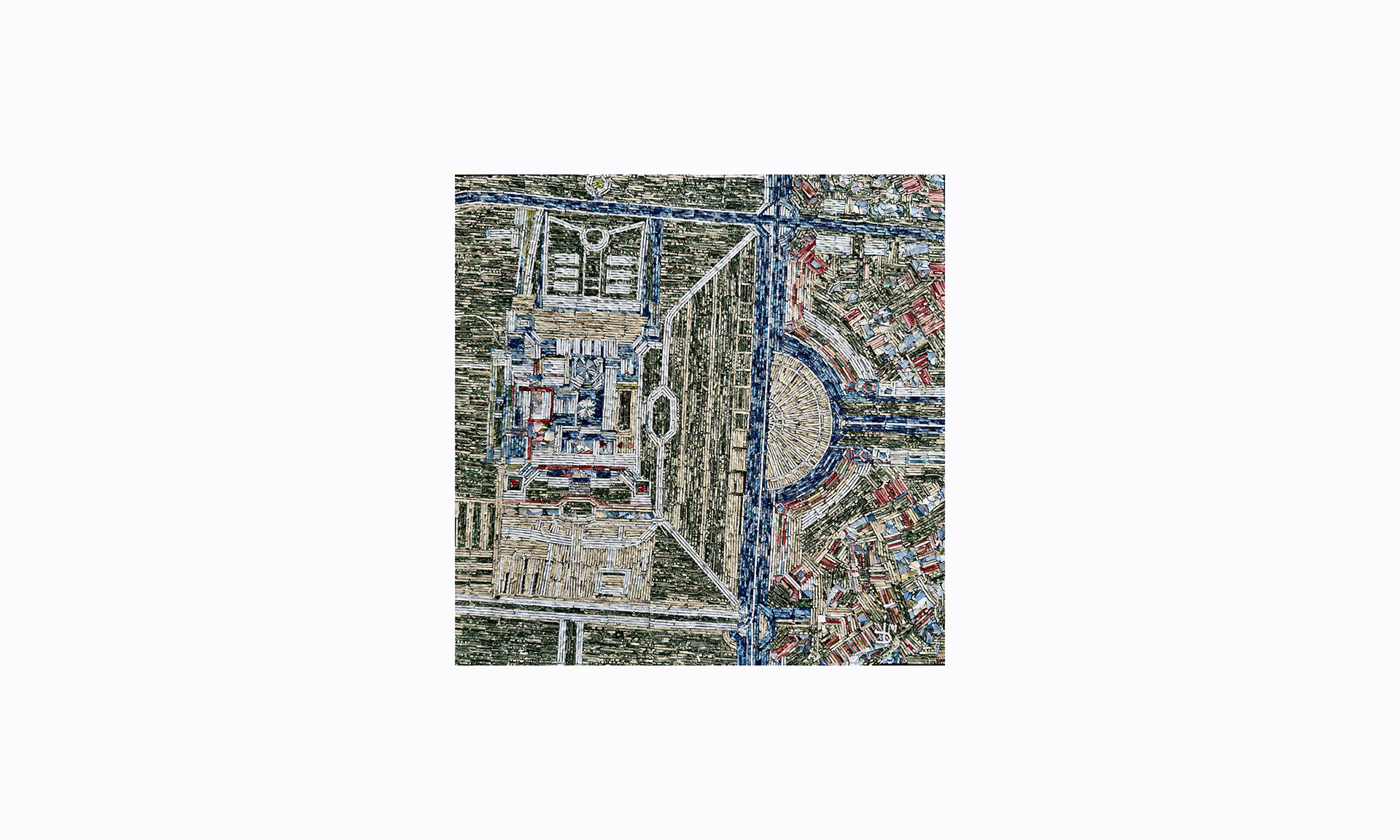
“The Weight of Money” transforms the Palace of the Parliament in Bucharest — one of the heaviest and most imposing administrative buildings ever constructed — into a meditation on power, sacrifice, and the burden carried by nations in the pursuit of grandeur.
Built entirely from fragments of shredded currency, the structure becomes more than architecture; it becomes condensed history. The rigid symmetry and monumental scale evoke authority and permanence, yet the material itself reveals instability beneath the surface. What once represented economic value has been dismantled and reconstructed into a symbol of political ambition and collective cost.
The work reflects the immense human and financial weight behind monumental power: the labor, deprivation, erased neighborhoods, and generations burdened by systems larger than themselves. The building rises not simply as a national landmark, but as a physical manifestation of how wealth, control, and ideology can shape entire societies while demanding silent sacrifice in return.
By reconstructing Casa Poporului from destroyed currency, the artwork exposes a profound contradiction — that structures built to symbolize strength and prosperity are often sustained by invisible human costs. In “The Weight of Money,” value no longer exists in the banknote itself, but in the history, pressure, and collective memory embedded within its fragments.
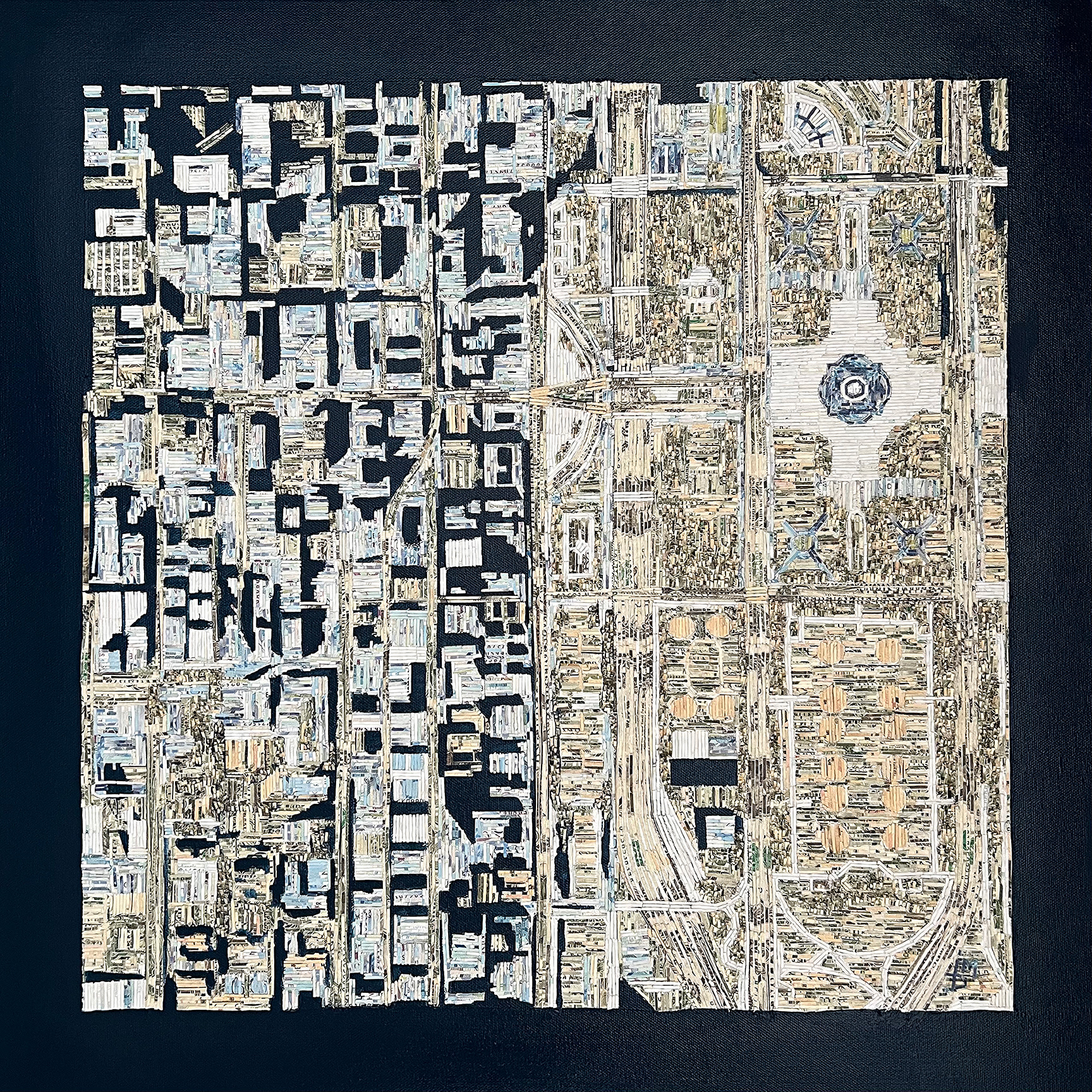
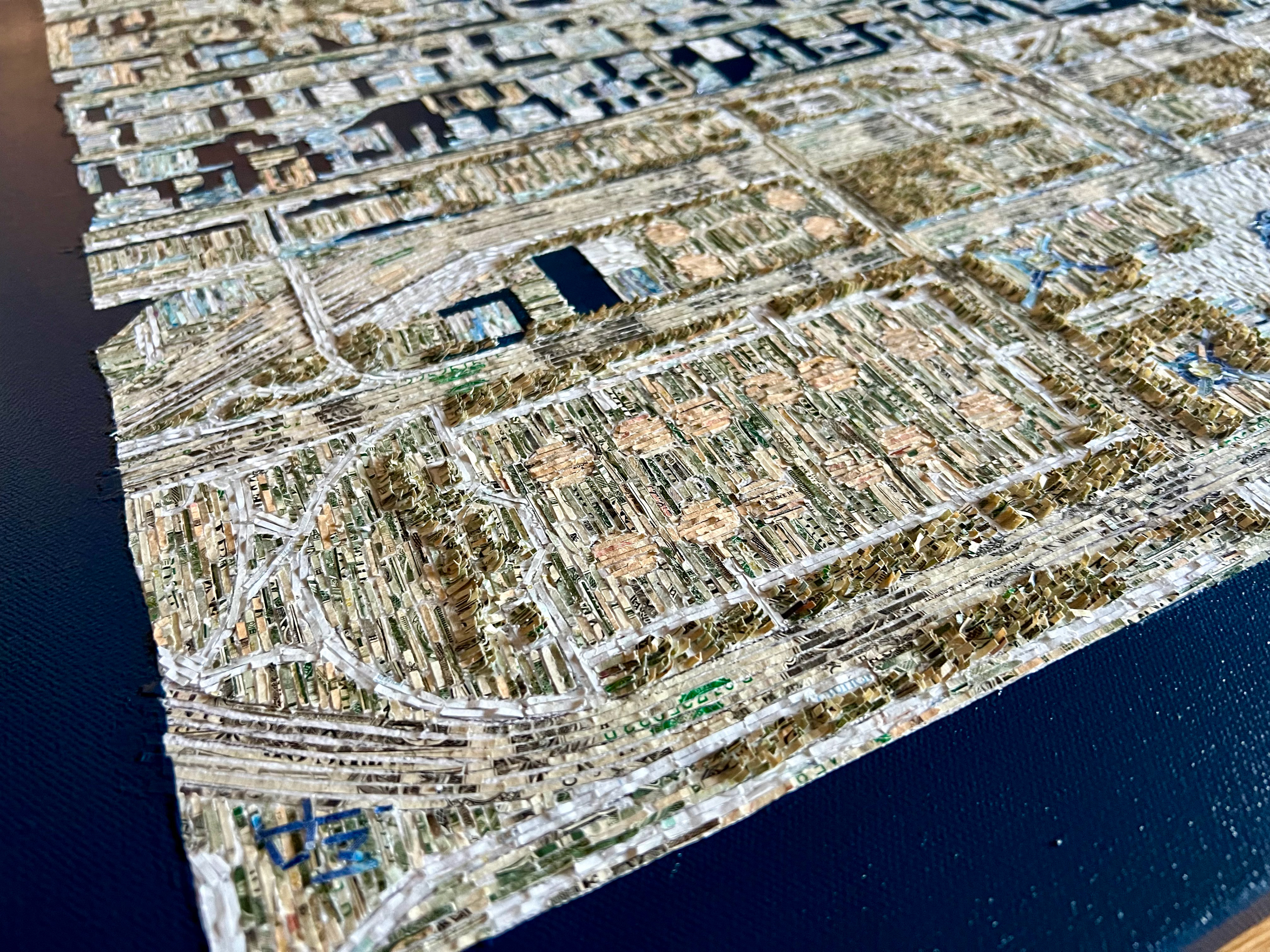
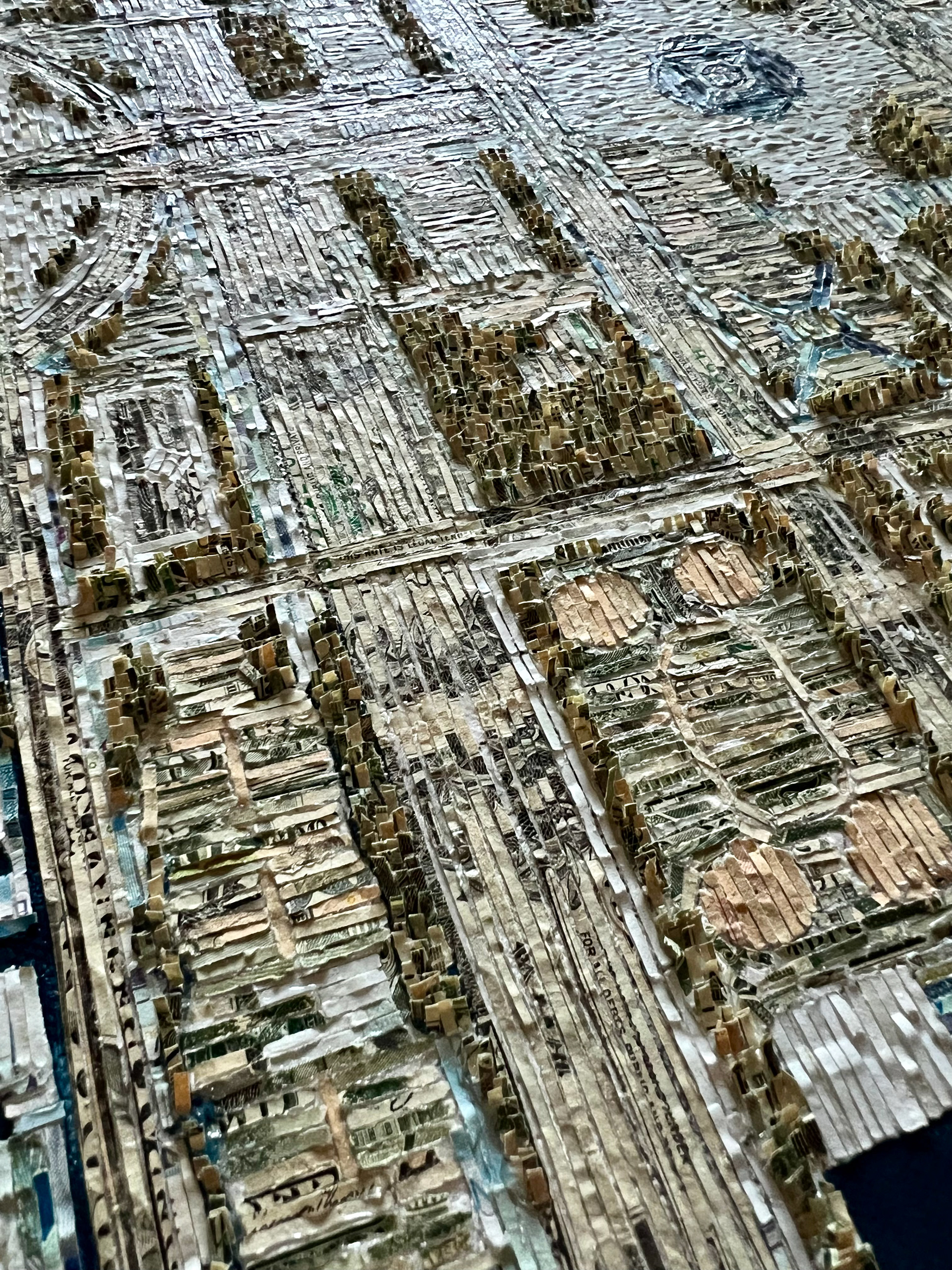

“Urban Alchemy” transforms downtown Chicago into a living system built from the remains of value itself. Constructed from shredded currency, the city becomes more than architecture — it becomes evidence of how wealth is continuously broken apart, redistributed, consumed, and rebuilt into the modern world we inhabit.
From above, the streets resemble veins carrying financial energy through an engineered landscape of ambition, labor, power, and survival. The rigid geometry of the city suggests order and progress, yet every fragment within it once belonged to something already destroyed. What appears stable and monumental is, in reality, assembled from pieces of collapse.
The work reflects the strange alchemy of civilization: how paper given symbolic value can reshape skylines, dictate movement, influence human destiny, and ultimately construct entire identities around success and accumulation. Chicago emerges not simply as a city, but as a monument to human desire — a place where dreams, pressure, sacrifice, and capital coexist in constant motion.
In “Urban Alchemy,” shredded money no longer functions as currency. It becomes memory, structure, and testimony — revealing that beneath every great city lies an invisible architecture built from human effort, economic obsession, and the perpetual transformation of value into power.

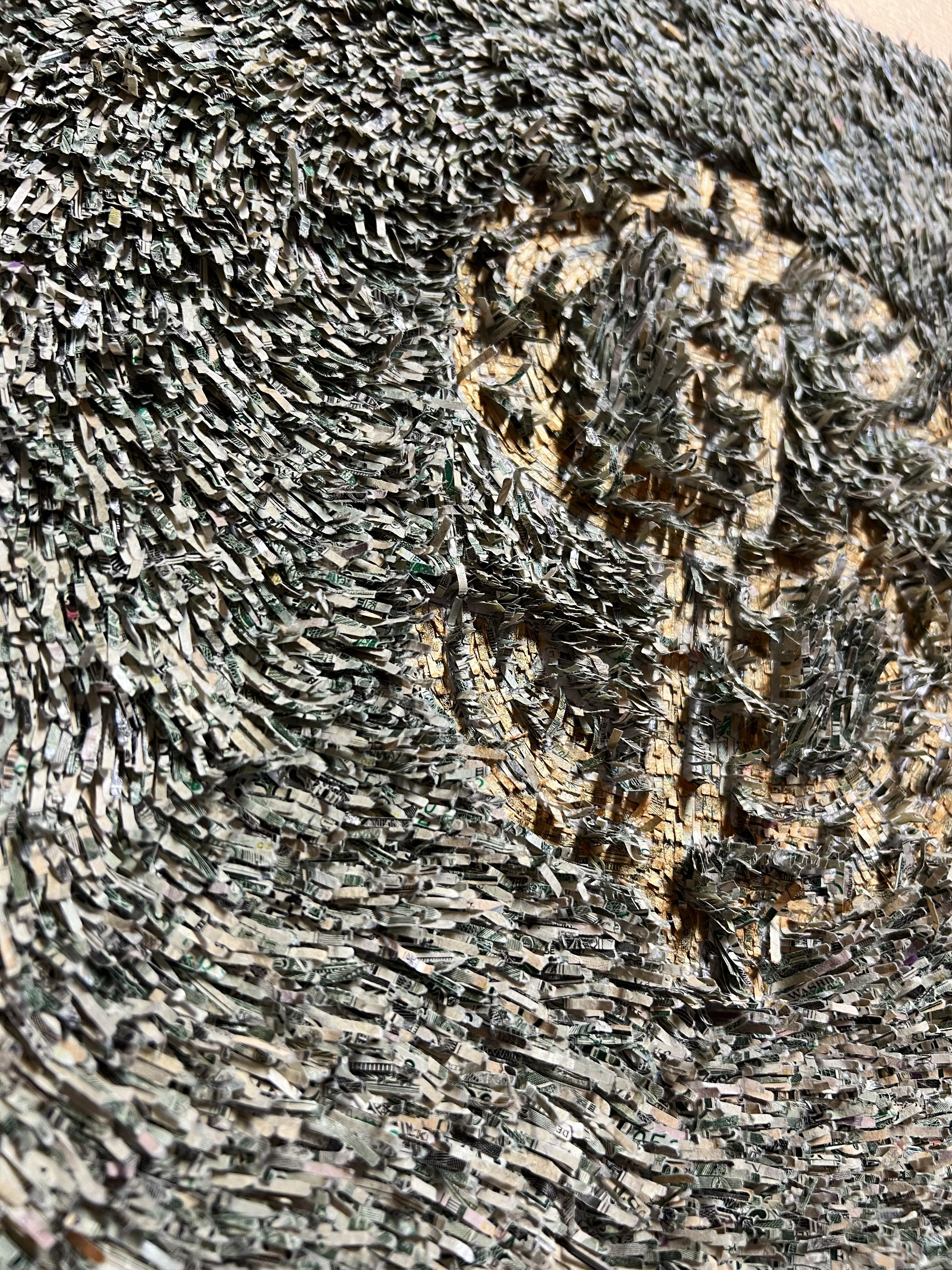
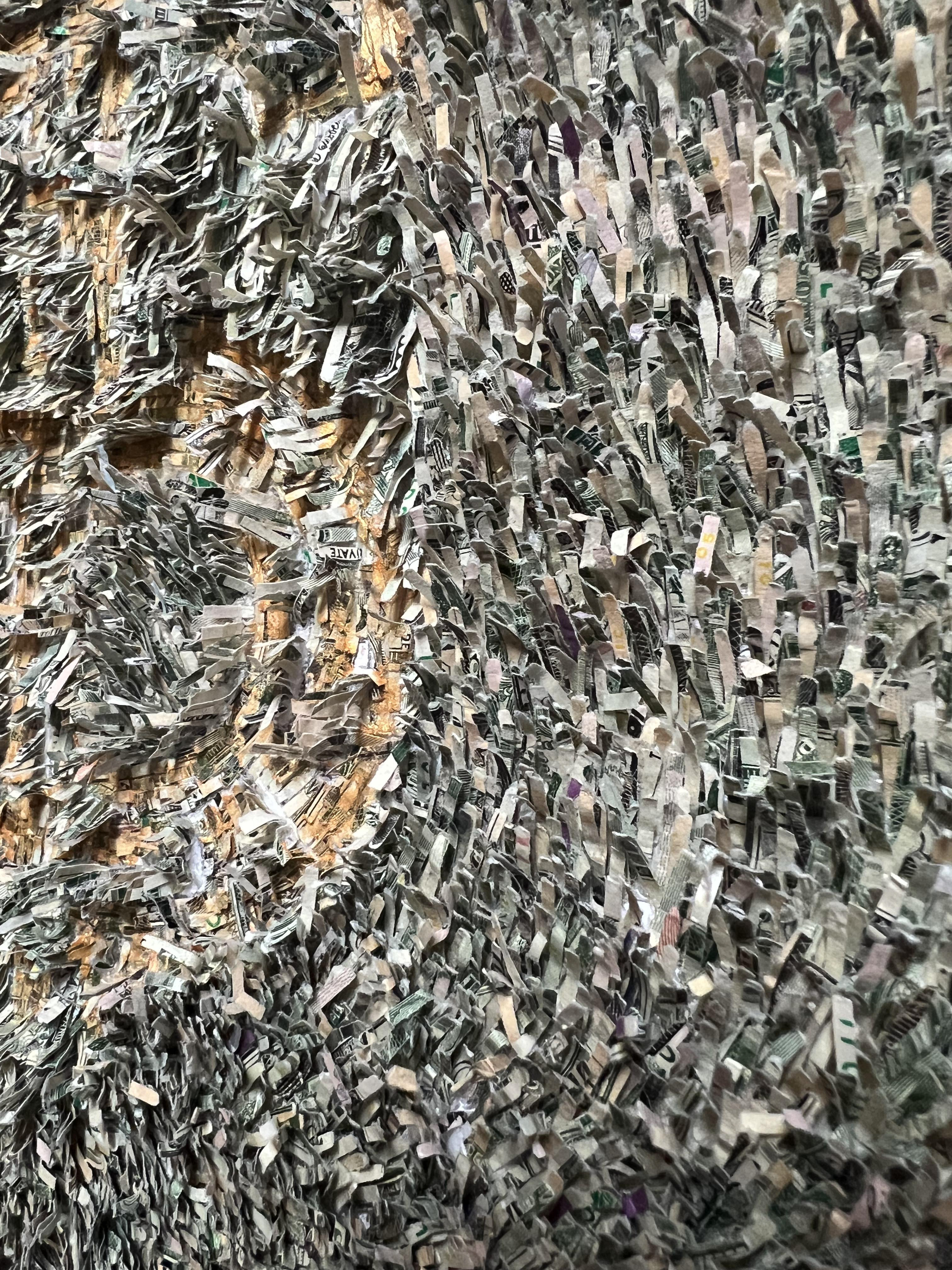
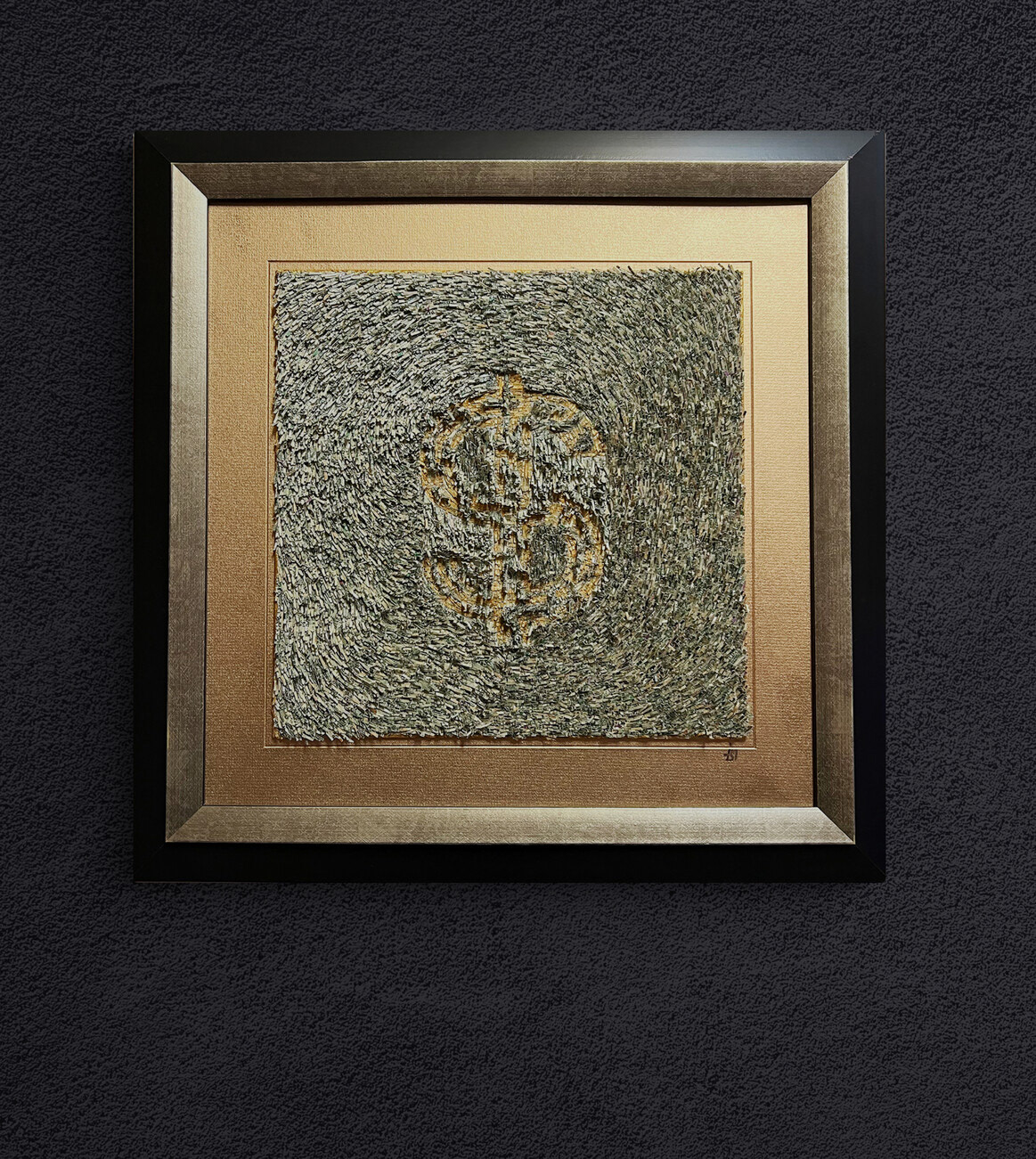
“Welcome to the Money Maze” captures the hypnotic force of wealth and the psychological systems built around it. Constructed from thousands of fragments of shredded currency, the work forms a swirling vortex that pulls the viewer toward a fading dollar symbol at its center — a symbol simultaneously revealed and consumed by the very material that created it.
The composition reflects how modern life often revolves around the pursuit of financial value: endless movement, repetition, competition, and desire circling around an idea that can never fully satisfy. The closer one moves toward the center, the less stable the symbol becomes, suggesting that wealth itself is both attraction and illusion.
The maze is not architectural, but psychological. It represents the invisible structures that shape ambition, identity, status, and self-worth. The shredded currency no longer functions as money, yet it continues to command attention, exposing how deeply value remains embedded in human consciousness even after its physical purpose has been destroyed.
In “Welcome to the Money Maze,” greed is not portrayed as chaos alone, but as a system so immersive that people willingly lose themselves inside it — searching for meaning in the same force that slowly consumes them.

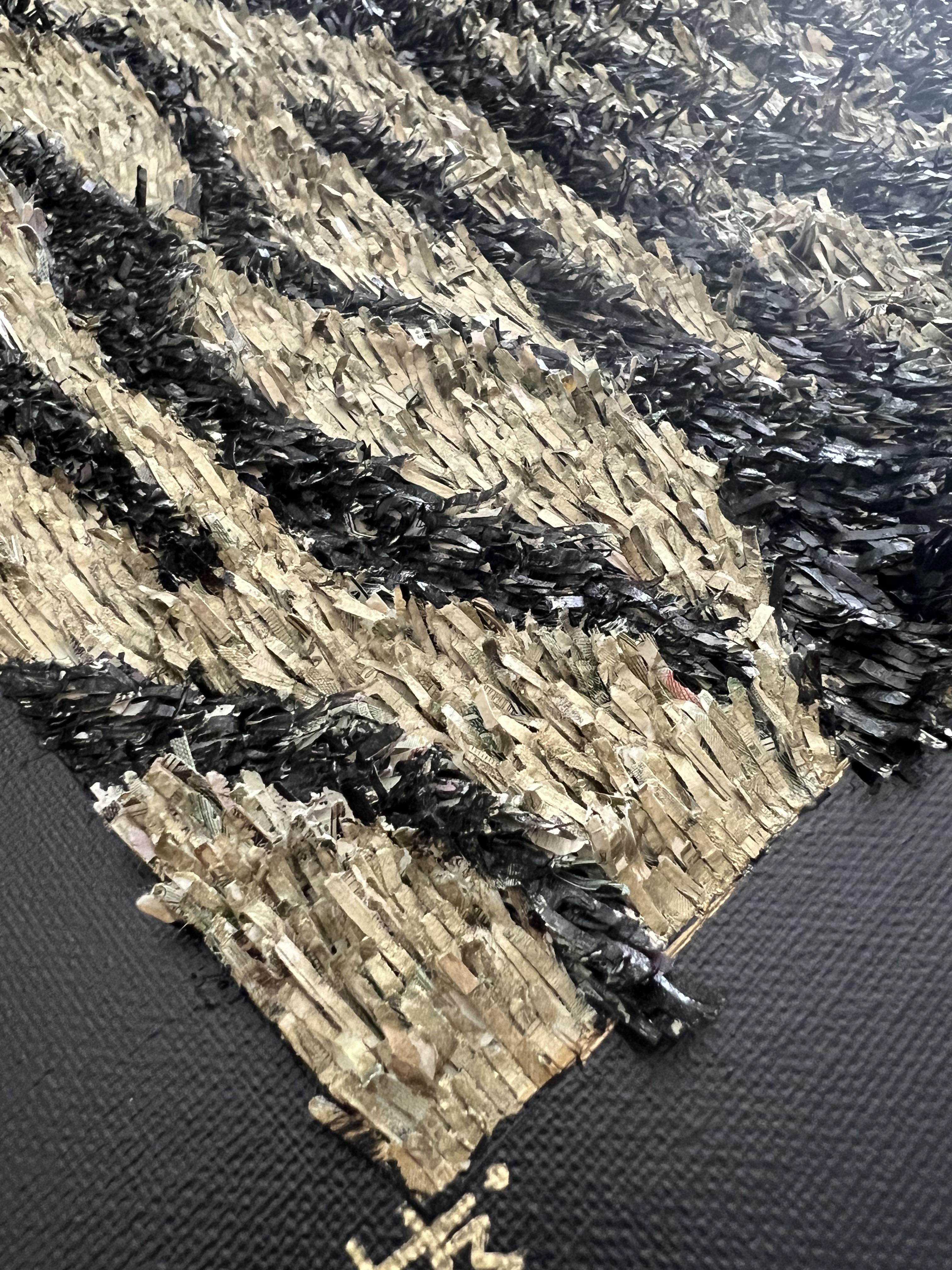
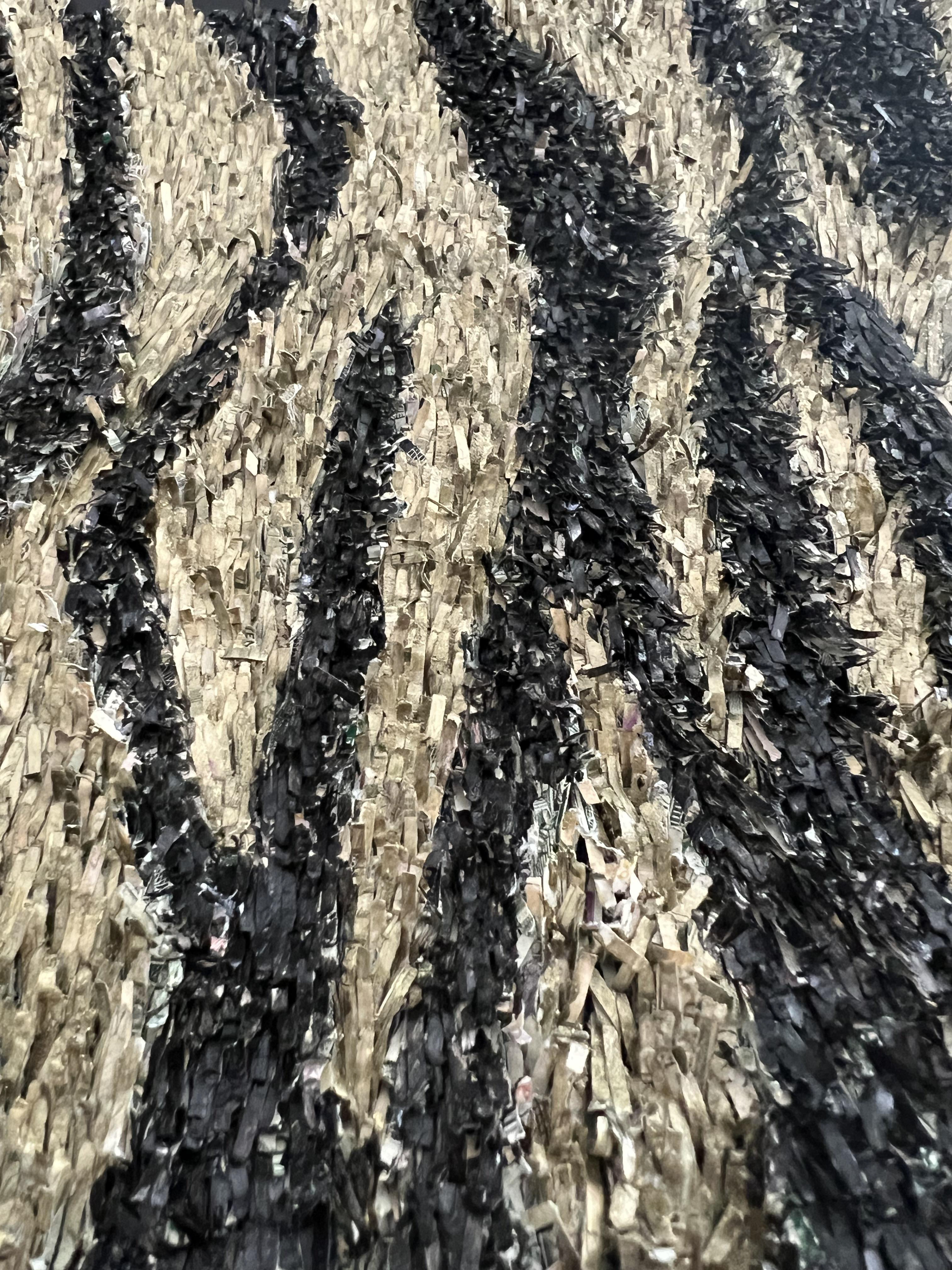
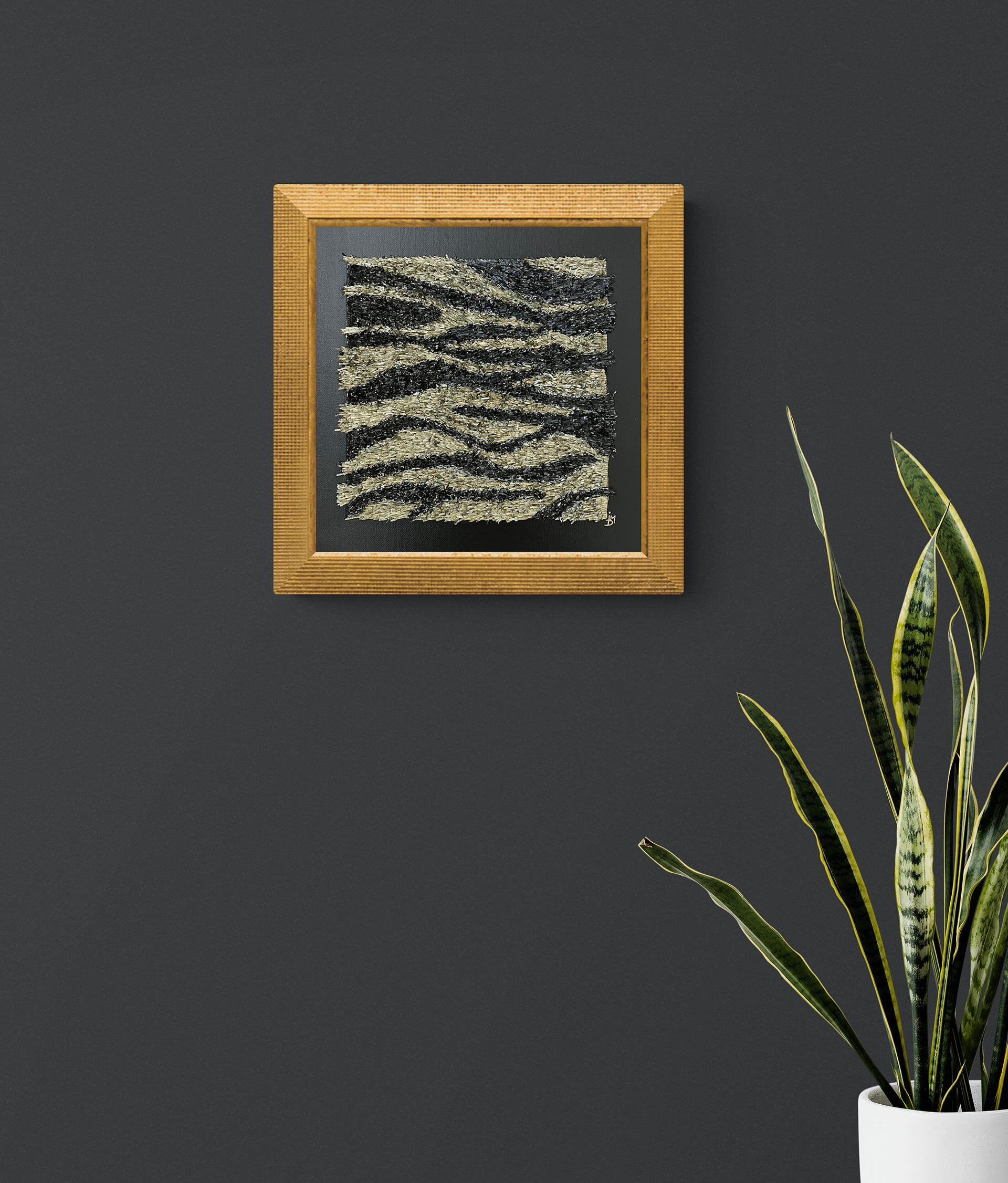
“Wild Wealth” explores the instinctive, untamed nature of human desire for accumulation and power. The tiger-like pattern, constructed entirely from shredded currency, transforms money into something primal — no longer a symbol of civilization, but a living force driven by hunger, dominance, and survival.
The work suggests that beneath financial systems and polished structures lies an ancient impulse: the pursuit of control, territory, status, and possession. The stripes resemble both animal camouflage and flowing currents of capital, blurring the boundary between nature and economy, instinct and ambition.
By reducing currency to fragments and rebuilding it into a wild organic form, the artwork reveals how wealth can behave like a predator — seductive, powerful, beautiful, yet capable of consuming everything around it. “Wild Wealth” reflects the reality that greed is rarely rational; it is emotional, instinctive, and deeply rooted in human behavior.
In this piece, money loses its transactional function and becomes texture, movement, and animal energy — a reminder that even in the modern world, civilization often hides its most primitive desires beneath surfaces of luxury and success.