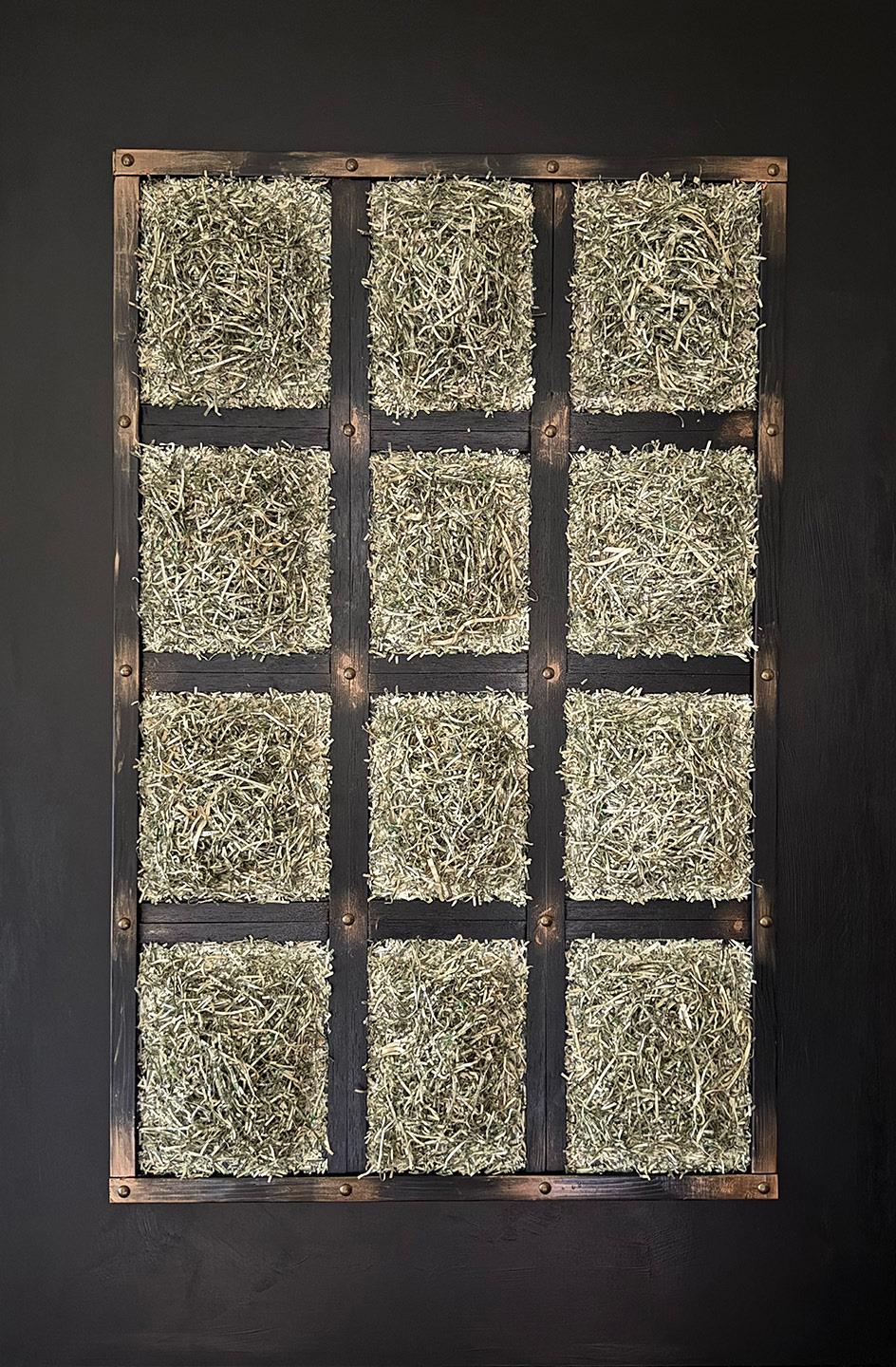
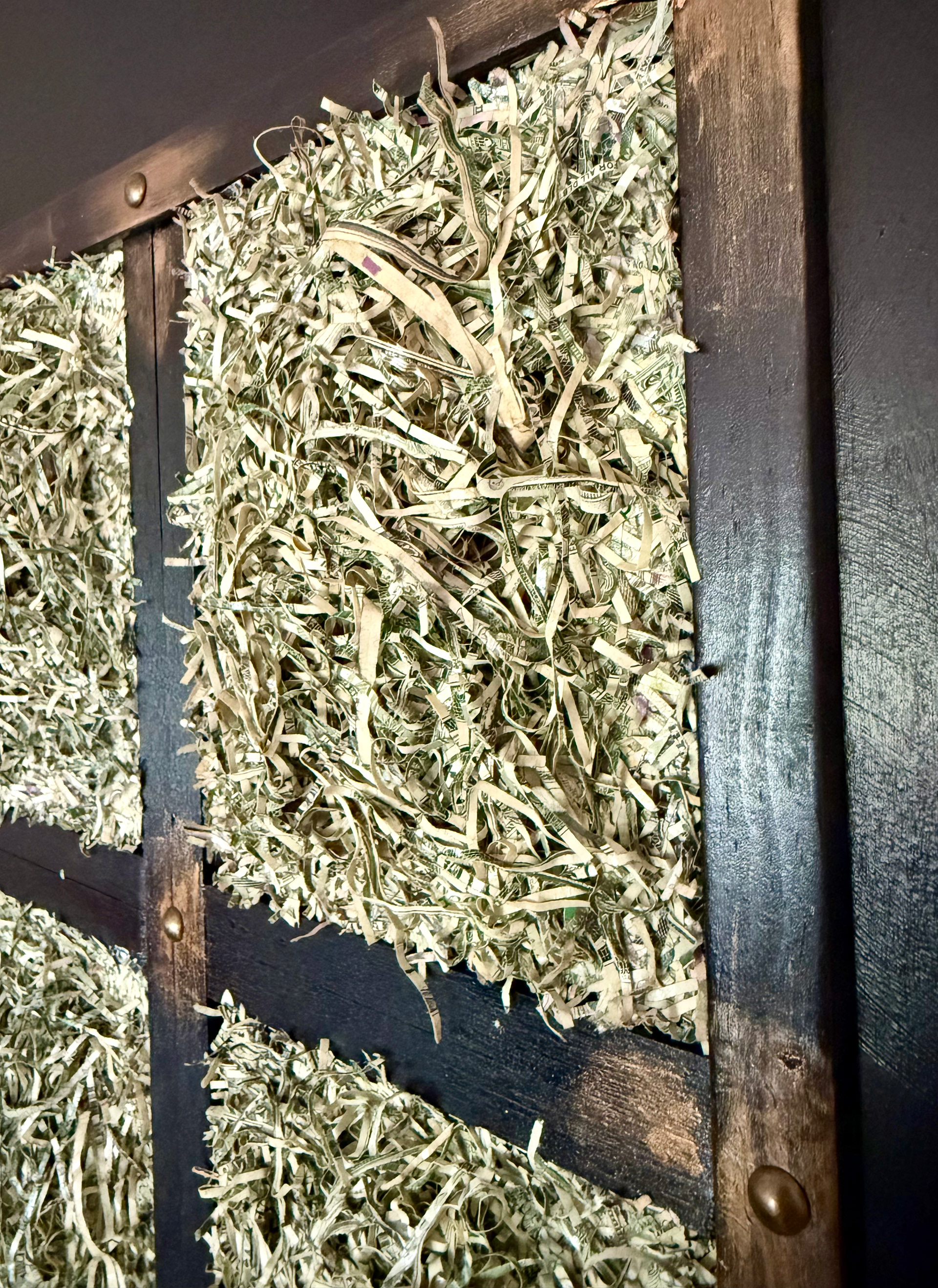
Containment continues the structural progression of the Portraits of Invisible Power series by shifting attention from visible pressure into controlled confinement. The work is organized through a rigid architectural grid that divides the surface into twelve restrained compartments, each densely filled with shredded currency compressed into isolated fields. What once circulated freely as value is now immobilized, categorized, and sealed within a system of order.
The piece examines how institutions contain power not only through force, but through structure, repetition, and controlled boundaries. The dark wooden framework functions simultaneously as support and restriction, holding each section in place while preventing movement between them. The shredded money becomes both material residue and symbolic evidence of systems that reduce human labor, identity, and exchange into units that can be measured, processed, and confined.
Unlike overt representations of authority, Containment focuses on quieter mechanisms of control — the invisible grids that organize behavior, regulate movement, and define worth. The repeated compartments suggest bureaucratic logic, storage systems, archives, cells, or accounting structures, while the compressed currency fragments retain traces of circulation, history, and collective dependence on systems larger than the individual.
Within the broader arc of Portraits of Invisible Power, the work marks a transition from visible structural tension toward internalized order. Pressure no longer appears chaotic or unstable; it has been absorbed into a disciplined system where fragmentation itself becomes organized. The result is a surface that feels simultaneously stable and suffocating — calm in appearance, yet dense with restrained energy and accumulated residue.
Acrylic, wood, and shredded currency on wood panel
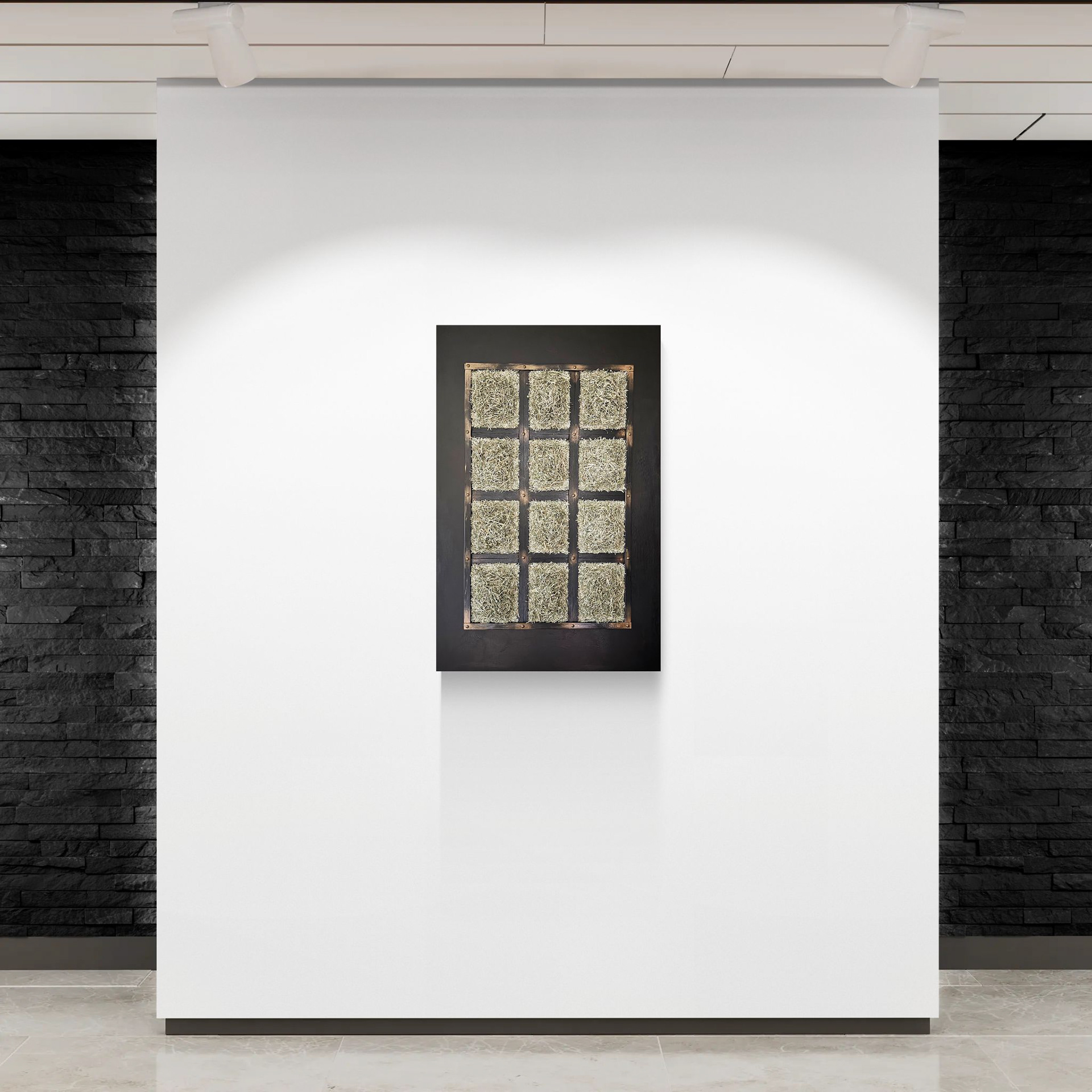
24 × 36 × 2 in, 2026
24 × 36 × 2 in, 2026