
THE FALSE EXIT
Not every door is meant to open. Some exist only to make us believe we can leave.
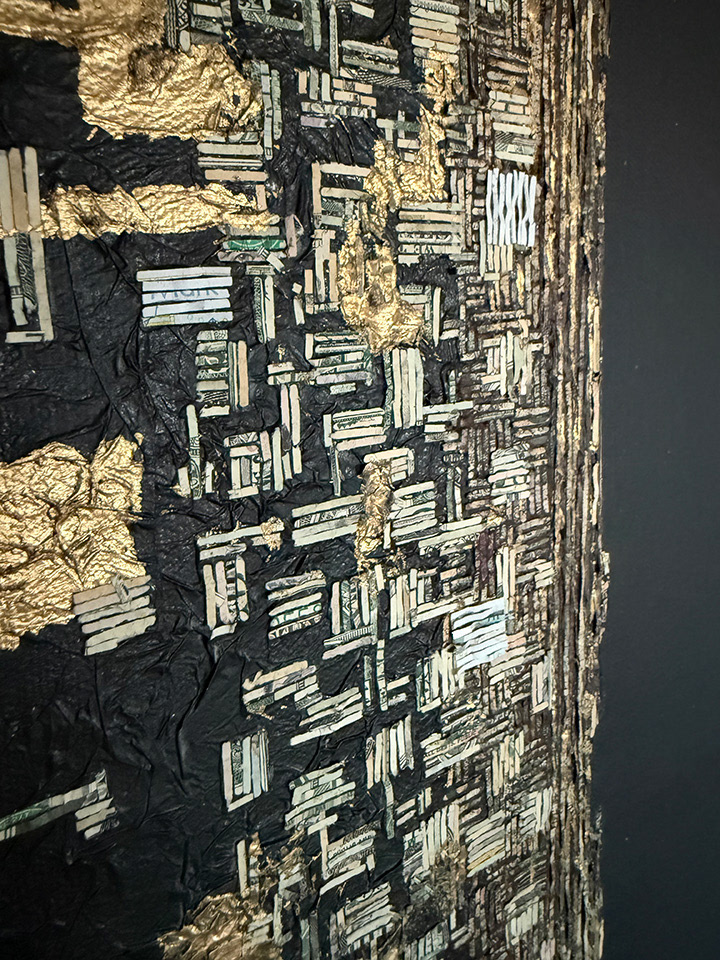
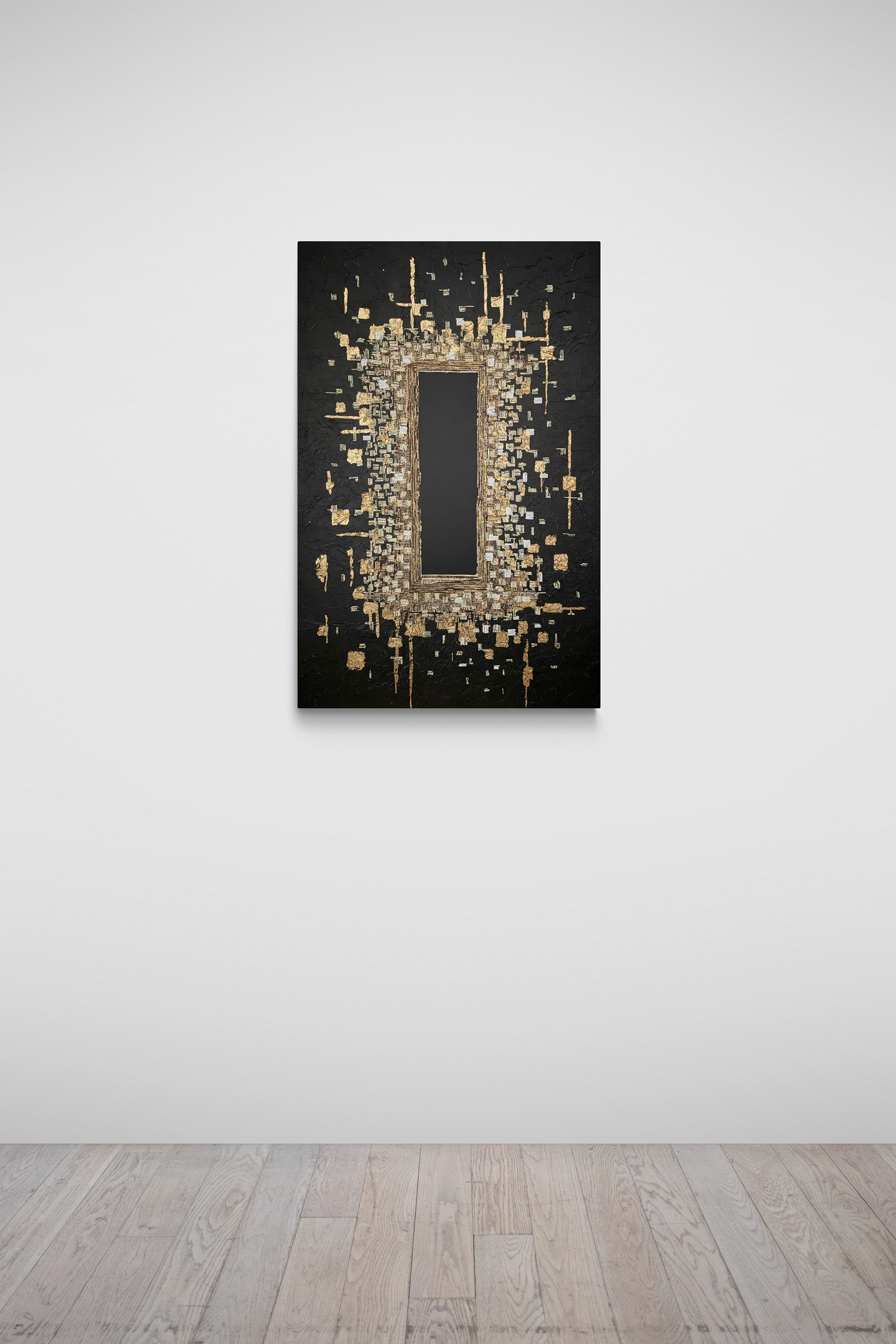
At the center of The False Exit, a dark, empty space is surrounded by layers of shredded American currency, paper, and gold foil. It resembles a doorway, an opening that might lead somewhere. Yet there is no light beyond it, no visible path, and no indication of what lies on the other side.
The fragments surrounding this opening form an intricate structure, both beautiful and unsettling. The gold suggests wealth, success, and opportunity, while the darkness at the center challenges the belief that achieving these things necessarily brings freedom.
Much of our lives is shaped by the expectation that something better is waiting ahead. We work, make sacrifices, follow expectations, and pursue financial security, believing that one day we will have enough to live without fear or limitations. Yet the pursuit of success can become an endless cycle, where each achievement creates another expectation and the sense of freedom remains just out of reach.
In The False Exit, the doorway represents this promise. It appears to offer a way forward, but reveals no destination. The shredded currency surrounding it has lost its monetary function, yet still carries the symbolism of wealth and authority. The gold adds another contradiction: something precious and desirable becomes part of a structure that surrounds an empty space.
The work explores the distance between what society teaches us to value and what actually gives our lives meaning. It reflects how easily financial success can become confused with personal freedom, and how deeply our ambitions and choices are influenced by systems we rarely question.
As the final work in Portraits of Invisible Power, The False Exit brings together the ideas explored throughout the series: the influence of money, the presence of authority, the pressure to conform, and the ways these forces shape our decisions, ambitions, and understanding of ourselves.
While the earlier works examine how invisible power operates, The False Exit focuses on its deeper human consequences. It speaks to the years spent pursuing security, the sacrifices made along the way, and the possibility of discovering that the destination we imagined is not what we expected.
There are no human figures in this artwork, yet its subject is profoundly human. It reflects our hopes, our disappointments, our need for certainty, and our determination to believe that something better lies ahead.
The False Exit closes the series with a quiet but unsettling realization: the appearance of a way out does not always mean that freedom lies beyond it.
Shredded U.S. currency, paper, and gold foil on stretched canvas
24 × 36 × 2 inches (61 × 91.4 × 5.1 cm)