THE VEIL OF CONSENT
Portraits of Invisible Power
Shredded Currency, Mixed Media
Portraits of Invisible Power
Shredded Currency, Mixed Media
Power rarely depends on force alone. Its most enduring form emerges when obedience becomes voluntary, when participation is mistaken for freedom, and when systems no longer need to compel because they have been accepted.
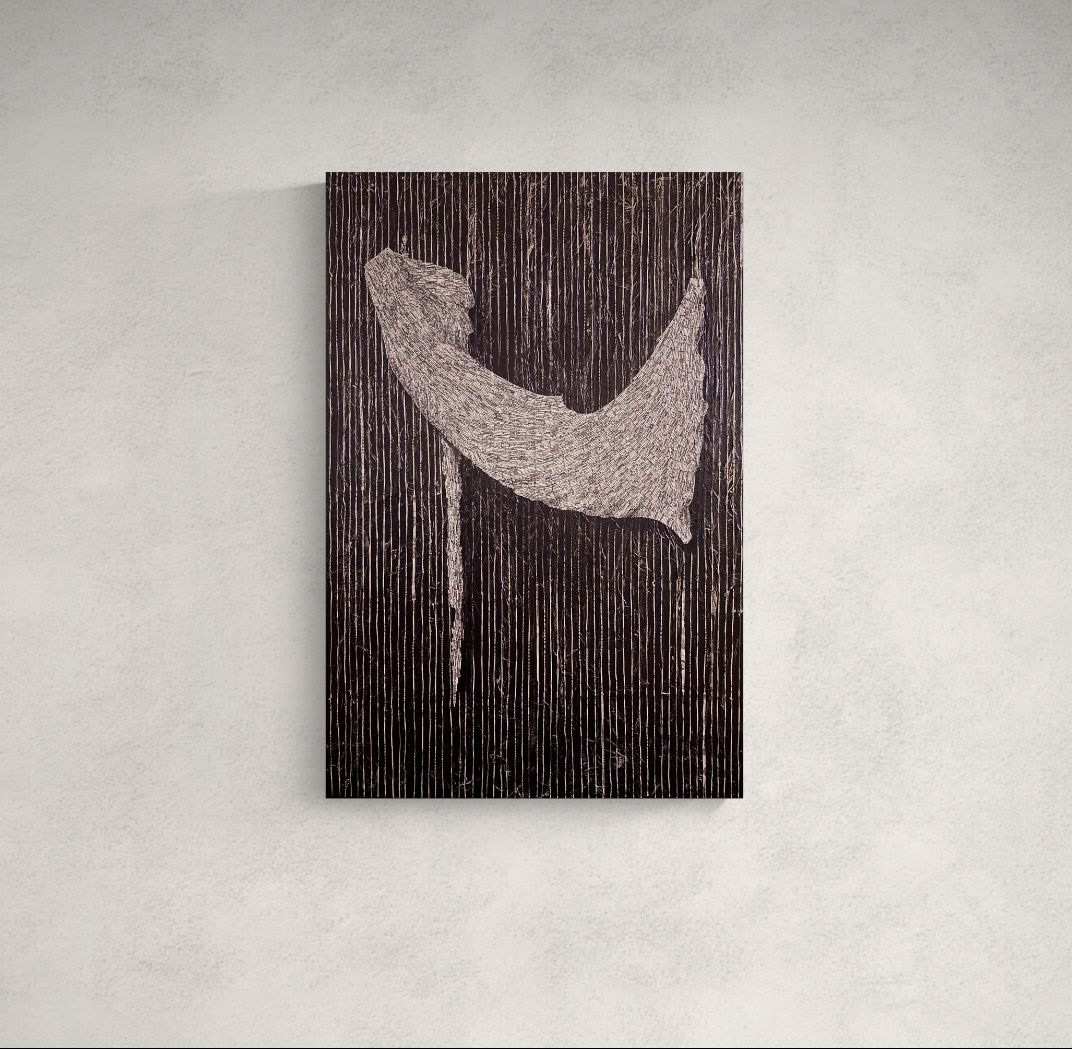
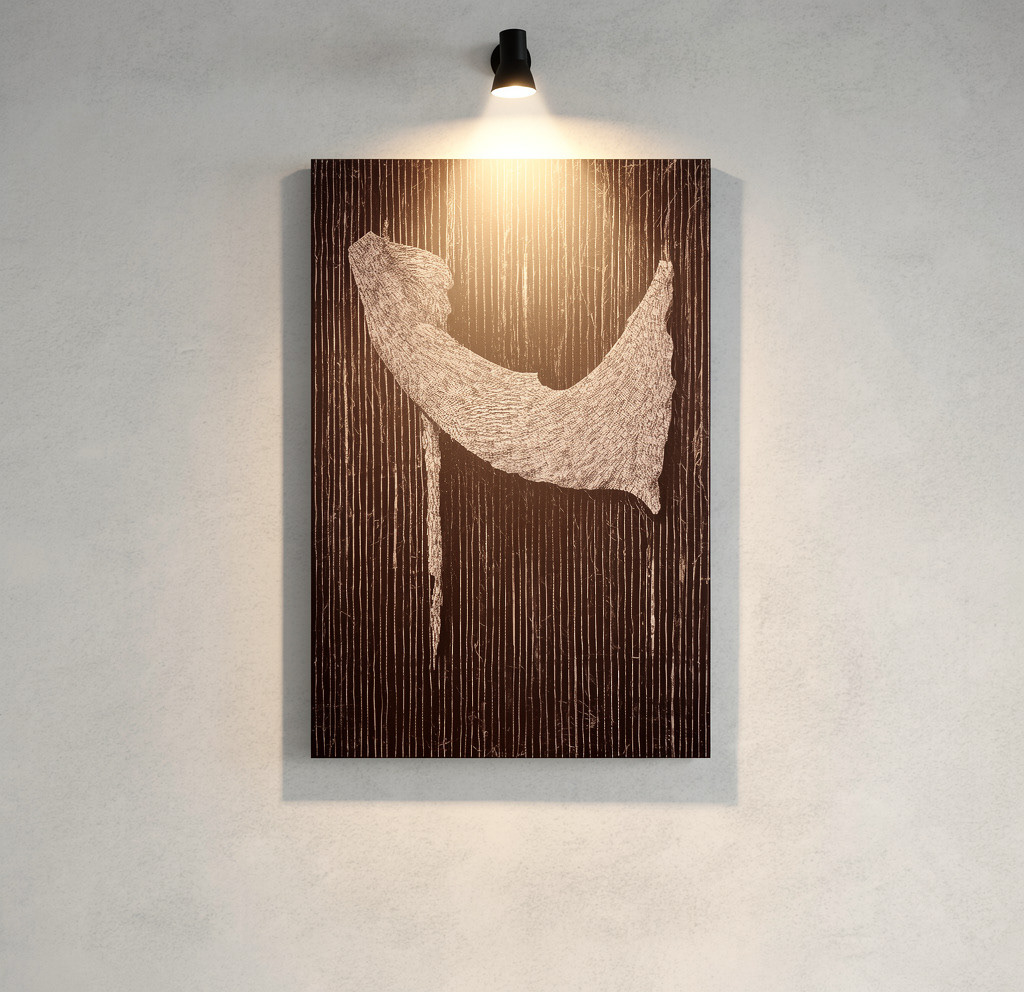
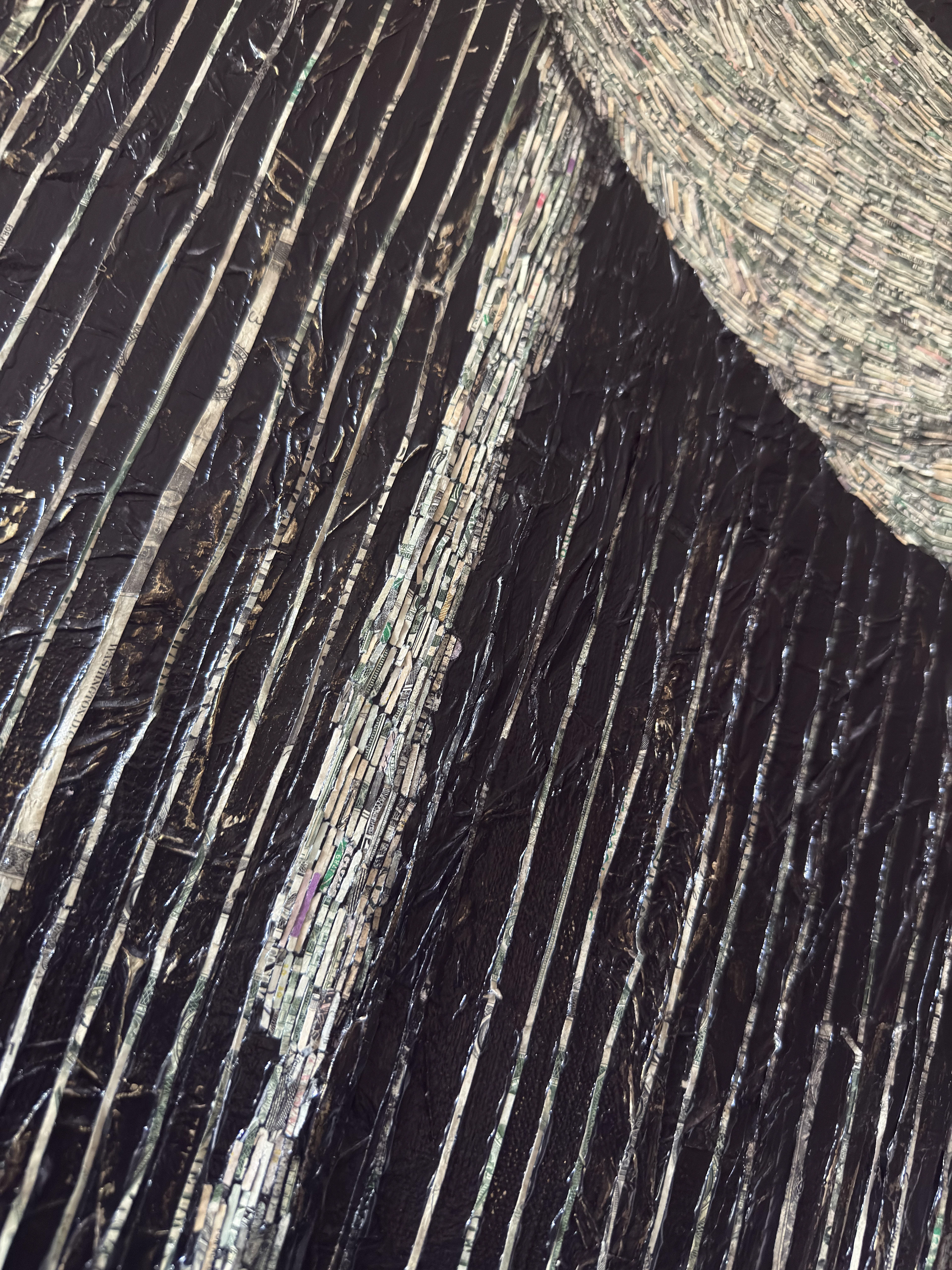
The Veil of Consent consists of thousands of fragments of shredded currency assembled into a suspended, draped form that stretches across a field of rigid vertical structures. At first glance, the work appears delicate, almost weightless. Closer inspection reveals that its surface is composed entirely of destroyed money—material once exchanged, accumulated, desired, spent, and trusted.
The veil functions as both barrier and invitation. It conceals without fully obscuring, allowing viewers to sense the presence of an underlying structure while preventing complete access to it. The work examines the subtle agreements through which power sustains itself—not through visible coercion, but through normalization, participation, and collective acceptance.
Each fragment of currency carries an unknowable history. Before its destruction, it may have passed through the hands of a laborer, a child, a collector, a politician, a billionaire, or someone struggling to survive. Removed from circulation and stripped of its original purpose, these fragments are transformed into a new structure that speaks not of wealth itself, but of the systems that define its value.
Within Portraits of Invisible Power, The Veil of Consent marks a critical transition. Earlier works confront authority through weight, pressure, accumulation, and containment. Here, power becomes less visible and therefore more effective. The mechanisms remain present, but they are softened by familiarity and hidden behind the appearance of choice.
The work asks a question that extends beyond institutions and into everyday life:
What forms of power do we accept simply because they have become invisible?